
Continuous Transformation Needs a Clear End State
Last updated 05:57 AM EDT • Read time: 7m
The Army’s Transformation Initiative, or ATI, applies an enduring approach through specific reorganizations, program cuts, equipment deliveries, and personnel moves. ATI assigns deadlines to several major capabilities, but many directed actions lack completion dates. Public guidance also provides no common measures for determining when a phase has achieved its promised capability, savings, and readiness. The lack of a defined end state creates problems.
Without an end state, continuous transformation can blur the line between progress and activity. Structural changes consume money, personnel, and training time while units continue to meet operational demands. Defined completion criteria allow leaders to determine whether a change delivered sufficient value, assess continued investment, and distinguish successful progress from delays or institutional momentum.
Leadership turnover compounds this problem. Gen. Randy George left the chief of staff position in April, and Secretary of the Army Dan Driscoll resigned in August. George and Driscoll signed the May 2025 Letter to the Force that launched Army implementation of ATI. In a process with no destination, written completion criteria give successive leaders a common standard and prevent each leadership team from redefining success.
Army leaders describe Continuous Transformation as a long-term process driven by changing threats, experimentation, field experience, and new technology. Constant adaptation requires clear decisions. Each ATI phase needs defined criteria that allow leaders to close completed work, expand successful changes, revise weak approaches, or stop efforts that fail to deliver before committing resources to the next phase.
What ATI Requires
ATI requires leaders to manage three connected lines of effort: fielding battlefield capabilities, reorganizing the force, and ending outdated programs or spending. These lines of effort define the scope leaders must assess during each ATI phase.
A complete schedule should extend beyond equipment delivery dates. Defense guidance sets deadlines for long-range missiles, unmanned systems, counter-drone defenses, AI-supported headquarters, advanced manufacturing, and ammunition production. Phase schedules should also account for unit conversions, personnel moves, training requirements, and the retirement of displaced systems and organizations.
Financial measures must connect resource decisions to results. Army leaders projected $48 billion in savings over five years, while the FY2026 budget request distributed ATI divestments and investments across equipment, force structure, readiness, unmanned systems, munitions, and other accounts. Cost baselines, expected savings, and planned reinvestments would allow leaders to assess the financial performance of each phase.
Governance must distinguish each phase from the larger transformation campaign. FY2027 Army budget materials place ATI within a Continuous Transformation Campaign Plan spanning how the Army fights, organizes, equips, and develops people. May 2025 guidance also described ATI as a first step with additional rounds to follow. Each round needs a defined scope, responsible authority, review point, and closure decision.
The Army has faced this governance challenge before, and modular transformation provides a useful precedent for defining and verifying completion.
A Better Lesson from Modular Transformation
Congress required the Army to report annually on modular transformation until the Secretary of the Army certified completion. Under federal law, that certification created a public endpoint for the shift to a brigade-oriented force.
The Army’s 2014 completion notice showed the limits of one measure. The Army certified the shift to a brigade-oriented structure, while questions about costs and performance persisted. In a review published before the certification notice, GAO found that the Army lacked reliable cost estimates and a comprehensive plan to assess whether the modular force achieved its intended benefits.
ATI can improve on this model by measuring organization, resources, readiness, and performance separately. Each phase would end after leaders review those measures and determine whether the Army achieved the intended result. Proposed FY2027 legislation identifies much of the information needed to support those decisions.
The modular transformation experience provides a starting point for ATI: define each phase, measure its results, and require a formal closure decision. Army leaders can build that structure from existing reporting requirements.
A Completion Framework for ATI
Army leaders can turn existing reporting requirements into a practical completion framework. Each major ATI phase should define the capability being delivered, the units affected, the expected operational result, the planned cost, and the projected savings. Leaders should identify dates for first delivery, full fielding, training completion, and achievement of the required readiness standard. Public summaries should report progress at a level that protects sensitive capabilities. Army leaders and Congress should receive the detail needed to assess costs, readiness, and results.
Validation should occur before leaders close each phase. Exercises, unit evaluations, readiness reports, equipment status, staffing levels, and cost data can show whether new organizations and capabilities perform as intended. Senior leaders should identify who has authority to declare completion and what evidence supports that decision. A formal closure decision would create a record that future leaders can review before beginning the next round of change.
Completion decisions should also direct what happens next. Leaders can expand changes that perform well, revise changes that fall short, or end programs that fail to produce enough value. Resources released from completed or terminated work can move toward the next priority. Each phase would produce a capability result and a documented lesson for the next phase.
Congress can reinforce this approach through required reporting. Annual reports require many of the data points needed to assess progress. Aligning congressional reporting with Army phase reviews would reduce competing measures and give both institutions the same evidence base. A common framework would also help future leaders see what prior rounds cost, what they delivered, and where gaps remain.
Counter Argument
Supporters of continuous transformation have a strong reason to resist fixed endpoints. Military threats change quickly, commercial technology develops faster than traditional acquisition systems, and adversaries adjust their methods in response to American capabilities. A declaration of completion can create pressure to defend an existing force design rather than continue testing new ideas. Army leaders have good reason to describe adaptation as a permanent responsibility.
Continuous transformation also protects the Army from treating modernization as a series of isolated projects. New drones, communication systems, weapons, and organizations affect one another. A change in one area can create new requirements somewhere else. Army leaders need enough flexibility to respond when experiments expose new problems or technology changes before a planned fielding schedule ends.
A phase review gives leaders a scheduled opportunity to test earlier decisions against evidence. Leaders should record the results, identify remaining gaps, and decide whether to expand, revise, continue, or end the effort.
The 2014 certification demonstrates that leaders can close a defined effort and use its results to guide subsequent changes. ATI needs a stronger record of costs, operational results, and unresolved gaps at each closure decision.
Conclusion
Continuous transformation needs a record of what each phase produced. ATI contains deadlines for major capabilities, organizational changes, program reductions, and investment decisions. A completion framework would connect those actions to cost, readiness, training, equipment, staffing, and operational performance. Public summaries and detailed reviews for Army leaders and Congress would support decisions to close, extend, revise, or terminate each effort.
Army leaders should set targets for each major ATI phase, review operational and financial results, and record a decision to close, extend, revise, or terminate the effort. Proposed congressional reporting requirements offer a starting point. The decision record should show what the Army gained, what the change cost, and which gaps leaders accepted or assigned to the next phase.
Matt Russell is a retired Army infantry officer and strategist. Currently, he is the co-founder and managing partner of Attain Leadership Solutions, LLC, a consulting firm focused on strategy, leadership, and team performance.
Michael Carvelli is an Army officer who writes on strategy, operational planning, protection, and engineering. He has written on large-scale combat operations for Real Clear Defense, War on the Rocks, Parameters, Modern War Institute, and Small Wars Journal.
The views expressed are their own and do not represent those of the U.S. Army, the Department of Defense, or any part of the U.S. government.
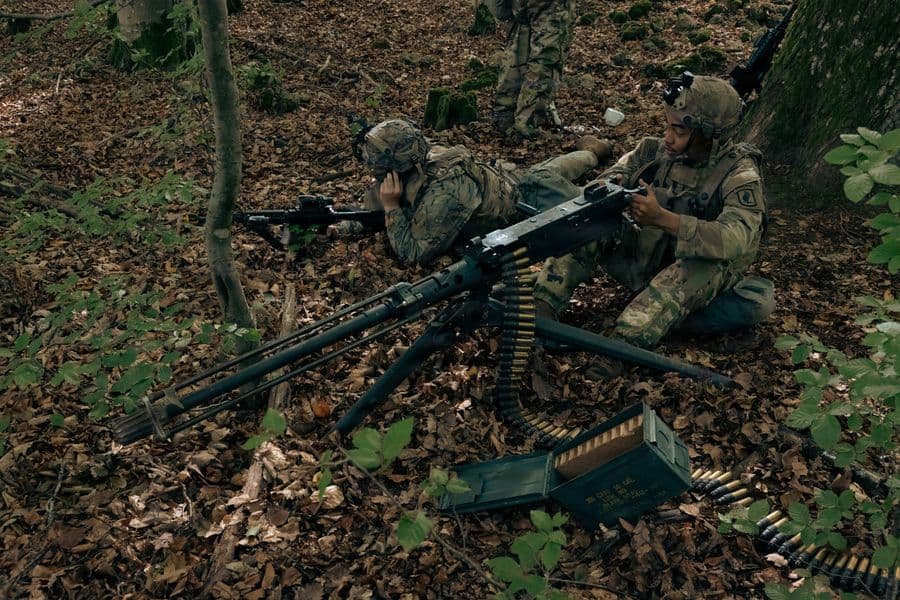
image: U.S. Soldiers assigned to the 173rd Mobile Brigade Combat Team (Airborne), Assassin Battery, provide overwatch during Exercise Saber Junction 26 at the Joint Multinational Readiness Center’s Hohenfels Training Area, Germany, Sept. 01, 2026.The Continuous Transformation initiative is grounded in one principle: increasing the lethality of U.S. Army formations by creating more agile and mobile units capable of responding to complex combat scenarios.(U.S. Army photo by Spc. Aubrey Boyle, JMRC Vipers)

In Pursuit of Nuclear Abolition
By Peter Huessy • RealClearDefense
Innovation Alone Won’t Prepare the U.S. for the Future Battlefield
By Joshua Segal • RealClearDefense
The sUAS Tactical Trifecta
By Bryan T. Woody • RealClearDefense
The Revolutionary War: When Strategic Options Share the Same Weakness
By Henry Yep • RealClearDefense
The Houthis Are Testing the Limits of Collective Defense
By Saima Afzal • RealClearDefense

Who Shoots Down the Drone Over the Shipyard?
By John Ferrari & Dillon Prochnicki • RealClearDefense
Northrop Grumman Breaks Out the Big Guns at AUSA
By Daniel Terrill, Defense News
Army Pursuing Diverse Array of New Anti-Air Interceptors
By Trevithick, The WarZoneWho Shoots Down the Drone Over the Shipyard?
By John Ferrari & Dillon Prochnicki, RCD
F-35C Lands for the First Time on a Ford-Class Aircraft Carrier
By The Aviationist