
Military Strategy
RealClear Context
Click below to continue reading this story, discover more Military Strategy stories from over 25 years of RealClear archives, or follow this topic to stay in the know.
Understanding Military Product Lifecycles
Believe it or not, the B-52H Stratofortress could be the first military aircraft to see a century of service
07/12/25Read it on Engineering.comWhen Access Becomes the Fight
What Hormuz Can and Cannot Teach INDOPACOM About Sustaining Combat Power...
2h agoRead it on RealClearDefenseAutonomy and Combined Arms Maneuver
The Elements Remain, but How We Deliver Them Is Changing Forever...
2h agoRead it on Modern War Institute
When Access Becomes the Fight
What Hormuz Can and Cannot Teach INDOPACOM About Sustaining Combat Power
I have chartered commercial Mutipurpose Supply Vessels (MSPV) from the Oil & Gas industry for military support and have run marine operations for a global oceanographic research firm and its fleet of vessels. Getting a ship underway depended on more than its condition. Crew changes, flag, and class compliance/regulatory, insurance terms, vessel inspections, QHSE, port services and host-nation permits could each hold it at the pier.
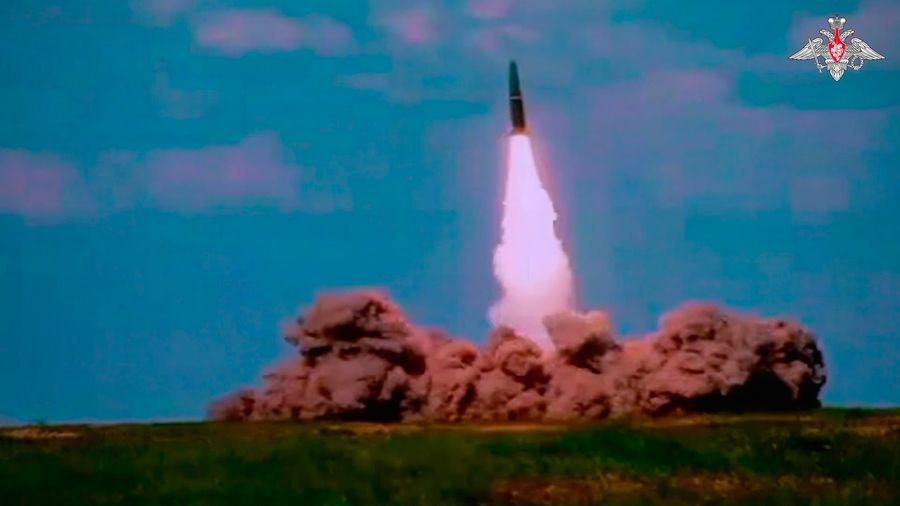
Don’t Be Swayed by Tactical Nukes
The Department of Defense, specifically under the direction of Undersecretary Elbridge Colby, is looking to increase the number of “tactical” nuclear weapons in America’s nuclear arsenal. Many hear “tactical” and think that these nuclear weapons aren’t so destructive, that they’re more usable than other nuclear weapons. The Department of Defense also aims to deploy more of these weapons throughout Europe. It’s seen as a go-between of putting US boot-on-the-ground or withdrawing from these continents entirely.
But tactical nuclear weapons aren’t the golden ticket to solve this dilemma, and the United States should refrain from adding more of them to its nuclear arsenal and should refrain from relying upon them for defense.
Don’t Be Swayed by Tactical Nukes
The Department of Defense, specifically under the direction of Undersecretary Elbridge Colby, is looking to increase the number of “tactical” nuclear...
6d agoRead it on RealClearDefenseRethinking Wargame Design and Analysis in the Modern Age
The U.S. Naval War College (NWC) recently hosted Global 21, the largest and most sophisticated wargame in its history in support of Commander, U.S....
6d agoRead it on CIMSECSuper Intelligence and the Distancing Effect
As prediction shortens the path from sensing to action, it creates distance....
6d agoRead it on War RoomWar for the Mind: Narrative Intelligence, AI & the Fight in the Cognitive Domain
The United States is actively losing a war it barely acknowledges....
1w agoRead it on Modern War Institute
The Mirror-Life Trap: When Deterrence Must Prevent Invention
Imagine a scientific breakthrough that could make a nation less secure even if it achieved it first. Now imagine two rival powers, each afraid the other might pursue it anyway. That is the strategic problem raised by the possibility of so-called "mirror life". Its danger lies not only in what an adversary might do with a novel organism, but in what competition itself might persuade otherwise cautious actors to create.
Mirror life does not exist today. It is a hypothetical form of life built from biological molecules that are the mirror images of those found in nature. The distinction involves what scientists call "chirality", or molecular "handedness". Consider your left and right hands. They have the same components but are arranged as mirror images and cannot be perfectly superimposed. Something similar occurs in biology. The proteins of living organisms are built almost exclusively from "left-handed" amino acids, while DNA relies on "right-handed" sugars. Mirror life would reverse these arrangements, potentially producing organisms whose molecular structures are fundamentally incompatible with those of life as we know it. Scientists have already created individual mirror-image biological molecules, but never a self-replicating organism. The danger is that certain mirror microbes might evade immune defenses and national biological controls that evolved to recognize ordinary organisms, thereby potentially allowing infections or ecological disruptions that would be difficult to contain. The likelihood and scale of these dangers remain uncertain at the moment.
The Mirror-Life Trap: When Deterrence Must Prevent Invention
Imagine a scientific breakthrough that could make a nation less secure even if it achieved it first....
2w agoRead it on RealClearDefense
After the Midterms, the Right Strategy Against Iran
By Lance Gordon • RealClearDefense
The Color Revolution Came Home
By Emzari Gelashvili • RealClearDefense
When Access Becomes the Fight
By Richard Byno • RealClearDefense
What the 2026 Midterm Results Mean for U.S. Strategic Competition with Rivals
By Dean Chen • RealClearDefense
Measurable by Design: Project Meridian
By Alex Willard • RealClearDefense

New USAF Force Design Bets on Technology
By Stephen Losey, Air & Space Forces
DoD Pushes $450M in Loans To Bolster U.S. Space Companies
By Hitchens, BrDefense
The U.S. Navy Needs a New Battlecruiser. Will It Get One?
By Sadler & Ouellette, NatInt
U.S. Army Rehearses Rapid HIMARS Rocket Launcher Deployment
By Global Defense N.
Coding Commander's Intent into Unmanned Systems
By Thomas Baumstark, Proceedings