
More on the Sinking of the MOSKVA
Last updated 05:45 AM EDT • Read time: 7m
A previous article used the naval combat Salvo Equations to analyze the sinking of the MOSKVA.[i] The analysis suggested that, in short, the sinking should not have occurred. In summary, the analysis concluded that “… the Ukrainians probably should have shot more missiles, the MOSKVA should have destroyed or defeated more missiles, and that MOSKVA’s damage control (DC) efforts or ship design to sustain damage could have used improvement.”
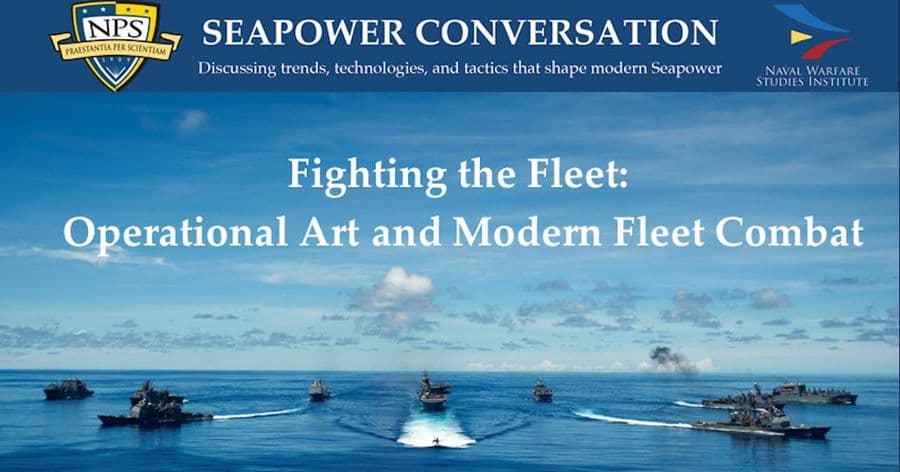
One strength of the Salvo Equations is that they allow decomposition of the elements of combat power in naval competition, usually to help planners examine the different ways that an upcoming battle might unfold. Additional use of the equations is as a forensic tool, that is, given that a battle occurred, how and why might the outcomes have been affected by the combat power employed by both sides and, as appears to be the case with the MOSKVA, how and why might the outcomes have deviated from those dictated by the equations. While the previous article recognized the deviation, this article suggests some of the reasons why the outcomes did not comport with the equations. These considerations are addressed within the context provided by the authors’ recent book, Fighting the Fleet: Operational Art and modern Fleet Combat.[ii]
For example, the previous analysis used the basic Salvo Equations to show that the Ukrainian attack should not have been successful, primarily because the MOSKVA had the defensive systems necessary to destroy or defeat an attack by two anti-ship cruise missiles (ASCMs). One of the variables which is not contained in the basic Salvo Equations, but is addressed by Captain Wayne Hughes, Jr., USN (Ret.) in his original paper on the Salvo Equations (included in an appendix to Fighting the Fleet), is defender alertness. Defender alertness essentially measures the degree of a defender’s readiness, taking on a value of 0 for complete surprise to 1 for complete readiness.[iii]
Degrading defensive combat power in this way allows an analyst to capture cases in which the full defensive combat power of a ship is, for whatever reason, not brought to bear. There is reporting now that the MOSKVA crew was distracted by drones employed by the Ukrainian armed forces (UAF)[iv] and therefore did not engage the incoming missiles. If this report is true, then the value of the MOSKVA's defensive combat power might have been decremented to almost nothing and the expanded Salvo Equations would more closely comport with the observed outcomes.
But here also variability comes into play. As discussed in Fighting the Fleet, human performance does not follow a normal bell-shaped curve, but instead is highly skewed. This is particularly true in periods of transition from peacetime to wartime. What gets someone promoted in peacetime is usually not what makes them successful in wartime. The historical distribution of human performance in combat indicates that there is no true “average” performance, which you might have observed in peacetime exercises. In fact, there is always a larger population below average than above it. For example, if ten ships are assigned to a force, except that one out of ten will vastly outperform the others, but perhaps six out of ten will be well below par and the other three will be "about average." Peacetime performance is a poor predictor of which specific captains and crews will be in what part of the ace-goat distribution. We may never know if aces or goats manned MOSKVA, but their performance suggests the latter.
Fighting the Fleet provides a further source of deviation between expectations from the basic Salvo Equations and observed outcomes, called combat entropy. Combat entropy arises when uncertainties compound in a salvo exchange. Given that when fired at a ship, an ASCM can realize one of four different outcomes (it can potentially be in all the combinations of being well-aimed or not, or shot down or not), then the two Neptune ASCM salvo fired at the MOSKVA could have 42, or sixteen, different outcomes. The contribution of all the elements of combat power to compounded uncertainty in each of these sixteen cases is different in each. As Fighting the Fleet recommends, fleet planners should explore the landscape of entropic outcomes to ensure they are prepared for all the potential deviations from Salvo Equation expectations. In the case of the MOSKVA, it appears that both of the ASCMs were well-aimed, and that the MOSKVA did not defeat or destroy either one of them. Two well-aimed ASCMs, hitting in just the right spot, could easily lead to a sinking…
…Which brings up another concept discussed in Fighting the Fleet: the extreme variability, or “knife edge distribution” of salvo battle damage. The previous article described the Cube Root Rule for expected damage, and showed how two hits is below the threshold level of Thousand Pound Bomb Equivalents (TPBEs) needed to sink a ship of MOSKVA's tonnage. But the book takes pains to clarify that the Cube Root Rule is not meant to be deterministically predictive, that is, that exactly x TPBEs will sink a ship of y tonnage. What the rule in facts states is that for cases in which a ship of y tons was sunk, it took x TPBEs to do it (within some error bounds). These two statements are not equivalent: in fact, there are plenty of cases in naval history when a ship of y tons took much more than x TBPEs and survived to keep fighting. What is most critical is where on the ship the pulses of power are absorbed, and what damage then ensues (particularly if damage control is ineffective). It is quite possible that one or both of the Neptune ASCMs hit critical parts of the MOSKVA that resulted in secondary fires, explosions and damage that the MOSKVA could not recover from. Damage in a salvo fight is anything but average, so fleet planners should not plan for it to be average, but, as Fighting the Fleet recommends, explore all the pulse power damage variabilities as an integral part of their planning. The unexpected level of damage to MOSKVA underscores this point.
As a final point, Fighting the Fleet enjoins fleet staffs to think of searching and surveillance less in terms of technical capabilities and more in terms of a competition between the hunter and the hunted. One sure way to confound a hunter, particularly one with relatively rudimentary search and surveillance assets, is to clutter the picture as much as possible. Here is indeed another kind of entropy, compounded uncertainties in the tactical picture. That MOSKVA was so readily located beyond the horizon suggests that her crew relied too heavily on assessments of technological capability (that of the Ukrainians) and not enough on low-tech ways of competitively cluttering a tactical picture: more, less valuable platforms stationed closer to the MOSKVA; towed or sea-anchored inflatable radar reflectors; or other such rudimentary decoys.
Fighting the Fleet contains a quote from Bradley Fiske about the concept of “admiralship.”[v] It is observed that many fleet commanders rise up the ranks with little or no background in the operational level of war concepts. Similarly, the book Neptune’s Inferno[vi] is the story of a navy that thought it knew how to fight, but had some very painful, and bloody lessons to learn. Fiske warned against expecting “genius on demand” from our flag officers; it is clear that genius was lacking onboard MOSKVA. Again, the more complex version of the Salvo Equations accounts for “…inadequate training, organization or motivation” and assigns values where appropriate. We will likely never know what role Admiralship (or the lack of it) played in the sinking of the MOSKVA, but we have seen that when tested in actual combat, the vaunted Russian Army has performed miserably; it is quite likely that at least elements of the Russian Navy are faring no better.
Anthony Cowden is the Managing Director of Stari Consulting Services and Jeff Cares is president of Alidade Incorporated. Both are co-authors of Fighting the Fleet: Operational Art and Modern Fleet Combat, all royalties for which go to the Navy/Marine Corps Relief Society.
Notes:
[i] https://www.realcleardefense.com/articles/2022/04/19/neptunes_the_moskva_and_how_not_to_sink_a_cruiser_827840.html
[ii] Cares, Jeffrey R. and Anthony Cowden, Fighting the Fleet: Operational Art and Modern Fleet Combat. Annapolis: US Naval Institute, 2021. https://www.usni.org/press/books/fighting-fleet
[iii] Cares and Cowden, p. 115
[iv] https://www.forbes.com/sites/davidhambling/2022/04/14/ukraines-bayraktar-drones-helped-destroy-russian-flagship/?sh=35e54e73a7aa
[v] Cares and Cowden, p. 4
[vi] Hornfischer, James D. Neptune’s Inferno: The U.S. Navy at Guadalcanal. New York, Bantam Books, 2011.
Is It Déjà vu All Over Again: The 2012 Report on Global Zero
By Peter Huessy • RealClearDefense
As Private Investment Pours Into Defense, the Clock Is Ticking
By Elaine McCusker • RealClearDefense
The First Test of Peace Lies in Ukraine's Borderlands
By Dennis T. Cosgrove • RealClearDefense
The VFW’s Gambling Addiction Victimizes Veterans
By Jack Yoest • RealClearDefense
Superintelligence Exposes a Gap in the Law of Delegated Authority
By Sue Ghosh Stricklett • RealClearDefense
When Your Navy is too Small, the Bill Comes Due Bigly
By CDR Salamander
Quo Vadis MCU?
By Marine Corps Compass Points
When the Network Goes Dark, Who Controls the Battlefield?
By Jonathan K. Corrado • RealClearDefense
Air Force Should Buy 250 Blended-Wing Tankers, as 2027 Demo Looms
By A&SF Mag.
Long Deployments to Be Navy Standard For Next Couple Years
By Mongilio, USNI News