
Our Military Sealift Success Depends on Qualified Mariners. Where are They?
Last updated 02:47 PM EDT • Read time: 4m
Russia’s failure to secure and maintain its Ukrainian supply lines will be a topic of exhaustive study for generations of future historians. It appears likely the Russian military ignored Napoleon’s timeless axiom that “amateurs discuss tactics” while “professionals discuss logistics.”
While Western intelligence officials might get a pass for having overestimated Russia’s capabilities, there is absolutely no excuse for not getting our own logistical house in order in preparation for the grim possibility of a future – some say inevitable – conflict with Russia or China.
If war comes, there can be no doubt that success will hinge upon the viability of America’s military sealift to move troops, supplies, weapons and fuel to the front lines. Most people assume this is the job of the U.S. Navy, but U.S.-flag commercial vessels and merchant mariners are responsible for this all-important mission.
A viable sealift capacity depends not just on enough vessels, but also on a sufficient number of highly qualified, militarily obligated merchant mariners to operate them. We don’t have enough of either. Former U.S. Maritime Administrator Mark Buzby estimates the nation is at least 1,800 merchant mariners short of what’s needed to sustain the sealift in times of war.
The nation needs a concerted effort to recruit, train and prepare a new generation of merchant mariners. A key part of this effort must be to bring more women aboard. Women mariners have proven themselves in ocean-going commerce – as well as in wartime – and if we are to have a credible military sealift, we need many more of them.
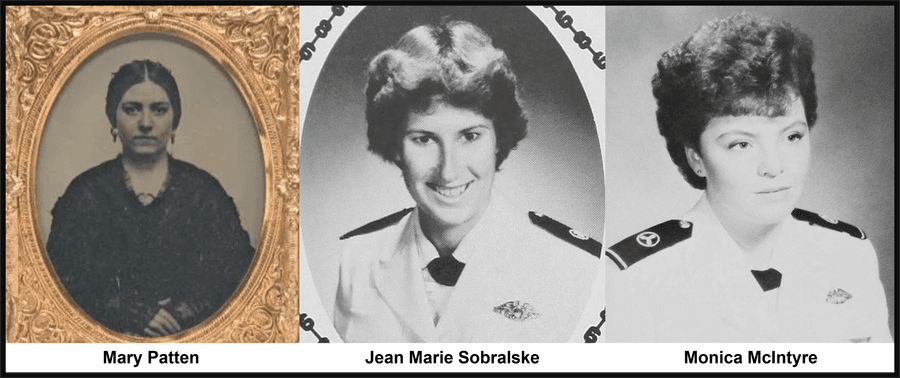
Two female graduates of the U.S. Merchant Marine Academy (USMMA) broke the wartime sealift glass ceiling in the early 90s, and I hope their stories will inspire more women to pursue a career in the merchant marine.
USMMA graduates Monica Malone and Jean Morehouse served in Desert Shield/Storm (Gulf War I). Monica, who was on her mission critical Sea Year training, is reputed to be the first female among the sealift personnel sent into the Gulf’s hostile waters. She remembers the experience vividly, recalling “routine” mandatory gas mask orders and scud missile warnings. Jean was second mate responsible for the navigation and voyage planning on a massive cargo ship carrying helicopters, military vehicles and ammunition across the Atlantic to the Gulf. Cargo vessels are always prime targets in wartime (countless were sunk during WWII), so Jean’s ship required continuous air and sea protection as it navigated its way through the Suez Canal. Jean and Monica were generally the only female mariners aboard.
On this National Maritime Day 2022, it is fitting to recognize Monica’s and Jean’s service to our country and to call on the maritime industry, the Military Sealift Command, the federal Maritime Administration and my alma mater, USMMA, to proactively encourage more women to pursue careers at sea.
USMMA was the first of the five service academies to admit women and their numbers are slowly growing. While some male and female graduates immediately go on active duty in the military, most hone their skills as working officers in the merchant marine while also serving in the U.S. Navy Reserve as Strategic Sealift Officers (SSO). More than 80 percent of these SSOs are USMMA graduates.
If you look close enough, women merchant mariners can be found throughout our country’s history. As far back as 1856, nineteen-year-old pregnant Mary Patten, took command of the clipper ship Neptune’s Car when her husband took ill and safely navigated the vessel to San Francisco four months later. Ironically, the hospital at the USMMA is named for this trailblazer.
The next chapter in America’s maritime history will be filled with inspiring stories of women mariners, but this won’t happen without a concerted effort by today’s policymakers, industry leaders, the USMMA and the young women who are pondering a career at sea. The maritime community needs to create an environment conducive to advancing their cause as I firmly believe that #womenbelongatsea.
Captain Tobin is president and CEO of the U.S. Merchant Marine Academy Alumni Association and Foundation.

Is It Déjà vu All Over Again: The 2012 Report on Global Zero
By Peter Huessy • RealClearDefense
As Private Investment Pours Into Defense, the Clock Is Ticking
By Elaine McCusker • RealClearDefense
The First Test of Peace Lies in Ukraine's Borderlands
By Dennis T. Cosgrove • RealClearDefense
The VFW’s Gambling Addiction Victimizes Veterans
By Jack Yoest • RealClearDefense
Superintelligence Exposes a Gap in the Law of Delegated Authority
By Sue Ghosh Stricklett • RealClearDefense
When Your Navy is too Small, the Bill Comes Due Bigly
By CDR Salamander
Quo Vadis MCU?
By Marine Corps Compass Points
When the Network Goes Dark, Who Controls the Battlefield?
By Jonathan K. Corrado • RealClearDefense
Air Force Should Buy 250 Blended-Wing Tankers, as 2027 Demo Looms
By A&SF Mag.
Long Deployments to Be Navy Standard For Next Couple Years
By Mongilio, USNI News