
The Fleet Structure of the Future
Last updated 07:33 AM EDT • Read time: 4m
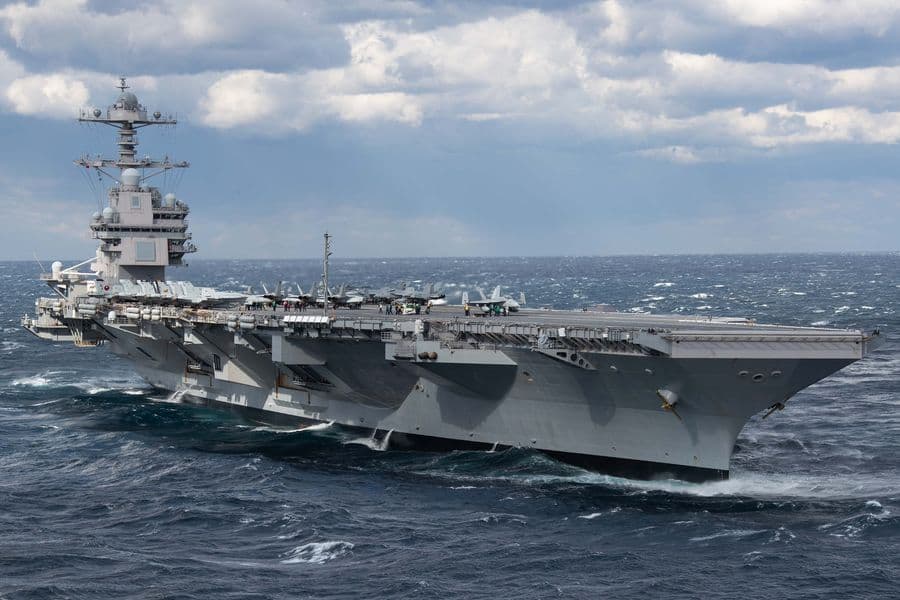
The sinking of the Moskva, the air defense-capable jewel of Russia’s Black Fleet, is yet another example of the vulnerability of surface ships. This vulnerability should lead to the re-evaluation of naval force structures, the United States Navy in particular.
Surface ships face a wide and increasing range of threats. In 2000 the USS Cole (2000) was heavily damaged by low-tech attacks by terrorists who were able to come alongside the ship. The Moskva incident was an attack by a second-tier military power using homemade subsonic Neptune antiship missiles. The advent and proliferation of a number of sophisticated hypersonic precision anti-ship missiles will elevate these threats by orders of magnitude.
Turning points in paradigm are often hard to discern either because of fixation on traditional models or resistance to change, but change arrives whether invited or not. The Battle of Tsushima (1905) in the Russo-Japanese War heralded the transition from sail and ironclad ships to steel battleships. Midway (1942) marked the emergence of the era of the aircraft carrier.
The Falklands War (1982) marked the beginning of the end of the aircraft carrier era and the dominance of large surface ships. To be sure, this transition has been masked by the fact that over the past several decades, the U.S. has been able to stand offshore and attack with impunity foes unable to defend from such attacks, but as Moskva demonstrates, those days are coming to an end.
In the Falkland war, a second-tier military power, Argentina, was able with a total arsenal of just five 1960s-era Exocet missiles to sink two British naval ships and force the aircraft carrier HMS Invincible to withdraw further from the range of Argentinian fighters.
The U.S. Navy surface fleet is organized around launching manned aircraft (a driver of design complexity) from the decks of large supercarriers that need to be defended and supported by an entire carrier task force at the cost of around $30 billion. Each component of the task force requires complex and expensive design and procurement. In so doing, the U.S. Navy concentrates its capabilities on a small number of large vessels (targets) that emit large electromagnetic signatures.
In former days carriers were lauded for overcoming the “tyranny of geography” in that they could move from spot to spot. In the future, the tyranny of geography works the other way around in that with sensors and precision anti-ship missiles traveling at hypersonic speeds. Carriers will be trapped in the limited geographical area of maneuver.
It is unnecessary to get into a debate about whether a carrier can be sunk when all an opponent needs to do is put it out of use through damage, limits on maneuverability, or withdrawing outside of the ever-increasing range of antiship missiles. The supercarrier fixation is analogous to attempting to build ever larger and more complex mainframes in an era of smartphones, tablets, and the cloud.
Even if the U.S. Navy had the right fleet structure, problems abound. The latest aircraft, the F35, is well over budget and plagued with design flaws. The latest supercarrier, USS Ford, is well over budget and after five years from delivery, is still working through all its performance issues, including problems with the catapult to launch those planes. In addition, the Navy’s new destroyer, the Zumwalt class, has been terminated after just three ships and the Freedom-class of the Littoral Combat Ships (LCS) is being decommissioned – one having been delivered as recently as 2020. Clearly, all is not well with Navy procurement.
Old conceptions need to be set aside. The ground war in Ukraine demonstrates the destructive force that can be delivered on a column of tanks from a platform as simple as the human shoulder. In the naval context, that may mean missiles fired from speed boats, cargo ships, or even fishing boats. A mighty carrier may be taken out of action by a salvo of missiles coming in on evasive flight paths at Mach 10 fired off the back of a truck.
This strategy will also require supplementing the Navy's "all nuclear" force below the surface with a significant number of diesel submarines. These subs are very quiet, can also operate in shallower water and can be produced at the cost of four to five to one nuclear sub.
The fleets of the future will employ smaller, less complex, often unmanned and distributed platforms. The future of warfare will be dominated by swarms.
David W. Wise is a MALD graduate of The Fletcher School of Law and Diplomacy at Tufts University.

Trump's Disrupt First, Negotiate Second: Greenland in Focus
By Meda Parameswara Reddy • RealClearDefense
In Seeking Peace With Beijing, Taipei Is an Asset, Not a Burden
By Alexandru Filip • RealClearDefense
Strike First: Israel's Inevitable Doctrine for the Iranian Axis
By Lance Gordon • RealClearDefense
It’s Not President Trump but Thomas Friedman Who Should Be Ashamed
By Francis P. Sempa • RealClearDefense
Putin, Plague, and America’s Biodefense Gap
By Ryan Kane • RealClearDefense
U.S. and Japan Begin Naval Exercises Near Taiwan
By Mari Yamaguchi • Associated PressU.S. and Japan Begin Naval Exercises Near Taiwan
By Mari Yamaguchi, AP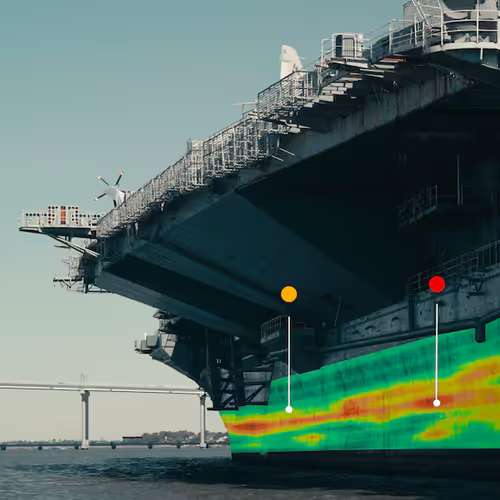
U.S. Navy, Gecko Robotics Surge AI Maintenance Contract
By Ceder, Simkins, Navy T.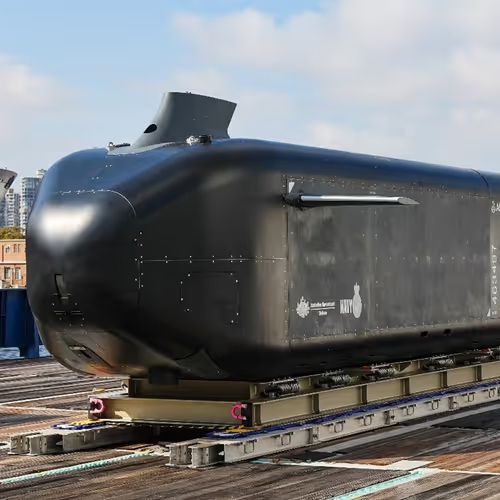
Ghost Shark XL-AUV Payload Bay Seen For First Time
By Thomas Newdick, The WarZone
Dakota Meyer Tapped As Barracks Task Force Senior Advisor
By C. Stassis, MC Times