
Vladimir of Taurus
What Putin thinks of Europe and the U.S.
Last updated 01:00 AM EDT • Read time: 4m
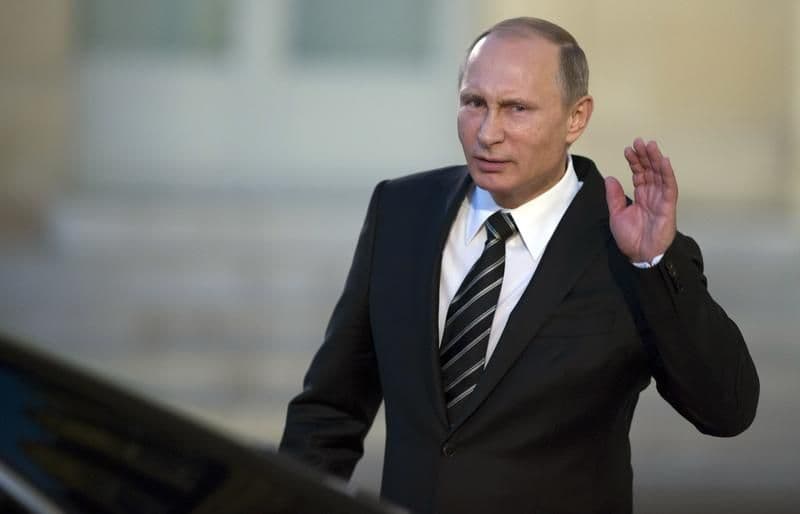
To speak of Russia's international isolation is an exaggeration, but Putin is in any case not concerned about the effect of his actions on Russia's standing in many countries: he has made plain his disdain for the EU and for Europe in general, famously describing the EU as a 'hamster'.
As for the US, Putin cares not a fig for its opinions. His recent UN address expressed his convictions trenchantly. The US belief that it has a right to support aspirations to democracy everywhere he finds particularly galling. As an authoritarian he identifies strongly with Saddam Hussein, Gaddafi and Assad. With his conspiratorial view of the world, he holds the US responsible for the collapse of the Soviet Union, which he views as a 'tragedy' and a 'catastrophe'. At this year's UN General Assembly speech (see video) he repeated his claim that the Maidan revolution in Kyiv was a CIA-orchestrated coup.
The US handling of Putin has sometimes been clumsy.
Washington seems repeatedly to have failed to treat him with the respect he expects as the ruler of Russia. Yet Obama's policy towards Russia cannot credibly be described as aggressive; rather, the contrary. When Obama's genuine attempt to 'reset' the relationship foundered on a Russian conviction that all concessions should be made by the US alone, and after he endured a tirade from Putin at their first meeting, he apparently decided to have as little to do with Putin as possible. Obama has since resisted strong pressure to supply the Ukrainians with defensive weapons, and in effect left Angela Merkel to deal with the Russian challenge to the security order in Europe.
But recent US behaviour does not explain Putin's attitudes. Rather, they are a reflection of his psyche, his experience overall and the ethos of the KGB, the organisation to which he devoted his career.
Australians, living in a bubble called the Anglosphere, are unaware of the toxicity of the treatment of the US in the Russian media, especially television, which is state-controlled and the main source of news and commentary for almost all Russians. A liberal Russian commentator recently noted the practice in some provincial cities of staging 'bash Obama days', in which citizens are encouraged to belabour cardboard cutouts of the US president. Racist jokes about Obama circulate in Russia. Most Russians would reject the charge of prejudice and point bitterly to what they see as stereotypes of Russians in the Anglophone media. It's true that much media commentary on Russia is poorly informed and superficial, but those media do not enact government directives (ask Tony Abbott or Kevin Rudd).
But if sharp diplomatic tensions do not concern Putin, sanctions imposed by the US, EU and others, including Canada and Australia, do. The Russian line is that sanctions have made matters worse by allowing Putin to sheet the blame for Russia's economic woes to its critics and by hurting only smaller Russian firms (because the Kremlin will always bail out the big ones, most of which it owns). That may be so — Russians commonly interpret the sanctions as further proof of an irrational hatred for them as a people. But some respected Russian economists have observed the sanctions are hurting and say Putin is determined to have them lifted as soon as possible.
Most importantly, the sanctions have stopped the flow of the advanced technology Russia needs to modernise its energy sector, which brings in 65% of export revenue and over half of all state income (the impact has been much magnified by the collapse in the price of oil and its effect on the gas price). The sanctions have also further lowered domestic and foreign confidence in the future of the economy, thereby deepening Russia's reliance on China as a source of capital, which worries some Russians. And China cannot supply the technologies Russia needs to tap its huge Arctic deposits of oil and gas.
This article originally appeared at the Lowy Institute Interpreter.
Trump's Disrupt First, Negotiate Second: Greenland in Focus
By Meda Parameswara Reddy • RealClearDefense
In Seeking Peace With Beijing, Taipei Is an Asset, Not a Burden
By Alexandru Filip • RealClearDefense
Strike First: Israel's Inevitable Doctrine for the Iranian Axis
By Lance Gordon • RealClearDefense
It’s Not President Trump but Thomas Friedman Who Should Be Ashamed
By Francis P. Sempa • RealClearDefense
Putin, Plague, and America’s Biodefense Gap
By Ryan Kane • RealClearDefense
U.S. and Japan Begin Naval Exercises Near Taiwan
By Mari Yamaguchi • Associated PressU.S. and Japan Begin Naval Exercises Near Taiwan
By Mari Yamaguchi, AP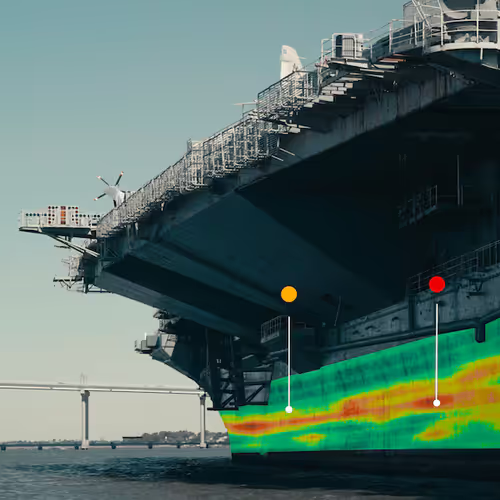
U.S. Navy, Gecko Robotics Surge AI Maintenance Contract
By Ceder, Simkins, Navy T.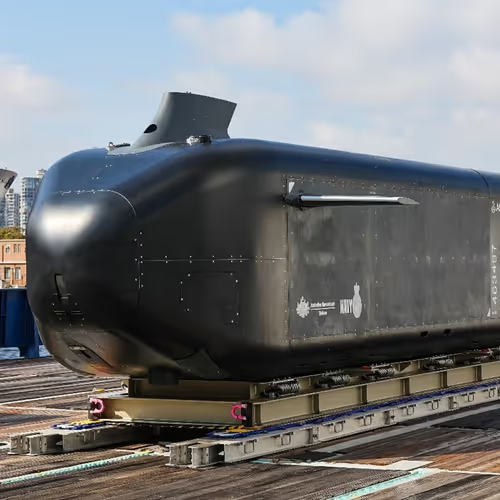
Ghost Shark XL-AUV Payload Bay Seen For First Time
By Thomas Newdick, The WarZone
Dakota Meyer Tapped As Barracks Task Force Senior Advisor
By C. Stassis, MC Times