
Why We Should Not Overlook Russian Arms Sales
Published March 21, 2026 • Read time: 5m
Join the Conversation
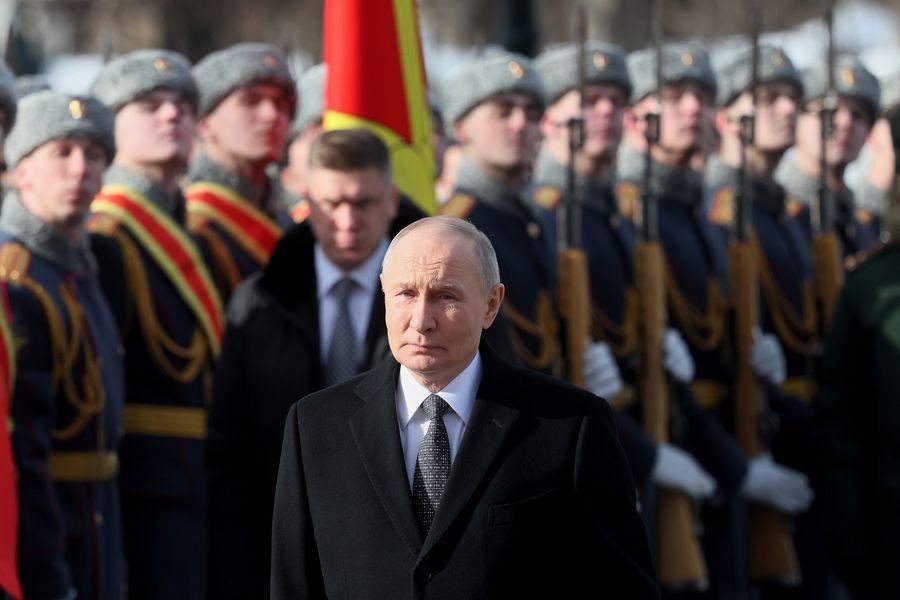
0Many observers are dismissing Russian power projection abroad. The U.S. operation against Venezuela, the war against Iran, and Russia’s silence during the 2025 Israeli and U.S. operations against Iran, its failure to support Bashear Assad against Syrian rebels in 2024, or Armenia against Azerbaijan in 2023 all seem to signify the retraction of Russian power and influence beyond its borders. That retreat or recession of Russian power clearly stems from the economic constraints imposed on Russia due to sanctions and its own structural impediments as well as the war against Ukraine that consumes resources and policy attention. Nevertheless, it would be premature to proclaim that these defeats point to a lasting diminution of Russian power and standing abroad.
One reason for making this claim is that Russia shows no sign of jettisoning key instruments of its power projection, e.g. arms sales. Today, as in the past, arms sales play a critical role in Russian foreign and defense policy. First, arms sales are a major enabler of Russian influence on foreign armies and/or governments. This was true during Soviet rule and is no less true today as many Middle Eastern and African developments show. Second, these sales, by virtue of the influence Russia obtains through them, facilitates the acquisition -- often long-term – of lasting military bases as has happened in Syria and could reoccur in Sudan. Thus, arms sales give Russia opportunities to project military power abroad not only in contested regional environments but also against Washington and NATO. The acquisition of long-term bases or rights to ports and airfields in the Middle East and Africa allow Russia to threaten NATO and American assets in Europe, the Mediterranean, Middle East, and the Indian Ocean. Arms sales to countries or to non-state actors like the Houthis, Hamas, Hezbollah, etc. astride these areas also allows Russia and/or its proxies to threaten key trade routes like the Suez Canal, Red Sea, and the Mediterranean if not others.
Russian Missiles Land in Poland As Europe Held Military Drills Nearby
The Summit as Mirror
Moscow Expresses Warnings on Kaliningrad Defense Against NATO
Strengthening Deterrence Against Russia’s Conventional Attack of Latvia, Lithuania, and Estonia
Third, arms sales, especially if they involve long-term contracts for sale, maintenance, servicing, and replenishment over time, provide the means for acquiring large amounts of foreign exchange and, still more importantly, for maintaining and expanding its defense industrial sector. Since Russia continues to promote and sell its weapons and is entering into co-production with them and is expanding its search for customers it is far too early to write Russia off. For example, Russia claims to have completed arms sales deals in 2025 totaling $15 Billion, mainly in Africa.
Indeed, due to growing global tensions and corresponding global demand it is likely that major Russian arms producers increased their revenues in 2024. Even if revenues from arms sales were halved since 2022 due to Western sanctions, pressure, and the lackluster performance of Russian weapons, Russia’s continued drive to sell weapons shows that it is not willing to renounce its power projection drive. Indeed, there is no sign that Russia’s arms sellers are slackening their efforts. To be sure the priority of supplying its forces in the field plus sanctions are major causes of the general retreat of Russian power abroad that manifests itself in a 64% decline in it share of global exports from 2021-2025. In fact, Russia's share of the global arms export market dropped from 21% in 2016–2020 to 6.8% in 2021–2025. Even so, during 2021–2025, Moscow supplied major weapons systems to only 30 states and one non-state actor. Nevertheless, Moscow earned $15 Billion from arms sales largely to. Africa where it still has numerous connections.
So, despite the ground it has lost and is losing Russia will continue promoting its weapons for Putin and presumably his entourage openly believe that this is a key element in fostering Russia’s competitiveness, if not influence, in global markets. E.g. it appears that an unpublicized program exists for exporting a variant of the S-400 air defense system, specifically the 48N6E2 export version, to India. Certainly India remains a major consumer of Russian weapons due to its long-standing path dependency on them going back seventy years. Even if India is diversifying its portfolio to encompass major Western producers like the U.S., UK, France, Israel, and Sweden, as it has been doing for at least twenty years, this reliance on Russian weapons is unlikely to go away.
Neither will Russia simply fold up its tent in the Global South and betray its erstwhile clients and partners as too many observers think. Vasily Nebenzia, Russia’s ambassador to the UN dismissed claims that there are Cuban officials who, like their opposite numbers in Venezuela, will betray its leadership to Washington and his government has warmed Washington about such a move even if Russia can only support Cuba on a political and diplomatic level. Likewise Russia’s provision of target intelligence to Iran shows that if necessary it will show its claws. And this may include provision of satellite and electronic intelligence.
Thus, Russia is certainly down but it is not out. A wounded bear on the battlefield may be even more dangerous and only a rash or reckless hunter would provoke him further for no good reason.
Stephen Blank is a senior fellow at Foreign Policy Research Institute (FPRI).

When Losing Control of AI Becomes a Weapon
By Yunus Emre Tumen • RealClearDefense
International Allied Reliability of States: Criteria and Evolution
By Sergey E. Ivashchenko • RealClearDefense
Your Military Paycheck Has an End Date
By Sean Ofeldt • RealClearDefense
Masters of Command
By Travis A. Karnes • RealClearDefense
A Sweet American Original
By Greg Maresca • RealClearDefense

Monty: Riding the Pendulum
By Zachery Thomas, DODReads
Sign of the Times: CCAs Dominate a Major Fighter Conference
By Bill Sweetman • The Strategist (ASPI)
Marines Want Naval Strike Missiles With Double The Range
By The WarZone
U.S. Navy Targets 79 New Cutter-Based FF(X) Frigates
By A. Servaes, Global Defense
The Hegseth Grenade: A Sea Change at Newport
By Robert C. Rubel, CIMSEC