
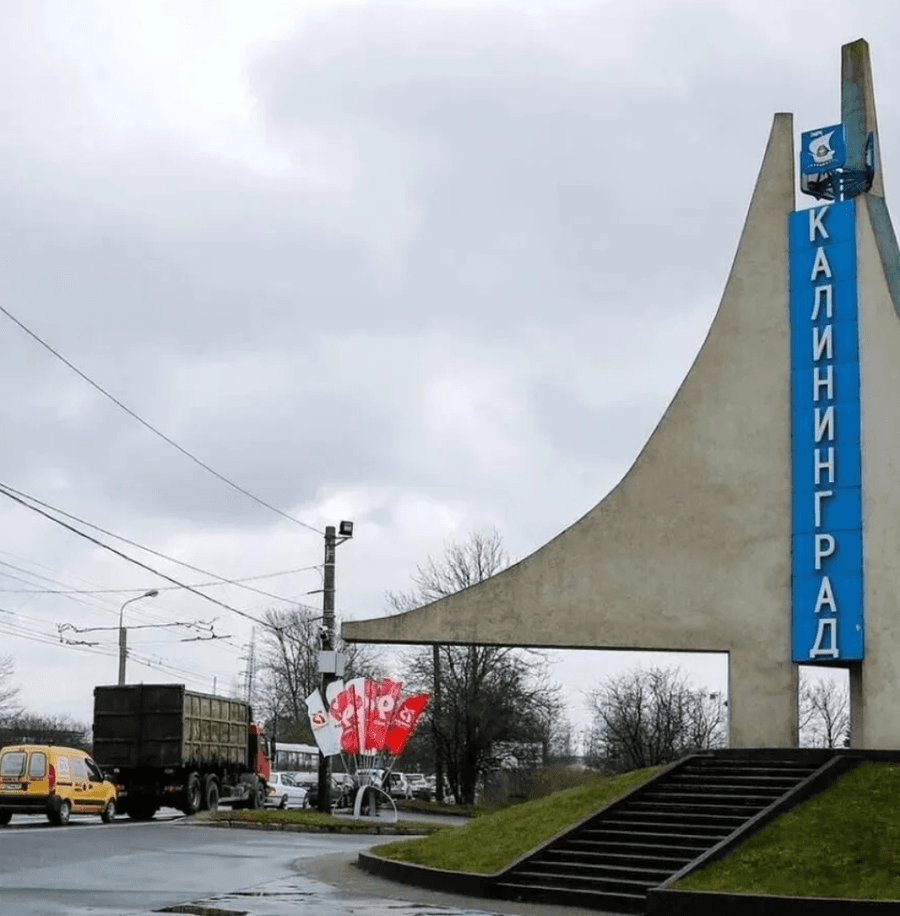
Moscow Expresses Warnings on Kaliningrad Defense Against NATO
Last updated 02:58 PM EST • Read time: 8m
Join the Conversation
0Moscow Expresses Warnings on Kaliningrad Defense Against NATO
Executive Summary:
- Russia’s senior political and diplomatic leadership has given explicit warnings about Moscow’s readiness to defend Kaliningrad by “all available means,” implicitly including nuclear weapons. These statements suggest a deliberate strategy of nuclear ambiguity.
- The Kremlin portrays these statements as defensive responses to alleged North Atlantic Treaty Organization (NATO) threats. Their frequency and intensity raise questions about Moscow’s strategic calculations concerning its westernmost territory.
- The Kremlin portrays Kaliningrad as an indispensable symbol of Russian sovereignty and military power, but its geographic isolation and conventional vulnerabilities complicate its defense.
The fall of 2026 has witnessed a series of explicit warnings from Russia’s senior political and diplomatic leadership about Moscow’s readiness to defend Kaliningrad by “all available means,” implicitly including nuclear weapons. In early September, Deputy Foreign Minister Alexander Grushko said Moscow had the military-technical capabilities to protect the exclave against a possible Western blockade (Interfax, September 1). On October 1, President Vladimir Putin reinforced this message at the Valdai Discussion Club, warning that an attack on Kaliningrad or another Russian region would raise the question of employing Russia’s entire military arsenal. While emphasizing that Moscow had not explicitly committed itself to a nuclear response, Putin reserved the right to determine which weapons would be used (Interfax, October 1). On October 16, Foreign Ministry Spokesperson Maria Zakharova warned of a “devastating response” to any North Atlantic Treaty Organization (NATO) “aggression” against Kaliningrad. She alleged that Poland had developed contingency plans for precision strikes against Russian Iskander missile systems, S-400 air defenses, command facilities, and other military infrastructure, potentially accompanied by a maritime blockade (Interfax, October 16). Taken together, these statements suggest a deliberate strategy of nuclear ambiguity. Moscow avoids committing itself to a specific nuclear response while emphasizing that a confrontation over Kaliningrad could escalate beyond conventional warfare.
The Kremlin portrays these statements as defensive responses to alleged NATO threats. Their frequency and intensity raise questions about Moscow’s strategic calculations concerning its westernmost territory. The central question is not merely whether Moscow is bluffing, but why Kaliningrad has once again become a focal point of Russian nuclear brinkmanship.
Russia’s sensitivity over Kaliningrad predates its post-2014 confrontation with the West. Following World War II, northern East Prussia, including Königsberg, became a Soviet territorial acquisition even though the 1945 Potsdam Conference did not provide for an unconditional, final transfer of the territory (Harry S. Truman Library & Museum, August 2, 1945). Soviet authorities subsequently consolidated control through demographic transformation, militarization, and the establishment of a new Soviet identity. The Soviet Union’s collapse in 1991 introduced new uncertainties. Kaliningrad became geographically separated from mainland Russia, while the rediscovery of its German heritage and occasional discussions of greater regional autonomy generated concerns in Russian political circles about its long-term orientation and potential “re-Germanization” (regermanizatsiya, регерманизация) (MGIMO, accessed November 1). Despite the absence of a significant separatist movement, proposals to bring Kaliningrad closer to the European Union generated political controversy (Kommersant, March 18, 2002). Kaliningrad consequently occupies a distinctive place in Russian strategic thinking. It is simultaneously a symbol of Soviet victory, a military outpost, and an isolated territory whose historical identity has periodically raised questions about its relationship with Moscow.
Russia’s nuclear rhetoric must also be considered against Kaliningrad’s structural military vulnerabilities. Despite its concentration of missile systems, air defenses, naval facilities, and other military infrastructure, the exclave lacks strategic depth. It depends on transportation routes that could be disrupted during a major conflict. Russia’s war against Ukraine has also exposed limitations in the survivability of sophisticated air defenses and other military assets against modern precision strikes and unmanned systems.
Finland’s accession to NATO in 2023 and Sweden’s in 2024 further changed the Baltic security environment, expanding the Alliance’s ability to coordinate maritime, air, and surveillance operations. Poland’s ongoing military modernization is also strengthening NATO’s conventional capabilities (Defence24.pl, October 1; Milmag.pl, October 30). Poland is emphasizing unmanned warfare and counter-drone systems (Defence24.pl, January 23). Russian-language military commentary has itself acknowledged, albeit often indirectly, the difficulties Moscow could encounter in reinforcing and supplying Kaliningrad during a prolonged conventional confrontation (Argumenty y fakty, January 28; Kommersant, June 16).
Russia’s threatening rhetoric concerning Kaliningrad fits a broader pattern of nuclear signaling employed since the annexation of Crimea in 2014. Moscow has repeatedly invoked its nuclear capabilities to discourage Western “intervention” and underscore the potentially catastrophic consequences of confrontation. In January 2023, former Russian President and current Deputy Chairman of Russia’s Security Council Dmitry Medvedev—in the wake of the eighth meeting of the Ukraine Defense Contact Group at Ramstein Air Base—argued that the defeat of a nuclear power in a conventional war could trigger nuclear conflict, adding that nuclear powers “had never lost major conflicts on which their fate depended” (Interfax, January 19, 2023).
Russia’s revised nuclear doctrine, approved in November 2024, broadened the circumstances under which nuclear employment could be contemplated, including conventional aggression creating a critical threat to Russian sovereignty or territorial integrity (Garant, November 19, 2024). The doctrine also identifies attempts to isolate parts of Russian territory or obstruct vital transportation routes among the military dangers addressed by nuclear deterrence. This does not mean that every blockade or limited confrontation would automatically trigger nuclear use. Kaliningrad therefore presents Moscow with a particularly acute dilemma. Russia could face considerable difficulties defending the territory conventionally against NATO, while also viewing its loss as politically and strategically unacceptable. Nuclear signaling may therefore compensate for vulnerabilities that conventional military capabilities cannot fully overcome.
Moscow may genuinely perceive Kaliningrad’s military position as vulnerable because of NATO enlargement, Poland’s modernization, and the difficulties of sustaining an isolated territory during a major confrontation. This explanation, however, contains an important contradiction. Both Russian officials and academic and policymaking circles frequently downplay the strategic consequences of Finland’s and Sweden’s accession to NATO (Interfax, May 17, 2022; Baltic Region, 2023).
Kaliningrad’s symbolic significance as a Soviet war trophy, combined with longstanding concerns about its isolation and distinctive identity, may reinforce Moscow’s sensitivity to perceived threats to its sovereignty. This interpretation, however, also has limitations. Since 1991, Western governments have generally approached Kaliningrad cautiously, seeking to expand cross-border cooperation without challenging Russian sovereignty. Initiatives such as the Euroregions and the Polish–Russian Local Border Traffic Agreement (Mały Ruch Graniczny) demonstrated that closer economic and social integration with Europe could coexist with Kaliningrad’s political status as part of Russia.
Moscow’s warnings may be intended not only to deter Western action but also to constrain NATO’s responses to future Russian coercive or hybrid operations in the Baltic region. By portraying a broad range of Western countermeasures as threats to Russian territorial integrity, the Kremlin could seek to increase its freedom of action while depicting NATO’s responses as dangerously escalatory. This possibility deserves particular attention given the documented increase in Russian-linked hybrid incidents and provocations across Europe, warnings by Baltic intelligence services about possible additional provocations, and repeated incidents involving undersea infrastructure in the Baltic Sea, some of which have been investigated as possible sabotage (Novayagazeta.eu, February 7, 2025; Current Time, February 25; Rus.err.ee, June 23). These developments do not establish that Moscow is preparing a specific operation against NATO, but they suggest that Russia’s nuclear signaling may have a coercive function extending beyond the immediate defense of Kaliningrad.
Kaliningrad presents Moscow with a strategic paradox. While the Kremlin portrays the exclave as an indispensable symbol of Russian sovereignty and military power, its geographic isolation and conventional vulnerabilities complicate its defense. Russia’s nuclear signaling seeks to offset these weaknesses through deliberate ambiguity about the conditions that would trigger nuclear use. By invoking its “entire arsenal” without specifying whether a blockade, limited military strike, or disruption of supply routes would cross the nuclear threshold, Moscow forces NATO to consider the possibility of nuclear escalation across multiple scenarios. More consequentially, such ambiguity may serve not merely to deter attacks on Kaliningrad but to discourage NATO responses to future Russian provocations elsewhere in the Baltic. By leaving the escalation threshold undefined, the Kremlin could exploit disagreements within NATO over acceptable risks, potentially encouraging hesitation or restraint. Kaliningrad’s strategic value may therefore lie less in Russia’s ability to defend it than in its potential to constrain NATO’s actions across the Baltic.
Sergey Sukhankin, Ph.D., is a Senior Fellow at The Jamestown Foundation, and an Advisor at Gulf State Analytics (Washington, D.C.). He received his PhD in Contemporary Political and Social History from the Autonomous University of Barcelona. His areas of interest include Kaliningrad and the Baltic Sea region, Russian information and cyber security, A2/AD and its interpretation in Russia, the Arctic region, and the development of Russian private military companies since the outbreak of the Syrian Civil War.
This article appeared originally at The Jamestown Foundation's Eurasia Daily Monitor.

Counterterrorism and the Growing Convergence in Homeland Security and Homeland Defense
By Austin Doctor • RealClearDefense
The Future of Space Power Depends on Integration
By Damian DiPippa • RealClearDefense
America Should Unleash Cyber Privateers
By Jacob Schelp • RealClearDefense
America Invented the Battery, but China Controls the Factory
By William Crane • RealClearDefense
A Defense Win for Americans and Israelis in Arkansas
By Bradley Bowman • RealClearDefense

F-16s Build on Iran Combat Lessons to Prepare for China Threat
By Rebecca Grant • Lexington Institute
Key Space Force Satellites Can’t Talk to Each Other
By T. Hitchens, Breaking Defense
Blue Angels Pilot Scott Laux Removed for Failing To Uphold Standards
By Johnson, PNJ
The Future of the Ground Reconnaissance Enterprise
By Joe Albano, The Connecting File
The Future of the ARG/MEU
By William Yale, Proceedings