
How Ukraine Can Strengthen Itself
Last updated 08:16 PM EST • Read time: 6m
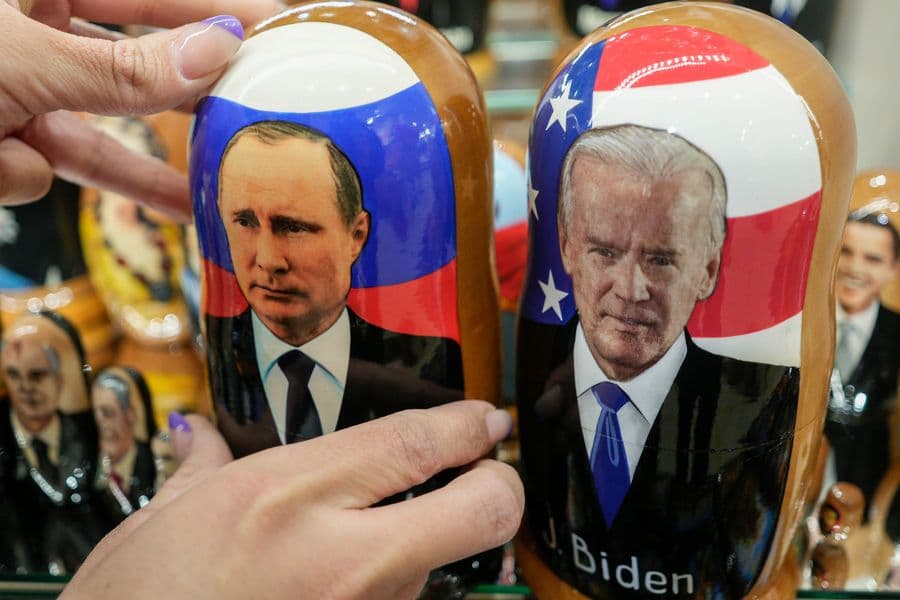
The December 7th Putin-Biden summit appears to be leading to the convocation of an international conference on European security to address Russia’s complaints. Thus this “summit” has evidently bought time for a diplomatic approach to the issues of Ukraine and European security more generally. Ukraine must utilize this interval or respite to strengthen itself not only militarily and diplomatically but also internally. Internal strengthening, the enhancement of Ukraine's overall resilience (to use a current vogue word) means driving the reform course still deeper and more strongly.
Specifically, this means further implementing the new legislation on deoligarchization that defines the category of an oligarch subjects them to registration, requires of many who associate with them, including state officials, that they submit a "declaration of contact, " bars them from providing services or finances to political organizations candidates, and parties, participation in large-scale government privatizations, and financing political rallies or demonstrations. To the degree that this legislation is implemented, it will go far to undermine the corrupting influence Ukraine’s oligarchs have on the media, the economy, the energy sector, and Ukraine’s politics. It will also undermine their ability to work with Moscow and its agents on their own behalf or Russia’s at the expense of the nation and the democratically-elected government.
The urgency of moving on the oligarchs and the pervasive corruption they have spawned over a generation is a necessity not just for domestic but for foreign relations purposes. Indeed, President Zelensky recognizes this and has made deoligarchization his number one priority. A key oligarch target is the country’s richest person, Rinat Akhmetov, who is an ally of Russia and controls a financial and industrial holding company, the energy sector conglomerate DTEK that controls 70% of Ukraine's power output, and a major media company that parrots Russian talking points about Ukraine and Zelensky. According to Zelensky’s security services, the Russians even sought to involve Akhmetov in a coup attempt last month.
But the political influence of oligarchs at home or over the media and their possible connection to Russia or pro-Russian elements is by no means the whole story. The corruption that inevitably is a byproduct of oligarchical domination of an economy or polity also exacts severe economic consequences on a country, depriving it of the capabilities it needs to gain friends and influence abroad or defend itself against subversion from within or without. For example, one ongoing sign of Ukraine's economic and political weakness issues directly from oligarchical domination of key economic sectors leading to restrictions on competition, namely foreign direct investment (FDI) in Ukraine.
As Elizabeth Braw has just observed, investing in Ukraine has for some time been a high-risk gamble, not least due to its restrictive and pro-oligarchical structures and laws. In 2020 FDI in Ukraine, due to those conditions and war, was negative, on the other hand, this year, the National Bank of Ukraine expects net FDI to reach $6.5 Billion, a clear improvement that owes something to this law. But if this trend continues, not only must there be peace. But domestic conditions for investment must also improve. Thus, for economic purposes, domestic reform must go hand in hand with diplomatic and military progress to deprive Russia of opportunities for continuing to wage its war of “cross-domain coercion” that puts pressure on Ukraine from all sides and exploits every instrument of power to that end.
A similar process is discernible in the energy sector. With proper corporate governance at SOEs and more investment, Ukraine could become not only self-sufficient but also a potential exporter of energy on a permanent basis. This would solve its own problems in that field and reduce if not eliminate the importance of people like Akhmetov and other sinister figures like Dmytro Firtash, who helped undermine Ukraine's economy, independence, and corrupted scores of political figures. Firtash even played a significant role in the scandals surrounding ex-president Trump’s ties to Russian and Ukrainian crooks, underscoring the international ramifications of oligarchical corruption in Ukraine.
Domestic reform, therefore, also strengthens Kyiv's hand abroad. Great Britain, for example, has welcomed the new deoligarchization law. The EU has never deviated from its support for Ukrainian reforms as the means of fostering. Ukraine’s integration with and ultimate membership in the EU. Indeed, the European Union and its associated organs had previously criticized the failure to pass, let alone implement such a law. Continuing implementation of this and other reforms enhances the willingness of the Eu and European governments, including those of non-members, to support Ukraine against Russia while also imparting much more and needed resilience to Ukraine’s politics, economics, media, and military. Finally, in as much as this is a war encompassing all the elements of power, military force, economics, information, and diplomacy, such self-strengthening is vitally necessary across the board to heighten overall societal and governmental, as well as military capability. If Ukraine knows how to use this new interval that has become available to it now wisely, then it must seize the day and proceed accordingly. Rarely do nations get second chances.
Stephen J. Blank, Ph.D., is Senior Fellow at FPRI’s Eurasia Program. He has published over 1500 articles and monographs on Soviet/Russian, U.S., Asian, and European military and foreign policies, testified frequently before Congress on Russia, China, and Central Asia, consulted for the Central Intelligence Agency, major think tanks and foundations, chaired major international conferences in the U.S. and in Florence; Prague; and London, and has been a commentator on foreign affairs in the media in the U.S. and abroad. He has also advised major corporations on investing in Russia and is a consultant for the Gerson Lehrmann Group. He has published or edited 15 books, most recently Russo-Chinese Energy Relations: Politics in Command (London: Global Markets Briefing, 2006). He has also published Natural Allies? Regional Security in Asia and Prospects for Indo-American Strategic Cooperation (Carlisle, PA: Strategic Studies Institute, U.S. Army War College, 2005). He is currently completing a book entitled Light From the East: Russia’s Quest for Great Power Status in Asia to be published in 2014 by Ashgate. Dr. Blank is also the author of The Sorcerer as Apprentice: Stalin’s Commissariat of Nationalities (Greenwood, 1994); and the co-editor of The Soviet Military and the Future (Greenwood, 1992).
Is It Déjà vu All Over Again: The 2012 Report on Global Zero
By Peter Huessy • RealClearDefense
As Private Investment Pours Into Defense, the Clock Is Ticking
By Elaine McCusker • RealClearDefense
The First Test of Peace Lies in Ukraine's Borderlands
By Dennis T. Cosgrove • RealClearDefense
The VFW’s Gambling Addiction Victimizes Veterans
By Jack Yoest • RealClearDefense
Superintelligence Exposes a Gap in the Law of Delegated Authority
By Sue Ghosh Stricklett • RealClearDefense

When Your Navy is too Small, the Bill Comes Due Bigly
By CDR Salamander
Quo Vadis MCU?
By Marine Corps Compass Points
When the Network Goes Dark, Who Controls the Battlefield?
By Jonathan K. Corrado • RealClearDefense
Air Force Should Buy 250 Blended-Wing Tankers, as 2027 Demo Looms
By A&SF Mag.
Long Deployments to Be Navy Standard For Next Couple Years
By Mongilio, USNI News