
Never Call Retreat: How Ukraine Can Force a High Mark to Victory
Last updated 06:43 AM EDT • Read time: 7m
A refined five-point operational framework to leverage technological asymmetries, disrupt Russian logistics, and break the attritional stalemate in 2026.
In the annals of warfare, few phrases capture unyielding resolve like “Never Call Retreat.” This imperative defines Ukraine’s path forward in 2026. The Russo-Ukrainian War has entered a brutal phase of attrition dominated by drones, precision strikes, electronic warfare (EW), and small-unit tactics. Large-scale armored maneuvers remain highly risky without overwhelming suppression. Yet the current battlefield landscape reveals exploitable asymmetries that, if seized with precision and audacity, can decisively shift the correlation of forces in Ukraine’s favor.
Current Battlefield Landscape: A Drone-Saturated Stalemate with Ukrainian Momentum
As of mid-2026, Russian forces continue limited advances in eastern Ukraine, particularly in Donetsk Oblast around Pokrovsk, Kostyantynivka, and toward Sloviansk-Kramatorsk. However, these gains occur at a sharply reduced pace compared to 2025. Ukrainian counteractions, including localized mechanized operations and relentless drone strikes, have produced net Russian losses in controlled territory in key sectors, with Ukrainian forces retaking significant ground through targeted actions.
The front has become a fragmented “kill zone,” where Russian infiltration tactics—small groups probing weak points—create temporary footholds but expose forces to Ukrainian drone swarms, loitering munitions, and precision fires. Both sides struggle to sustain massed armor or logistics within 10–20 kilometers of the line of contact due to pervasive FPV drones, reconnaissance UAVs, and advanced EW systems. Ukraine has gained a notable edge in tactical and intermediate-range strike capabilities, systematically disrupting Russian supply arteries in occupied territories (such as Tokmak-Melitopol routes) and deep into Russia, targeting oil refineries, command nodes, airfields, and rail lines.
Key Dynamics:
- Russian Strengths: Numerical manpower (despite losses exceeding one million total), massed artillery and glide bombs, and adaptations in EW and layered defenses. Their offensive has largely stalled, however, with daily casualties often exceeding 1,000.
- Ukrainian Strengths: Superior innovation in affordable mass-precision systems (especially drones), effective long-range strike campaigns imposing economic and logistical costs, and enhanced Western-enabled capabilities. Persistent challenges include manpower shortages, recruitment hurdles, and vulnerability to Russian missile and drone barrages on cities and energy infrastructure.
- Technological Parity with Asymmetry: Drones dominate observation and engagement, fragmenting the battlespace and elevating dispersed small-unit operations. Ukraine’s ability to conduct deep strikes and deny Russian advantages marks a new operational phase.
- Strategic Context: Russia pursues incremental gains in Donbas while targeting Ukrainian rear areas. Ukraine seeks to exhaust Russian will through sustained attrition, economic pressure, and battlefield reversals, while keeping avenues open for a favorable ceasefire.
Russian overextension in a grinding offensive, paired with Ukraine’s strike successes, creates clear windows for operational breakthroughs. What follows is a refined five-point battle plan—Operation Never Call Retreat.
Five-Point Detailed Battle Plan: Operation Never Call Retreat
Point 1: Strategic Air and Deep Strike Supremacy – “Bomb Them Back to the Stone Age”
Launch an unrelenting campaign of precision mass strikes against Russian logistics, command-and-control (C2), and energy nodes. Leverage Ukraine’s expanding arsenal of long-range drones (including systems like Hornet), ATACMS/HIMARS, and indigenous platforms to dismantle railheads, ammunition depots, fuel storage, and remaining Black Sea Fleet assets. Prioritize high-value targets such as the Kerch Bridge, Crimean supply corridors, and airbases supporting glide-bomb operations.
Tactically, deploy integrated swarms: decoy drones, EW-hardened strike packages, and AI-coordinated saturation attacks to overwhelm Russian defenses. Conduct nightly operations to degrade EW coverage and create deeper penetration corridors. Success metrics include barrels of fuel denied and reduced enemy sorties. This approach forces Russia onto the defensive by starving their sustainment for attritional warfare, with precise targeting of cascading failure points (e.g., key refinery complexes).
Point 2: Integrated Mechanized Counter-Maneuver with Drone Cover – “Hail Mary with Teeth”
Apply operational art through concentrated yet dispersed counteroffensives in vulnerable sectors (e.g., Zaporizhzhia or northern Donetsk flanks). Avoid visible massing of armor; instead, employ drone-enabled reconnaissance-strike complexes for “recon-pull” tactics. Small, mobile combined-arms teams—infantry, light armor, and artillery—advance under persistent UAV overwatch and electronic suppression.
Strategically, fix Russian forces in the east with feints while striking thinned logistics lines. Integrate autonomous systems for mine-clearing and breaching. The objective: encircle or destroy salients, liberate key terrain, and restore maneuver space. The principle of overwhelming force at the decisive point translates here to localized superiority via superior ISR and fires. Emphasize maneuver over frontal assaults to isolate and collapse Russian positions.
Point 3: Special Operations and Irregular Disruption – “On the Ground, In Their Rear”
Expand audacious behind-the-lines operations through special forces raids, partisan networks in occupied territories, and widespread sabotage. Target Russian C2 nodes, artillery spotters, and logistics convoys with highly trained small teams inserted via drone, infiltration, or covert means.
Incorporate a modernized clandestine framework akin to the 1980s US-backed Afghan mujahideen campaign—but updated for today’s battlefield. US Special Forces (e.g., Green Berets and Delta operators) and NATO counterparts would provide advanced training in irregular warfare, drone employment, and EW evasion at secure European facilities, mirroring the covert arming and instruction of Afghan fighters against Soviet forces. Intelligence agencies (CIA, MI6, and partners) would supply real-time satellite imagery, signals intelligence, and targeting data for precision raids, much like Stinger missile coordination in the 1980s but now augmented with AI-driven analytics, cyber tools for disrupting Russian communications, and secure Starlink-like networks.
Tactical precision includes FPV hunter-killer teams and electronic disruption to blind units piecemeal. Foster and equip local resistance to tie down occupiers, amplifying psychological impact through publicized successes. This creates persistent friction in the Russian rear, diverts frontline resources, and erodes enemy morale—leveraging emphasis on initiative and grit with deniable, high-tech support that avoids direct combat troop commitments.
Point 4: Manpower, Mobilization, and Force Multiplication – “Total Commitment”
Tackle Ukraine’s manpower challenges with aggressive yet transparent mobilization reforms and intensive training programs centered on drone operations, EW, and small-unit leadership. Integrate Western advisors for rapid skill transfer. A total-war mindset requires full resource commitment: scale drone production to thousands per month, incentivize veteran retention, and implement smart rotation policies to maintain combat effectiveness.
Build a robust “drone army” reserve for mass effects. Coordination ensures sustained flows of Western munitions and intelligence. Focus on sustainable exchange ratios through technology rather than sheer numbers, allowing Ukrainian forces to outlast Russia’s demographic and economic strains.
Point 5: Political-Military Cohesion and Endgame Pressure – “Victory Through Will”
Forge unbreakable home-front and international unity under the “Never Call Retreat” banner. Parallel military actions with diplomatic pressure: use battlefield gains to strengthen negotiating leverage while firmly rejecting frozen conflicts that reward aggression. High-tech vision and resolve demand continuous tactical iteration based on real-time data. Synchronization aligns all elements toward decisive outcomes.
Sequence operations for Russian operational exhaustion by late 2026 or early 2027, compelling withdrawals or broader collapse. Maintain moral authority and unified command; hesitation equals defeat. Victory accrues to those who impose their will relentlessly.
Ukraine possesses the innovation, resilience, and tactical edges necessary to achieve this high mark. Operation Never Call Retreat demands decentralized initiative at every level, paired with centralized strategic direction from Kyiv. The alternative is gradual erosion. Never call retreat. Strike hard, strike deep, and secure victory through superior strategy and unyielding spirit while holding the line.
Travis A. Karnes is a strategic analyst who was the FMR lead editor of the peace through strength institute.
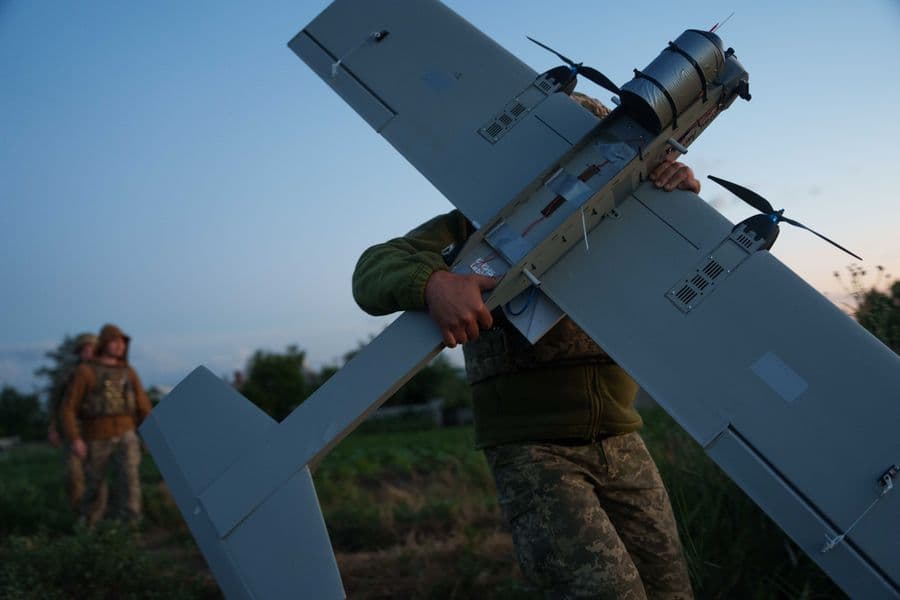
image: A Ukrainian serviceman of K-2 brigade of the Unmanned Systems Forces carries a midrange drone on takeoff position before flying towards Russian positions at the frontline in Donetsk region, Ukraine, Monday, June 22, 2026. (AP Photo/Evgeniy Maloletka)

In Pursuit of Nuclear Abolition
By Peter Huessy • RealClearDefense
Innovation Alone Won’t Prepare the U.S. for the Future Battlefield
By Joshua Segal • RealClearDefense
The sUAS Tactical Trifecta
By Bryan T. Woody • RealClearDefense
The Revolutionary War: When Strategic Options Share the Same Weakness
By Henry Yep • RealClearDefense
The Houthis Are Testing the Limits of Collective Defense
By Saima Afzal • RealClearDefense

Who Shoots Down the Drone Over the Shipyard?
By John Ferrari & Dillon Prochnicki • RealClearDefense
Northrop Grumman Breaks Out the Big Guns at AUSA
By Daniel Terrill, Defense News
Army Pursuing Diverse Array of New Anti-Air Interceptors
By Trevithick, The WarZoneWho Shoots Down the Drone Over the Shipyard?
By John Ferrari & Dillon Prochnicki, RCD
F-35C Lands for the First Time on a Ford-Class Aircraft Carrier
By The Aviationist