
Outmatched by Cost: The Missile Economy vs. Supply Chains
Last updated 05:31 AM EDT • Read time: 6m
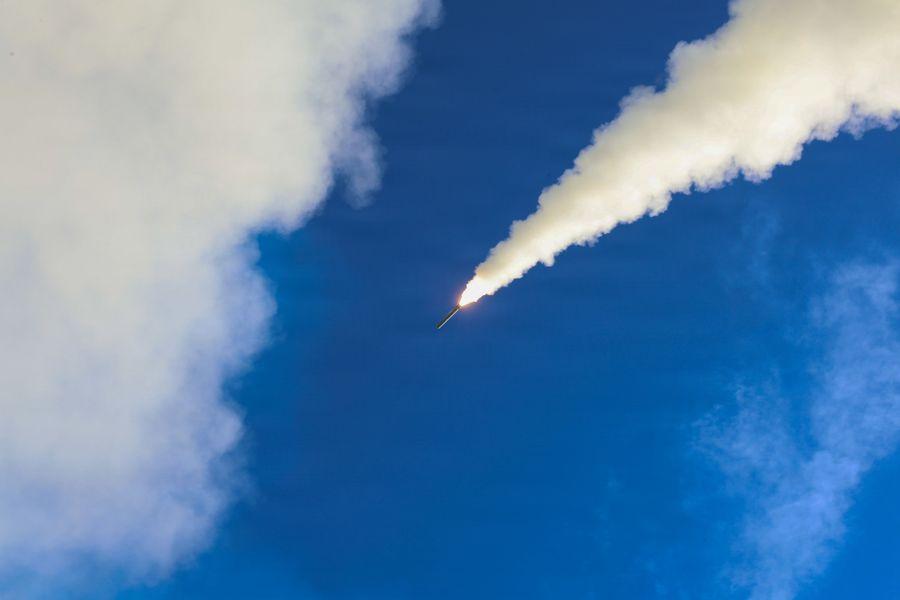
The rise of drone warfare has created a “missile economy” in which the United States is increasingly losing the cost battle. Advanced American defenses routinely defeat low-cost drones and missiles, but at a disproportionate price, creating an exchange ratio that favors the adversary over time. This is not a failure of technology, but of application: repeated tactical successes, when achieved through high-cost intercepts against cheap threats, compound into strategic vulnerability at scale. Correcting this imbalance requires more than better systems. It demands a fundamental shift in how defense is structured, where cost becomes a governing principle of engagement, production adapts to scalable and distributed models, and adversary supply chains are treated as operational targets. In this environment, logistics is no longer a supporting function. It is the decisive factor in whether military power can be sustained at all.
When Strength Becomes a Liability
Modern warfare is undergoing a structural shift that is no longer defined solely by firepower, maneuver, or technological sophistication, but increasingly by economics. The emergence of what can be described as a “missile economy” has altered the relationship between offensive and defensive systems, placing sustained pressure on traditional logistics models. Cheap drones and relatively low-cost ballistic platforms are forcing U.S. forces to respond with disproportionately expensive countermeasures, creating an imbalance that is reshaping how wars are fought and sustained. Under these conditions, logistics transcends its traditional role of supplying the battlefield. It is about cost endurance, where the ability to sustain expenditure over time may prove more decisive than battlefield success alone.
Modern U.S. air defense systems are highly effective, but they are often employed without sufficient cost discipline at the operational level. Engaging a low-cost drone with a high-cost interceptor may be tactically successful, but it represents a strategic failure when repeated at scale. What is required is a layered defensive architecture in which cost becomes a governing principle of engagement. Lower-tier threats must be met with lower-cost responses such as electronic warfare, signal disruption, or short-range kinetic systems, reserving high-end interceptors only for targets that justify their expense. This is not simply a matter of adding capability, but of changing how it is employed. It requires integrated command systems capable of making real-time decisions that account for both threat level and cost efficiency, effectively turning each engagement into a managed economic exchange rather than a reflexive defensive action.
High-cost intercepts quickly accumulate into strategic strain. In January 2025, the U.S. Navy reported firing more than 200 missiles to defend civilian shipping in the Red Sea from Houthi attacks since November 2023, at a cost of hundreds of millions of dollars. The engagements were tactically successful, but they illustrate a broader problem: when low-cost threats are consistently met with high-cost defenses, the resulting cost imbalance compounds over time, turning operational success into long-term economic vulnerability.
Attrition-Proof Arsenal
At the same time, the production side of the equation must be addressed. One of the U.S. adversaries’ key advantages lies in the scalability of low-cost systems, which can be produced rapidly using flexible and often decentralized supply chains. Traditional defense manufacturing, by contrast, is optimized for precision and complexity, not volume or speed. This mismatch creates a persistent replenishment gap that favors the attacker over time. Closing this gap requires a shift toward more distributed and modular production models for defensive capabilities, where systems can be produced, assembled, and repaired across a wider industrial base with fewer bottlenecks, such as can be seen in Ukraine.
Within this framework, there is a growing role for emerging technologies designed to operate on a more favorable cost curve. American companies such as AeroVironment, Epirus, and Hidden Level are developing portable, scalable, and comparatively low-cost solutions for countering drone threats. These include directed energy weapons (DEW), electronic warfare (EW) platforms, and gun-based kinetic systems, which achieve dramatically more favorable cost-exchange ratios than traditional interceptors. Whereas an advanced missile interceptor can cost $3–5 million per engagement against a $20,000 drone, DEW and gun-based systems can reduce cost-per-engagement to a fraction of a dollar for EW effects and under $2,000 for gun-based effectors. From a logistics perspective, the significance of these systems is not merely their capability, but their sustainability: they allow the United States to engage mass drone threats at scale without exhausting finite high-cost inventories. By integrating these technologies into broader defense networks, resources can be redistributed effectively, preserving high-end assets while lower-cost systems absorb the bulk of operational demand, thereby aligning engagement strategies with sustainable logistics and cost endurance principles.
When Dollars Do the Fighting
Even a more efficient defensive architecture cannot fully resolve the imbalance if the attacker retains unrestricted access to low-cost production inputs. Addressing the problem therefore requires extending beyond the battlefield and into the structure of global supply chains. Many of the components that enable mass-produced drones, including microelectronics, navigation systems, and communication modules, are sourced through commercial markets that are not inherently designed for military competition. By targeting these supply pathways through export controls, supply chain monitoring, and targeted disruption of key nodes, U.S. policymakers can impose friction on the attacker’s production model. The goal is not to eliminate supply, but to increase costs, create delays, and reduce reliability. Even small increases in production difficulty can have outsized effects on systems that rely on scale to be effective.
The Battlefield Is the Balance Sheet
Taken together, these adjustments mark a shift toward cost-managed warfare. Victory is no longer defined solely by firepower, but by the ability to sustain operations economically over time. Success depends on coordinating across operational, industrial, and economic domains, where logistics is not a support function but the mechanism that generates strategic advantage. Cost discipline in engagements, scalable production, and pressure on adversary supply chains are not peripheral, they are central to sustaining military power. In the missile economy, the battlefield is a contest of logistics systems: the side that can maintain pressure without incurring unsustainable costs will ultimately prevail. Modern warfare has become a test of financial endurance as much as of capability, where managing cost can be more decisive than just destroying targets.
Travis Veillon is a former Marine infantryman and a federal employee with the U.S. Army Corps of Engineers. He brings extensive education and experience in logistics and sustained operations in austere environments, giving him a practical understanding of sustainment challenges in modern operations. His writing focuses on operational realities, military adaptation, and strategic forecasting. His work has appeared across multiple defense and national security publications, including War on the Rocks, RealClearDefense, and Global Defense Insight.
The views expressed in this article are solely those of the author in a personal capacity and do not reflect the official policy, position, or endorsement of the U.S. Army Corps of Engineers, the Department of the Army, or the U.S. Government. All information referenced is drawn from publicly available sources, and no classified or sensitive internal materials were used in the preparation of this article.

A Defense Win for Americans and Israelis in Arkansas
By Bradley Bowman • RealClearDefense
A Path to Success Against Iran
By Michael Schwartz • RealClearDefense
The World Cup Is Over. The Drone Threat Isn’t.
By Mitzi Perdue • RealClearDefense
AI Should Speed Veterans’ Benefits, Not Decide Them
By Rob Schroder • RealClearDefense
Don’t Be Swayed by Tactical Nukes
By Benjamin Giltner • RealClearDefense
Big Surface Combatants are so Hot Right Now
By CDR Salamander
USS Stout Loses Power During Port Visit Due to ‘Engineering Casualty’
By USNI News
Air Force Lessons Learned From Operation Epic Fury
By Tabitha Reeves, National Defense
Marines Need Nine More Amphibious Warships To Carry Out Its Missions
By TWZ
AFRL, ACC Fly XQ-67A Drone To Test Autonomous Teaming
By Airforce Technology