
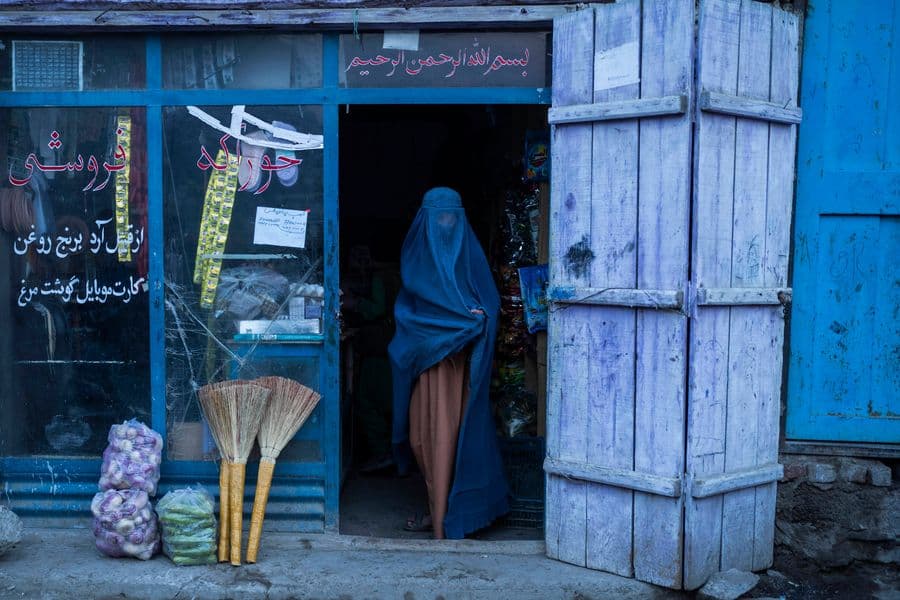
Send Us Back to Afghanistan
Last updated 08:21 AM EDT • Read time: 5m
When Joe Biden pulled out of Afghanistan in 2021, he claimed that Al-Qaida had been defeated. But al-Qaida is back with a vengeance in Afghanistan and has a stronger footprint there than ever before.
“Remember why we went to Afghanistan in the first place? Because we were attacked by Osama bin Laden and al Qaeda on September 11th, 2001, and they were based in Afghanistan,” Biden said in his Aug. 31, 2024 remarks on the pullout from Afghanistan. “We delivered justice to bin Laden on May 2nd, 2011 — over a decade ago. Al Qaeda was decimated.”
That was wishful thinking, and that official narrative was a lie. Al-Qaida is stronger than ever on the 23rd anniversary of the September 11 attacks. Around 800 al-Qaida commanders and over 50,000 Al-Qaida members, along with their families, operate in Afghanistan.
This is a reminder of President Biden’s failure: he delivered a defeat to U.S. military and Afghanistan from the very White House where he was supposed to fight for it. Decisions made in Washington in 2021 helped the Taliban to win and for Al-Qaida to come back ever stronger.
The flight of President Ashraf Ghani and the collapse of the Afghan government in Kabul on Aug. 15, 2021 that returned the Taliban to power in Afghanistan underscores this failure.
After the U.S. and its NATO allies invaded Afghanistan with the goal of eradicating al-Qaida in retaliation for the September 11 attacks, they overthrew the Taliban regime led by Mullah Mohammad Omar. However, the signing of the Doha Agreement on Feb. 29, 2020, resulted in an increasing Taliban insurgency that culminated in the Taliban’s return.
American policymakers look the other way about al-Qaida’s resurgence due to their foolish belief that the Taliban is a counterterrorism partner against al-Qaida and other terrorist organizations.
Despite the Taliban’s denial of al-Qaida’s presence in Afghanistan, Ayman al-Zawahiri, the leader of al-Qaida, was killed on July 31, 2022 in a U.S. drone strike in the diplomatic district of Kabul, just 900 meters from the Afghan Presidential Palace.
The CIA knows al-Qaida is active in Afghanistan; however, higher-ups in the White House cover for the Taliban to preserve the narrative that it’s a partner against terrorism and that al-Qaida is dead.
It is worth noting that Saif al-Adel, the leader of al-Qaida, currently residing in Iran, has instructed all fighters and supporters of the group to travel to Afghanistan for military training.
The second generation of al-Qaida married Afghan wives and are building his local connections. Al-Qaida members currently receive military training in Taliban-run training centres across various provinces of Afghanistan, according to recent intelligence reports released by the Afghanistan United Front Intelligence Committee.
Al-Qaida operates freely in Afghanistan and has established 8 training centers in various regions, particularly in Ghazni, Parwan, Laghman, and Uruzgan provinces, with a weapons depot in Panjshir province, according to a June 2024 report by the United Nations Monitoring Team on Sanctions. This is a direct violation of the 2020 Doha Agreement and underscores its failure.
The Afghanistan United Front’s sources have identified the following senior Taliban leaders as key facilitators of al-Qaida:
- Fathullah Mansoor: The son of Akhtar Mansoor, a Taliban leader who was killed in a U.S. drone strike. Fathullah Mansoor, the head of the Taliban regime's Civil Aviation Authority, is one of the Taliban's senior leaders responsible for coordinating the travel and accommodation of Al-Qaida leaders in Afghanistan. He also oversees the security of al-Qaida leaders in southern Afghanistan, particularly in Kandahar province.
- Sadr Ibrahim: The deputy interior minister of the Taliban regime, responsible for providing training camps, accommodations, weapons, vehicles, and documents for Al-Qaida fighters and their families. Sadr Ibrahim is one of the Taliban’s closest associates with Iran's Islamic Revolutionary Guard Corps (IRGC).
- Qari Fasihuddin: The Taliban’s Chief of Staff, responsible for training, equipping, and integrating Al-Qaeda-affiliated groups, especially Ansarullah of Tajikistan; the Islamic Movement of Uzbekistan (IMU); and the East Turkestan Islamic Movement (ETIM), which consists of Uyghur Muslims from China. These groups are focused on Central Asia and are linked to al-Qaida.
- Mullah Fazel: A former Guantanamo Bay detainee and currently the deputy defense minister of the Taliban. Under his direction, thousands of different types of weapons, vehicles, and resources have been provided to al-Qaida.
Given the close ties between the Taliban and the presence of al-Qaida's leadership in Afghanistan, it can be concluded that al-Qaida today has a fertile ground for planning, training, and executing attacks on U.S. interests and beyond. It is important to remember that the U.S. is once again overlooking the threat of terrorism, providing an opportunity for terrorist groups to plan and prepare their future operations with ease.
In 2023 the Taliban joined the nexus of resistance by Iran which aims to force U.S. troops and businesses out of the Middle East and Africa. Taliban, Al-Qaida and Iran are the new triangle of terror combining their efforts and resources to topple Arab regimes and wage a global war on the United States and its allies.
Looking to the future, there are three possibilities for the United States:
- Do nothing and let the triangle grow in strength and fight them when they attack.
- Start targeting their key personal and resource streams.
- Support Afghan allies to pick up arms and go after them deep into Afghanistan.
We in the Afghanistan United Front have the best leadership, combat leaders, young generation of Afghans, and tribal support across the country. Also, we have soldiers to fight. We know the Taliban; we know their weakness and furthermore we are motivated to fight them for they have invaded our country. In this new partnership we do not want U.S. boots with us on the ground; rather, we are asking for political and technical support which the U.S. can afford. The Taliban and Al-Qaida are your enemies—the most reliable friends the U.S. has in Afghanistan are its Afghan allies.
COL. Parwani is an officer in the Afghan National Army and a member of the Afghanistan United Front, which seeks to return Afghanistan to constitutional order so that Afghans can enjoy freedom, peace and prosperity.

The Services Do Not Need a Four-Star Autonomous Warfare Command
By Steven Wills • RealClearDefense
Honor Them While There Is Still Time
By Jeffrey Rosales • RealClearDefense
From Siberia to Fairford: How Operation Spider’s Web Has Changed the Rules of Airpower
By Frank A. Rose • RealClearDefense
Faster Simulations, Better Defense Decisions
By Rut Lineswala • RealClearDefense
Will HASC Have an Oversight Subcommittee in the Next Congress?
By Christopher J. Bright • RealClearDefense
Hegseth Barred Trans Troops. Military Boards Are Rejecting Those Orders.
By NYT
Closing the Sea: Lessons from Ancient Mediterranean Blockades
By DeCasien, CIMSECFrom Siberia to Fairford: How Operation Spider’s Web Has Changed the Rules of Airpower
By Frank A. Rose • RealClearDefenseFaster Simulations, Better Defense Decisions
By Rut Lineswala • RealClearDefense
Bombers Could Have a Major Air-to-Air Combat Role
By Joseph Trevithick, The WarZone