
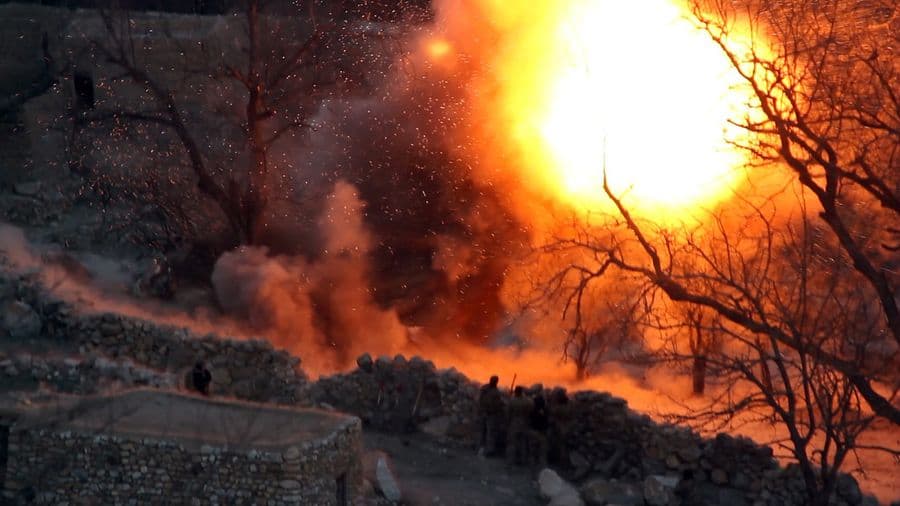
The Rise of ISKP in Afghanistan
Last updated 12:10 AM EDT • Read time: 3m
The Islamic State of Khurasan Province (ISKP) is recognized as a terrorist organization by numerous countries and international bodies, including the United States and the United Nations. Founded in late 2014 or early 2015 as a coalition of disaffected members from Afghan and Pakistani Taliban factions, ISKP established its foothold in eastern Afghanistan along the border with Pakistan. Initially led by Hafiz Sayed Orakzai, a former member of the Pakistani Taliban (TTP), ISKP swiftly garnered recognition as the first foreign wing of ISIS when Abubaker Al Baghdadi accepted Orakzai's pledge.
But leadership transitions have been frequent within ISKP.
Following Orakzai's death in a joint Afghan-U.S. operation in 2015, Abdul Hasib Logari took the helm until his own death in a night operation in Nangarhar province. Subsequent leaders such as Malawi Abu Sayed Bajawory and Mullah Abdullah Farooqi, alias Aslam Farooqi, met similar fates.
Notably, the leadership baton passed to Sana Ullah Ghafari, 32 years old, known as Doctor Shahab al-Muhajir, a Pashtun tribe member from Kabul with ties to the Haqqani network sleeper cells in Kabul. He is the first ISKP Afghan leader who is in direct contact with ISIS leadership. His last known location was in Badakhshan province, Afghanistan, and he has been traveling to eastern provinces of Afghanistan, including Kunar province, to meet with his leadership council.
Under Ghafari's leadership, ISKP has intensified its activities, orchestrating deadly attacks not only within Afghanistan but also in neighboring countries such as Pakistan, Iran and even as far away as Moscow. Recent attacks include the devastating Abbey Gate suicide bombing, claiming the lives of numerous Afghan civilians and U.S. soldiers on duty. With an estimated 7,000 fighters currently active in Afghanistan, ISKP poses a significant challenge to Afghanistan and neighboring countries, particularly in the North, East, and West, where its presence is prominent.
Despite the Taliban's assumption of power in Afghanistan since August 2021, ISKP has remained resolute in its opposition, engaging in fierce clashes and launching audacious assaults against both the Taliban and civilian targets. The recent attacks on the Taliban governor of Balkh province and in Kandahar province underscore ISKP's continued threat, not only within Afghanistan but potentially throughout the broader Central Asian region.
Considering ISKP's strategic positioning and demonstrated capabilities, concerns persist regarding its potential to escalate violence beyond Afghanistan's borders. The threat posed by ISKP underscores the challenges faced by regional actors and international stakeholders in effectively countering terrorism.
COL. Parwani is a council member of the Afghanistan United Front.
The Services Do Not Need a Four-Star Autonomous Warfare Command
By Steven Wills • RealClearDefense
Honor Them While There Is Still Time
By Jeffrey Rosales • RealClearDefense
From Siberia to Fairford: How Operation Spider’s Web Has Changed the Rules of Airpower
By Frank A. Rose • RealClearDefense
Faster Simulations, Better Defense Decisions
By Rut Lineswala • RealClearDefense
Will HASC Have an Oversight Subcommittee in the Next Congress?
By Christopher J. Bright • RealClearDefense
Hegseth Barred Trans Troops. Military Boards Are Rejecting Those Orders.
By NYT
Closing the Sea: Lessons from Ancient Mediterranean Blockades
By DeCasien, CIMSECFrom Siberia to Fairford: How Operation Spider’s Web Has Changed the Rules of Airpower
By Frank A. Rose • RealClearDefenseFaster Simulations, Better Defense Decisions
By Rut Lineswala • RealClearDefense
Bombers Could Have a Major Air-to-Air Combat Role
By Joseph Trevithick, The WarZone