
In Dispraise of Nuclear Folly
Last updated 06:47 AM EDT • Read time: 5m
As the world honored the 81st anniversary of the dropping of the atomic bomb on Hiroshima, Pentagon officials clamored for ways to make the use of nuclear weapons more likely in the renewed era of great-power competition.
In a private keynote speech on an anticipated review of America’s nuclear posture, Undersecretary of Defense Elbridge Colby insisted that the United States must have more nuclear options. “Rational nuclear options.” This desire to have more kinds of nuclear weapons comes amid increasing concerns with Russia’s and China’s growth in tactical nuclear weapons, that the United States has a deterrence gap and limited options to respond to a Russian or Chinese tactical nuclear detonation. In such a scenario, the United States would be forced to either use its strategic nuclear weapons or surrender. This worry is nothing new. National security experts during the Cold War looked to make a U.S. nuclear threats more credible to discourage the Soviet Union from attacking the United States and Western Europe.
America’s wide range and high quality of conventional military options, along with its current possession of several different types of tactical nuclear weapons make this concern unnecessary. But more importantly, the entire framing over the need to have tactical nuclear weapons is misplaced.
There’s the question of whether threatening to use these tactical nuclear weapons would is credible. Tactical nuclear weapons are less destructive when compared to strategic warheads. But they remain destructive. Most are more powerful than the atom bomb dropped on Hiroshima, which killed an estimated 140,000 people (this number leaves out those who suffered and died from severe burns, cancer, and other side-effects from the atomic bomb’s fires and radiation). Discussions over nuclear strategy often cast aside the effects of these weapons on people. But it’s a subtopic which should be included when creating nuclear strategy; not just for its moral implications, something that should go without saying, but also its influence on the credibility of using these weapons. It’s improbable that Americans would tolerate its government detonating a nuclear weapon with more destructive power than those in 1945 on another people, especially when doing so leaves to chance the other side retaliating with its own nuclear attack.
Even if these weapons were more credible compared to strategic nuclear weapons, it means that they are more likely to be used. This point is self-evident, but reflecting on this statement’s meaning shows that tactical nuclear weapons have a greater chance of being used. It’s a Catch-22 situation. To avoid the use of nuclear weapons by making America’s deterrent more credible, the United States is more likely to use nuclear weapons. To avoid dropping the bomb, the United States makes it more likely to drop the bomb.
Tactical nuclear weapons also make nuclear escalation more likely. These weapons can be launched or dropped from weapons platforms which normally carry non-nuclear capabilities. These dual-capable weapons make it difficult for America’s adversaries to discern whether the United States plans to use certain weapons platforms for a conventional or nuclear strike. Such a situation would incentivize an adversary to launch its own tactical nuclear weapon during a nuclear crisis to beat the United States to the punch.
The pushback from America’s security allies over the deployment of these tactical nuclear weapons also weakens their credibility. The deployment and use of U.S. tactical nuclear weapons make its allies the first targets in a nuclear war. It’s safe to assume that the people of Europe and East Asia don’t want their homes to be ground-zero in a nuclear crisis or war, and they’ll fight against any nuclear posture that does so. During the Reagan years, for instance, Europeans, especially West Germans, upon realizing that the deployment of Pershing II missiles in NATO Europe meant that they would be the first targets in a U.S.-Soviet nuclear war, protested their deployment. If the purpose of deploying tactical nuclear weapons is to protect allies, but their use would destroy these allies, then the deployment of these weapons makes no sense. These weapons not only fail to protect America’s allies; they make their destruction more likely.
None of this is to argue for U.S. policymakers to toss out all of America’s tactical nuclear weapons tomorrow. Having some of these weapons for limited and specified circumstances, maybe to use as a warning shot as an off-ramp in the escalation ladder, is better than launching an all-out nuclear attack. Adding more tactical nuclear weapons to America’s arsenal does little to improve America’s deterrent.
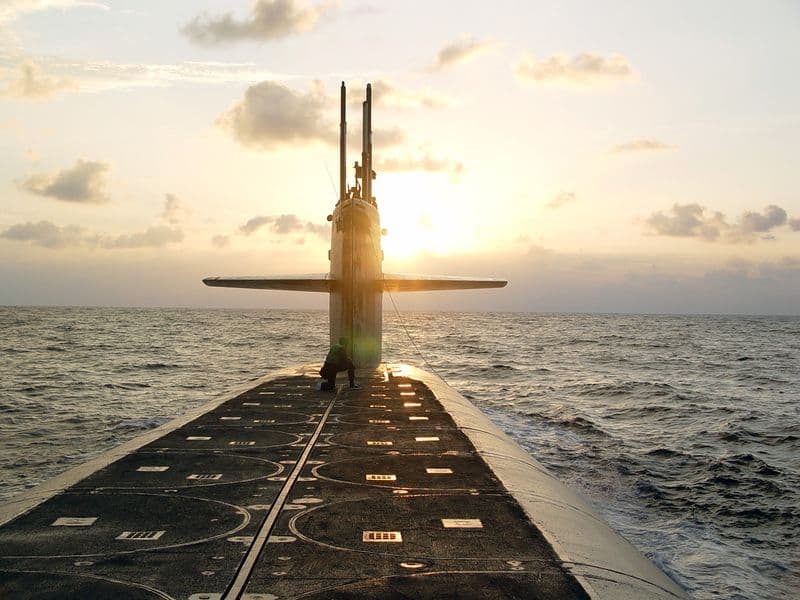
To make nuclear deterrence credible, its nuclear capabilities must be safe from a surprise attack. U.S. nuclear-capable submarines provide the best guarantee of this survivability. Anyone who even considers launching a surprise attack against the United States would be dissuaded from the fact that they would be unsure of where America’s nuclear-armed submarines are located. This guarantees the United States the chance to retaliate, and the other side knows it.
More is not always better. This is truer when it comes to military strategy. More nuclear options don’t strengthen America’s national security; they just make nuclear war more likely and put millions of lives at risk.
Benjamin Giltner is a policy analyst for defense and foreign policy at the Cato Institute, where he works on issues related to U.S. military strategy and foreign policy, great-power competition, nuclear weapons, and deterrence.

Iranian Cyber Operations
By Michael Groen • RealClearDefense
Reflecting on an Epic Horse Campaign in the Mountains of Afghanistan
By Brian Glyn Williams • RealClearDefense
The Godfather of American Foreign Policy Realism Speaks to Today’s World
By Francis P. Sempa • RealClearDefense
In Pursuit of Nuclear Abolition
By Peter Huessy • RealClearDefense
Innovation Alone Won’t Prepare the U.S. for the Future Battlefield
By Joshua Segal • RealClearDefense

Navy Civilianizes Six Former Flag Billets, Reduces Six to Captains
By Mongilio, USNI N.
Raytheon's $8B Contract for Strategic Comms Terminal Modernization
By M+A El
America’s Maritime Moment Will Not Wait
By CDR Salamander
Armor Up?
By Marine Corps Compass Points
Who Shoots Down the Drone Over the Shipyard?
By John Ferrari & Dillon Prochnicki • RealClearDefense