
Of Torches and Pitchforks
Last updated 07:05 AM EDT • Read time: 4m
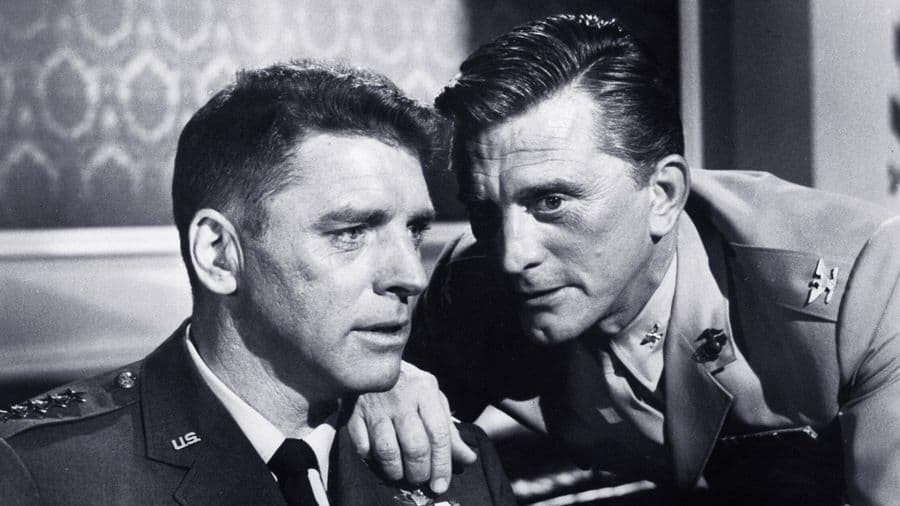
Photo: From the film "Seven Days in May."
More than 60 years ago – 1962, I think it was – I read a book with a profound message that burned itself into the recesses of my mind. Not that I understood it at the time. The only reason I read it was because it was there in an idle moment during vacation. I was a Fresno State Aggie, majoring in cattle, horses and rodeo, totally incognizant of the Cold War and Communism’s malignant march across the world.
Events that gave birth to the American Tea Party movement rekindled the dormant memory of that book, Seven Days in May. So I ordered the movie, which was made in 1964. They made really good movies in those days. The story’s plot involved a U.S. president pushing a policy of appeasement in the years immediately after WWII and the Korean War, back when the Red Menace was devouring nations, school children hid under desks in atom bomb drills, and families built fallout shelters in their back yards. Built entire houses underground even. Fear hung in the air like smog. In Seven Days in May, a group of patriotic military officers, decorated war heroes all, led by the Chairman of the Joint Chiefs, plots a coup to save the country. The Chairman's aide-de-camp, ardently loyal to his general and equally bound by his oath to the Constitution, figures out what's afoot and is torn between his duties. Spoiler alert: In the end, the Constitution wins.
We fought a bloody revolution against the British that America might become a free nation under just laws. The Founders, inspired by God and drawing heavily on the Bible, carefully constructed a Constitution that would ensure there would never again be need for armed revolution in America. That is, so long as the Constitution was never violated; to guard against usurpation of that sacred document, the Second Amendment guarantees the rights enshrined therein. Tyranny was never to be tolerated in the United States of America, resisted by an armed people if necessary.
The Founders built into the Constitution not only failsafes, but tripwires. When one of the three branches of government overreaches, the Constitution prescribes corrective measures. But the ultimate guardian of the Constitution is the vigilant citizen, We The People. Those safeguards built into our trifurcated system of government are useless if a supine citizenry acquiesces.
Abraham Lincoln, in his first inaugural address, stated that “This country, with its institutions, belongs to the people who inhabit it. Whenever they shall grow weary of the existing Government, they can exercise their constitutional right of amending it or their revolutionary right to dismember or overthrow it.” That was 38 days before Ft. Sumter. He must have reconsideration his words.
Politicians should have nightmares about torches and pitchforks advancing on Washington. As Thomas Jefferson said, “When the government fears the people, there is liberty." The spontaneous rising of the Tea Party movement signaled the reawakening of the American people, serving notice that our Constitution, bought and paid for by untold sacrifice in blood and treasure over two and a half centuries, would still prevail. That was then, this is now.
Seven Days in May is rearing up again. Never has the U.S. Constitution been in greater peril than it is today. Pray it will win again, but it will only if courageous men and women do the right thing.
Karen McKay is a retired U.S. Army lieutenant colonel. She is a Foreign Area Operations Officer (Middle East/SW Asia), and Airborne, Civil Affairs, and Psyops qualified. Her PhD dissertation at Hebrew University in Jerusalem was on the failure of Allied air forces to bomb Auschwitz and the rail lines transporting Jews to death camps. She was the Executive Director of the Committee for Free Afghanistan, and president of Americans for Freedom, an NGO supporting the Contras, especially on the Atlantic coast of Nicaragua.

In Pursuit of Nuclear Abolition
By Peter Huessy • RealClearDefense
Innovation Alone Won’t Prepare the U.S. for the Future Battlefield
By Joshua Segal • RealClearDefense
The sUAS Tactical Trifecta
By Bryan T. Woody • RealClearDefense
The Revolutionary War: When Strategic Options Share the Same Weakness
By Henry Yep • RealClearDefense
The Houthis Are Testing the Limits of Collective Defense
By Saima Afzal • RealClearDefense

Who Shoots Down the Drone Over the Shipyard?
By John Ferrari & Dillon Prochnicki • RealClearDefense
Northrop Grumman Breaks Out the Big Guns at AUSA
By Daniel Terrill, Defense News
Army Pursuing Diverse Array of New Anti-Air Interceptors
By Trevithick, The WarZoneWho Shoots Down the Drone Over the Shipyard?
By John Ferrari & Dillon Prochnicki, RCD
F-35C Lands for the First Time on a Ford-Class Aircraft Carrier
By The Aviationist