
The Elite's Focus on the Debt Made Them Miss the Other US Crisis
Last updated 01:45 PM EDT • Read time: 5m
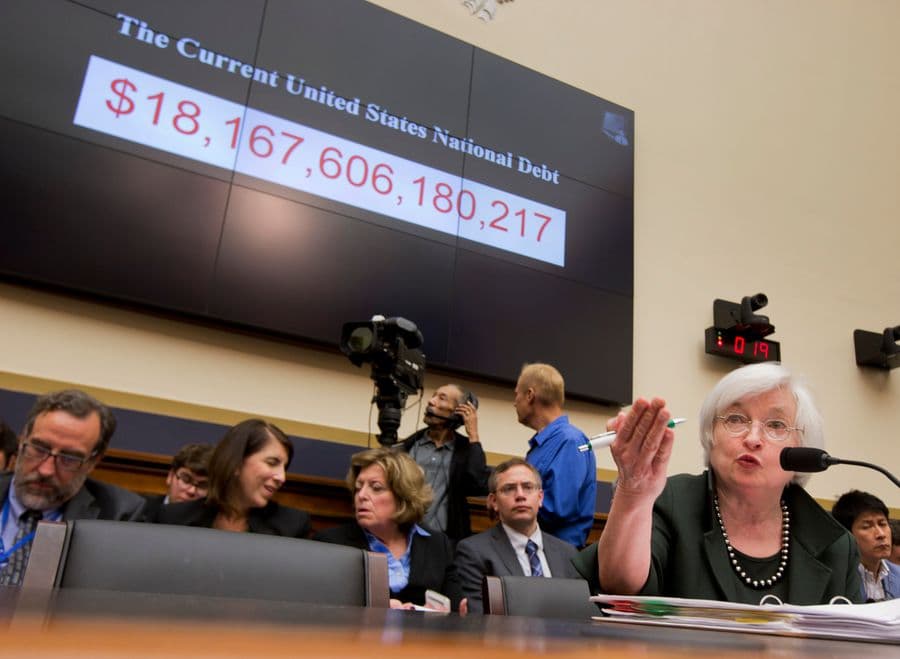
The elite constantly harp about the threat of a civil war. They claim that disinformation and political violence will create this war. They use this sensationalism for their political agenda. These politicians and writers are correct that America is deeply divided, but primarily due to anger from people who the elite have let down. Prior to President Donald Trump’s candidacy, the hot topic in DC was the national debt. It was the new red menace, that the two sides needed to use a truce to tackle. The elite’s sole focus on the threat of the national debt created the political environment that the elite now complain about.
The national debt crisis came about primarily in the twentieth century. Politicians created this crisis through influxes in spending on entitlements and defense, with no plan to pay for them. The purveyors of these problems often spanned multiple family members such as the Bushes, the Clintons, the Gores, the Kennedys, the Bayhs, the Dodds, and the Doles. Some of this spending was necessary, the defense spending brought peace, and America benefits from having entitlements.
But it seemingly never occurred to these politicians to pay for these programs. Two key moments of lucidity came in the past three decades. First when political forces in the aftermath of Ross Perot’s candidacy made both parties focus on the debt, President Bill Clinton worked with congressional Republicans to balance the budget. Even with this accomplishment, the debt was far from being paid off.
Then in the beginning of President Barack Obama’s presidency, conservatives sounded the alarm over debt. Some argue this was just a partisan response to derail Obama, others believe that conservatives got fed up with the Bush administration’s fiscal policy. Whatever the motivation, this focus changed the conversation. It fueled the tea party, and think tanks from all political perspectives took the debt crisis seriously.
But this is where trouble started. Many in think tanks started calling for straightforward cuts to entitlements, that would impact people near retirement. This response misunderstood the issue. Most of the entitlements in America should have been set up differently, with a plan to pay for them. But with these entitlements’ existence, DC policy figures were wrong to consider people selfish for relying on them. Especially as many Americans were struggling, even years after the 2009 recession. It is one thing to cut a six-figure pension for a public worker, but another to suggest people who have planned to rely on social security and Medicare need to suddenly readjust.
This framing eliminated any real discussion of hoe to help people struggling. In the lead up to the 2012 elections, the DC think tank choice for President, Mitch Daniels, called for a truce on social issues and won praise for a speech where he portrayed the debt as a red menace. That cycle, the media lambasted and dismissed social conservative candidates. In the 2012 general election, Romney offered few specifics on what he would do to help the economy, beyond lowering taxes. Obama’s campaign plan was to defend the Affordable Care Act, and demonize Romney. While the ACA did help people, its implementation harmed many that it was supposed to help, yet Obama did not seek any real fixes.
The epitome of the 2012 campaign’s issue was Romney’s infamous 47 percent comment, and the right’s defense of it. Many in the “47 percent” were in the GOP’s base.
After the 2012 election, many Republicans attacked social conservative initiatives that local politicians tried to implement. The DC elite continued to focus on the debt. It was clear many in DC did not care about the social or economic concerns of struggling Americans. 2016 was supposed to be the year that Republicans elected a candidate who would do everything the GOP claimed Romney would.
But then came Trump. While Trump did not abandon conservative orthodoxy, he pledged to protect entitlements and entertained expanding them. Trump also did not run away from social issues like taking a tough stance on immigration. The elite on both sides were perplexed by Trump’s staying power, and of course more so when he won Michigan and Pennsylvania for Republicans for the first time in decades.
This piece is not the first to mention how the elite was blind to Trump, but post Trump-presidency, the elite have wracked their minds about how America is so divided. They have found scapegoats, such as Trump and disinformation. The elite had the catalyst for division in front of them the whole time, but they ignored it.
Trump’s supporters are among the most hurt by inflation. The policies that created the debt crisis, contributed to inflation. Additionally, if the US does not reform entitlements, at some point, entitlements will have to get drastically cut, which would be worse for struggling populations. These realities would suggest the elite was right to focus on the debt. This would be true if they got something done, and took an approach that noted the concerns of everyone. Instead, these “experts” spent decades creating the debt crisis, and then their only solutions were to stick it to those with the most to lose. Ultimately, these elites failed to implement any solution, all they did was talk. Now, the debt crisis is even worse. Today, establishment figures write about how the populations that they constantly belittle are the biggest threat to America. These elitists need to look in a mirror.
Todd Carney is an international lawyer and a frequent writer on international issues. He earned his juris doctorate from Harvard Law School.

Iranian Cyber Operations
By Michael Groen • RealClearDefense
Reflecting on an Epic Horse Campaign in the Mountains of Afghanistan
By Brian Glyn Williams • RealClearDefense
The Godfather of American Foreign Policy Realism Speaks to Today’s World
By Francis P. Sempa • RealClearDefense
In Pursuit of Nuclear Abolition
By Peter Huessy • RealClearDefense
Innovation Alone Won’t Prepare the U.S. for the Future Battlefield
By Joshua Segal • RealClearDefense

26th MEU – U.S. Needs Crisis Response MAGTF
By Marine Corps Compass Points
The Influence of History on a Sea Power
By CDR Salamander
Navy Civilianizes Six Former Flag Billets, Reduces Six to Captains
By Mongilio, USNI N.
Raytheon's $8B Contract for Strategic Comms Terminal Modernization
By M+A El
America’s Maritime Moment Will Not Wait
By CDR Salamander