
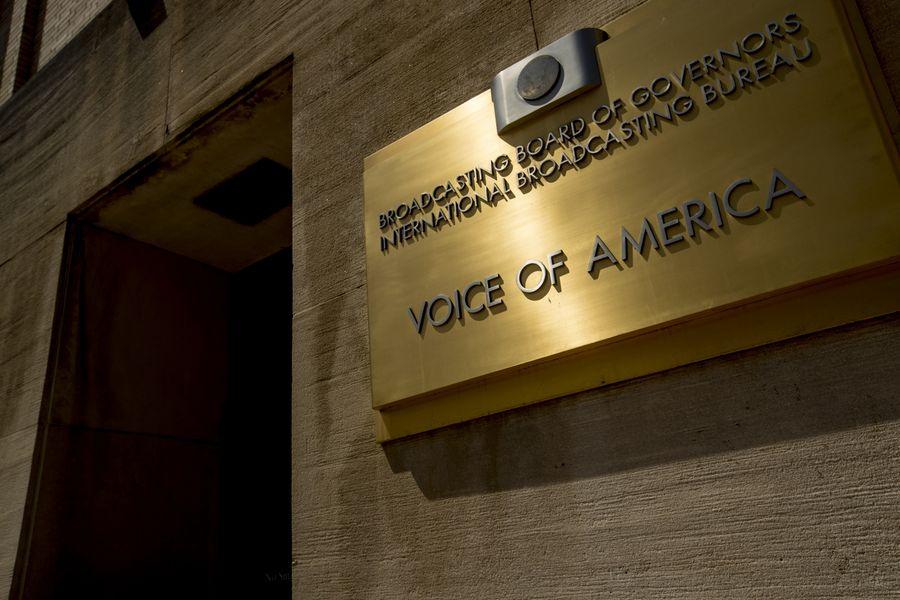
Make America's Story Great Again
Published Jan. 29, 2025 • Read time: 5m
President Trump has nominated L. Brent Bozell III, founder of the Media Research Center, to serve as CEO of the US Agency for Global Media, an umbrella organization for government-sponsored media outlets such as the Voice of America, Radio Free Europe/Radio Liberty, the Middle East Broadcasting Network, and others. The president has also chosen broadcast journalist Kari Lake to head VOA. This is a motivated leadership team that will be able to tell America’s story both honestly and constructively.
Strong leadership is urgently needed. USAGM has been a troubled agency for many years, plagued with low morale, questionable security practices, budget irregularities, diminished influence and other problems. Some of these issues are being addressed, but the new team will still have a monumental task ahead of them.
Perhaps the most critical need at USAGM and its agencies is to return to first principles— to reaffirm the purpose of this media enterprise as an element of American national power, promoting freedom abroad and countering the anti-American narratives being spread by our adversaries.
During the Cold War this mission was never in question. Information agencies were effective tools of public diplomacy, telling America’s story and countering foreign propaganda that painted a universally dire picture of life in the Free World. They also penetrated the Iron Curtain with news and information, the pro-freedom, pro-human rights narratives that totalitarian regimes suppressed and censored. It was a successful approach that had bipartisan backing.
Like other presidents before him, Ronald Reagan understood the immense value of public diplomacy as a tool in Cold War competition. Reagan’s US Information Agency Director Charles Wick expanded his agency’s efforts, doubled its budget, and pioneered innovative ways to reach larger foreign audiences by using the latest technology. These information services played a key role in defeating the Soviet Union.
Ironically this style of vigorous, focused public diplomacy became a victim of its success. During the “end of history” euphoria of the early 1990s USIA was disbanded, and agencies such as VOA, RFE/RL, Radio Free Asia, TV/Radio Marti and others were grouped in the new International Broadcasting Bureau, which later became USAGM.
In addition to this restructuring, a baffling mission culture developed which downplayed or denied the idea that these agencies existed to promote American national interests. One board member made the point explicitly at a 2002 VOA town hall meeting, stating “we’ve got to start thinking about ourselves separate from public diplomacy.” But if that’s the case, why spend taxpayer money on them at all?
This mission confusion was institutionalized with a “firewall” policy which was supposed to insulate the agencies from undue political influence and ensure editorial independence. The firewall became an object of worship at these agencies since it gave them carte blanche to do whatever they wanted free of oversight, including projecting messages damaging to America’s reputation, and supporting malign regimes abroad. One recent example was VOA refusing to identify Hamas as a terrorist organization, a policy they doubled down on in last-minute Biden-era guidance. When criticized, these agencies respond that they are journalists exercising their rights under the First Amendment and will not bow to political pressure – while being subsidized by the very government they criticize. As you might expect, they became nests of anti-Trump “resistance” in the first term.
Reform is also critical because it is now clear how misplaced the early 1990s optimism was. Contra Francis Fukuyama, history hasn’t ended, it has accelerated. Russia, China, Iran and other authoritarian states have invested heavily in both offensive disinformation platforms and defensive measures to keep their subject populations in the dark. At a time when more information tools are available than at any time in human history, USAGM is saddled with outdated methods and mission confusion. The bad guys are winning and our team isn’t even on the field.
The tools that helped win the Cold War are more necessary than ever for the battle in the information domain. The new Trump team has an opportunity to reset America's public diplomacy agencies to fit their original strategic intention, namely to present an accurate and positive view of our country, and to help penetrate information barriers in authoritarian countries to give people there news about their own countries that their governments have censored, stifled and erased.
Mr. Bozell should immediately inform both career employees and political appointees that USAGM’s mission is to tell America’s story, advancing U.S. foreign policy by informing, engaging, and connecting people around the world in support of freedom and democracy. If the staff at these agencies want to continue to promote anti-American narratives, be apologists for malign regimes, stoke resistance to Trump policies and invent sensationalized storylines, they should resign now and seek employment in the private sector media. If anyone will hire them.
James S. Robbins is Dean of Academic at the Institute of World Politics and served on the Trump 47 Transition Team for the US Agency for Global Media.

The Army’s AI Cyber Defenders Need a Proven Stand-Down Order
By Gleb Tsipursky • RealClearDefense
After the Silence
By Chase Skylar DeMayo • RealClearDefense
Defense Chip Procurement Needs a Recovery Test
By Percy Yixuanchen Yu • RealClearDefense
FORTRESS America Must Measure Missions, Not Megawatts
By Burak Oktenli • RealClearDefense
After the Midterms, the Right Strategy Against Iran
By Lance Gordon • RealClearDefense
After the Silence
By Chase Skylar DeMayo • RealClearDefense
Underwater Arms Race Puts U.S. Naval Supremacy at Risk
By Tom O'Connor, Newsweek
New Facilities To Pump Out Upgraded F/A-18E/F Super Hornets
By Trevithick, WarZone
U.S. Navy Expands Tomahawk Warhead Production
By Naval News Staff, Naval News
SSN(X) Attack Boat Will be a Swift, Lethal Mothership for Undersea Drones
By USNI N.