
From Force Design To Force Drift: The Challenge Facing the 40th Commandant
Last updated 03:13 AM EDT • Read time: 5m
When the 40th Commandant of the Marine Corps takes office in 2027, he will inherit a Marine Corps struggling to define its role in the Nation’s defense and a force that is neither adequately manned nor equipped to meet the demands of diverse combatant commanders and their increasingly complex theaters. For eight years, the Nation's Corps of Marines has wrestled with a fundamental question: is the Corps a regional force-in-waiting, a global force-in-readiness, or some combination of the two? The uncomfortable reality is that the capabilities needed to implement any of these competing visions do not exist today, either in the operating forces or in the depth of support necessary to respond quickly and effectively to combat and contingencies in “every clime and place.”
Capabilities essential to fighting and winning today, as well as those required for tomorrow’s conflicts, have been largely divested or allowed to languish on briefing slides rather than developed into credible operational capabilities. This is not speculation or hindsight. It is the observable consequence of decisions made over the past eight years.
The principal cause for this drift is the failure to execute a coherent, integrated, and disciplined combat development process. The Marine Corps largely possessed such a process when the 38th Commandant reported aboard but essentially set it aside for an approach best described as “ad hoc.” The process was fragmented and stovepiped between multiple commands. No single commander was in charge, unless one assumes it was the Commandant. The most consequential error of this disjointed approach was the failure to define the right operating concept for 2030 and beyond.
That failure was a fatal flaw. For a Service committed to a concept-based approach to requirements determination, getting the operational problem wrong at the outset undermined everything that followed. An operating concept establishes the intellectual framework for determining capabilities the Service must possess, such as requirements for doctrine, organization, training and education, equipment, leadership, and facilities and support. If the concept is flawed, it will create an unsuitable force, even if an integrated and disciplined combat development process is followed.
The 38th Commandant approved and implemented a flawed operating concept (Force Design 2030, now just Force Design) that transitioned much of the Marine Corps from a globally focused task-organized force to a regionally focused purpose-built force. This concept was developed in isolation and secrecy, without input from the operating forces, schoolhouses, and brights minds throughout the active and retired Marine Corps community. In doing so, he put the Marine Corps on a trajectory that has resulted in diminished relevance across the spectrum of conflict.
To his credit, the 39th Commandant - - who has steadfastly professed his support for Force Design in biblical terms as a “righteous journey” - - recognized the damage done to combined arms, resiliency, and global response. He has made several needed but largely incremental and disjointed adjustments to Force Design to restore capabilities and capacity necessary for the Marine Corps to remain a credible combined-arms force and responsive component of the joint force. For example:
- Plans to transition the 4th Marine Infantry Regiment to a third Marine Littoral Regiment have been put on hold.
- Nearly 100 of the 200 tactical aircraft divested in the active force have been restored or are programmed to be restored.
- The decision to abandon the long-standing requirement for 38 amphibious ships was reversed.
- The decision to divest 14 of the 21 cannon artillery batteries in the active force to establish 14 Medium-Range Missile (Naval Strike Missile) batteries has stalled.
- The plan to stand up a Long-Range Missile (Tomahawk) battalion was cancelled due to technical problems with the first battery fielded.
- The buyback of 6,500 of the almost 14,000 Marines jettisoned has been accepted, and
- The development of expeditionary bridging and assault breaching which had been completely divested are now being pursued.
The senior leadership has portrayed these “adjustments” to the original Force Design 2030 plan as epiphanies from a "campaign of learning." There is another, less flattering interpretation: these changes are an acknowledgment that the Marine Corps got fundamental capabilities and requirements wrong because it failed to follow an integrated, disciplined combat development process.
The clearest example is the concept for the Stand-in-Force, where the Marines intend to disperse small, isolated, and widely separated units throughout the First Island Chain of the Western Pacific. The Service remains committed to this approach despite the absence of acceptable means – either today or in the future – to deploy, redeploy, or logistically support those units during combat. The long-delayed and largely aspirational Landing Ship Medium will not solve this problem. This slow, essentially unarmed commercial vessel is not survivable inside the Chinese Weapons Engagement Zone during hostilities.
The inadequate approach of the Campaign of Learning will not fix the underlying problems of force drift, which will soon fall to the 40th Commandant. Among other exigencies, he will face the overriding challenge of organizing, training, and equipping the Marine Corps for the sureness of an uncertain and increasingly dangerous future. To meet this Title X, United States Code mandate, he must: develop an operating concept that better defines the role of the Marine Corps in national security than Force Design and build a combat development process capable of translating that concept into needed capabilities. Failing to do both will risk committing the Marine Corps to four more years of rudderless drift.
Brigadier General Jerry C. McAbee (U.S. Marine Corps, ret.) is a career artillery officer. He served three years as the Chief of Staff for the Marine Corps Combat Development Command. His last assignment was Deputy Commander, U.S. Marine Corps Forces, Central Command.
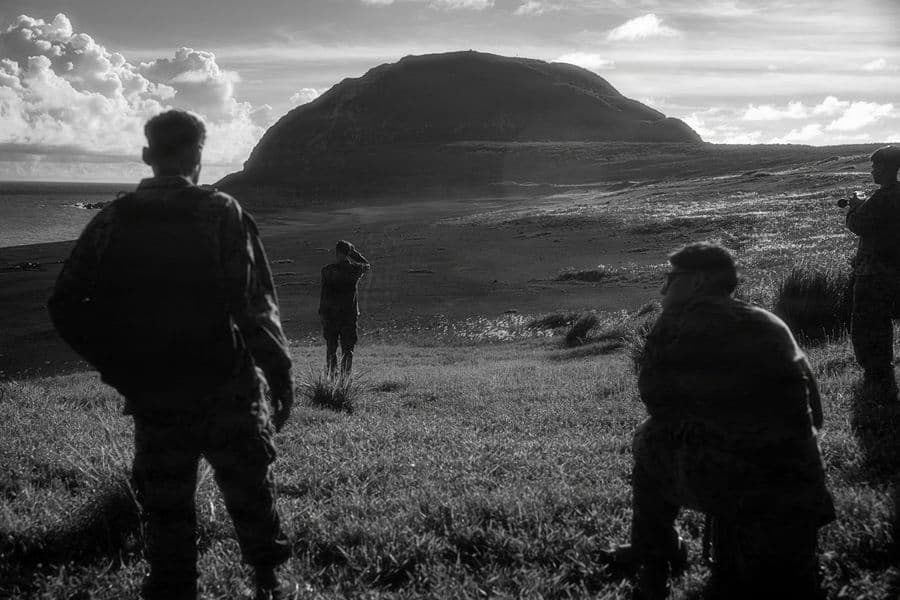
image: U.S. Marines with 3rd Marine Division observe Mount Suribachi during a professional military education opportunity on Iwo Jima, Japan, Sept. 28, 2026. The PME served to educate, build esprit de corps, and commemorate the service members from the Battle of Iwo Jima, honoring their legacy, and ensuring their stories are preserved for future generations. (U.S. Marine Corps photo illustration by Lance Cpl. Emily Bos)

In Pursuit of Nuclear Abolition
By Peter Huessy • RealClearDefense
Innovation Alone Won’t Prepare the U.S. for the Future Battlefield
By Joshua Segal • RealClearDefense
The sUAS Tactical Trifecta
By Bryan T. Woody • RealClearDefense
The Revolutionary War: When Strategic Options Share the Same Weakness
By Henry Yep • RealClearDefense
The Houthis Are Testing the Limits of Collective Defense
By Saima Afzal • RealClearDefense

Who Shoots Down the Drone Over the Shipyard?
By John Ferrari & Dillon Prochnicki • RealClearDefense
Northrop Grumman Breaks Out the Big Guns at AUSA
By Daniel Terrill, Defense News
Army Pursuing Diverse Array of New Anti-Air Interceptors
By Trevithick, The WarZoneWho Shoots Down the Drone Over the Shipyard?
By John Ferrari & Dillon Prochnicki, RCD
F-35C Lands for the First Time on a Ford-Class Aircraft Carrier
By The Aviationist