
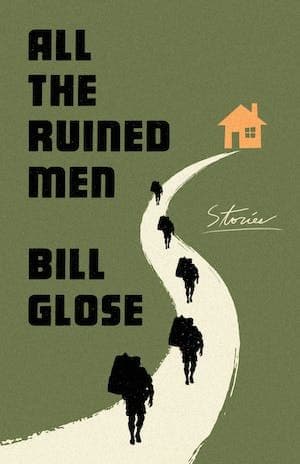
Review: "All the Ruined Men" by Bill Glose
Last updated 11:49 PM EDT • Read time: 4m
Like all wars, America’s Global War on Terror (GWOT) has produced a wide array of literature, both fiction and nonfiction. It’s my humble opinion that Bill Glose’s new collection of short stories titled All the Ruined Men (St. Martin’s Press, 2022) will be counted among the greats.
Glose’s collection is a fictionalized chronicle of the wartime and post-war experiences of a squad of young, 82nd Airborne paratroopers, men whose lives are forever scarred by the violence and loss they endured over multiple deployments to Iraq and Afghanistan. Glose offers readers insights into the minds of American soldiers whose traumas have left them used up, stunted, broken, and, for many, feeling tossed to the wayside. This work feels reminiscent of Tim O’Brien’s definitive Vietnam collection, The Things They Carried, only for the GWOT generation. It is dark, honest, and vital.
All the Ruined Men begins, appropriately, from the perspective of Staff Sergeant Berkholtz, the squad leader for the group of boys whom the rest of the book will follow. I use the word “boys” here because that is the term Glose uses through Berkholtz and because that is what many of us were after 9/11. Boys who were looking for a fight. Though his physical presence is limited, Staff Sergeant Berkholtz’s influence becomes one of the main threads weaving together Glose’s stories. The wisdom and discipline Berkholtz bestowed upon his soldiers, both in training and in combat, became pillars in their post-war lives – memories of these lessons serve as a touchstone of sanity for minds on the verge of collapse. Berkholtz’s recurring influence echoes an underlying theme of how our actions—good or bad, intentional or unintentional—resonate and influence those around us. For Glose’s ‘ruined men’, their actions and inactions during and after the war have dire consequences not only for themselves but for their families, friends, and brothers in arms.
One of the things I found interesting was the backstories Glose chose for his characters. While the characters came from diverse backgrounds, most, if not all, have pasts marred by traumas, neglect, or feelings of inadequacy. Some dealt with parental abuse, inclinations toward violence, poverty, and social anxiety. While it’s not a popular idea to address, it's no less true that many in our armed forces join as a last resort or as a refuge from a bleak future. Many join out of a sense of adventure, but just as many join for the steady paycheck and a stable foothold. Most who stay, stay for the camaraderie. Each of Glose’s stories features a soldier who has separated (some voluntarily, some involuntarily, and some for medical reasons) from the Army, and there is a feeling of loneliness and loss, as each seems to be adrift in their post-military lives. It’s no secret that many soldiers have trouble adjusting back to the “civilian world,” trying to find their place in a society they feel they can no longer relate to, and coping with the loss of a brotherhood they held dear for so many years.
Glose’s characters are faced with decision points and metaphorical forks in the road, where they are given the chance to head toward healing or continue spiraling in self-destruction. As in real life, some choose wisely and some choose poorly, allowing the ghosts of the past to shape their futures. Glose does an excellent job creating tension with these decision points, for we, as the readers, can feel where each road might lead. I felt personal investment in the characters, being able to see pieces of some of my own veteran friends in each, making their victories sweeter and their defeats all the more tragic.
All the Ruined Men is beautifully written, honest, and haunting. Those who have served, who have smelled the burning cordite of combat and felt the sting of sudden, violent loss, should find pieces of themselves in its pages and, hopefully, the comfort of understanding they are not alone if they too struggle with a past that won’t let go. For those who did not serve, this book should serve as a valuable window into the minds of the veterans in their lives. After 20 years of war, I’d wager there are few people who don’t know at least one veteran of the wars in Iraq or Afghanistan. But the lessons of Glose’s book go far beyond their applications to military veterans. One doesn’t need to know combat to know trauma. We could all do better to understand the private torments of those around us, and to extend kindness wherever and whenever we can.
Brett Allen is a humor writer and author of the Afghanistan war novel, Kilroy Was Here. He is also a contributing writer for Task and Purpose as a member of their Gear Review team. Follow him on Twitter at @hogwashwriting.
Trump's Disrupt First, Negotiate Second: Greenland in Focus
By Meda Parameswara Reddy • RealClearDefense
In Seeking Peace With Beijing, Taipei Is an Asset, Not a Burden
By Alexandru Filip • RealClearDefense
Strike First: Israel's Inevitable Doctrine for the Iranian Axis
By Lance Gordon • RealClearDefense
It’s Not President Trump but Thomas Friedman Who Should Be Ashamed
By Francis P. Sempa • RealClearDefense
Putin, Plague, and America’s Biodefense Gap
By Ryan Kane • RealClearDefense
U.S. and Japan Begin Naval Exercises Near Taiwan
By Mari Yamaguchi • Associated PressU.S. and Japan Begin Naval Exercises Near Taiwan
By Mari Yamaguchi, AP
U.S. Navy, Gecko Robotics Surge AI Maintenance Contract
By Ceder, Simkins, Navy T.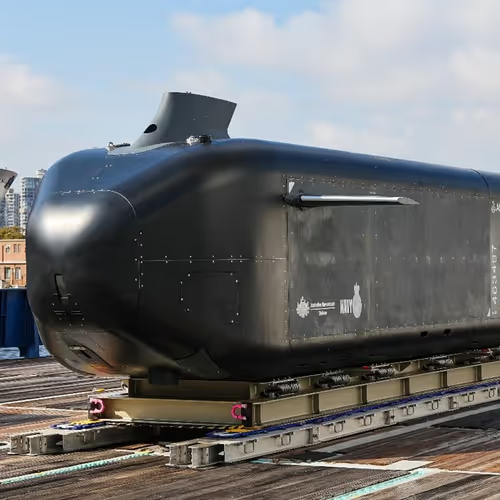
Ghost Shark XL-AUV Payload Bay Seen For First Time
By Thomas Newdick, The WarZone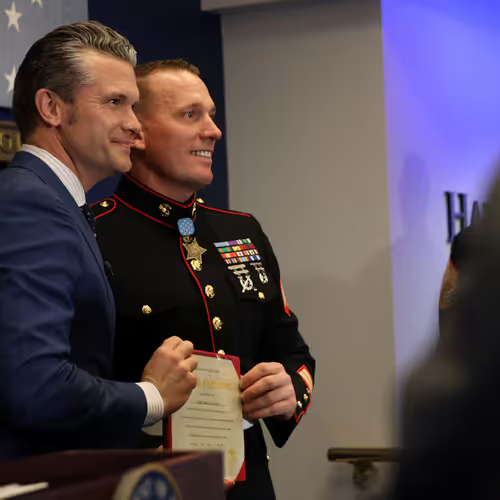
Dakota Meyer Tapped As Barracks Task Force Senior Advisor
By C. Stassis, MC Times