
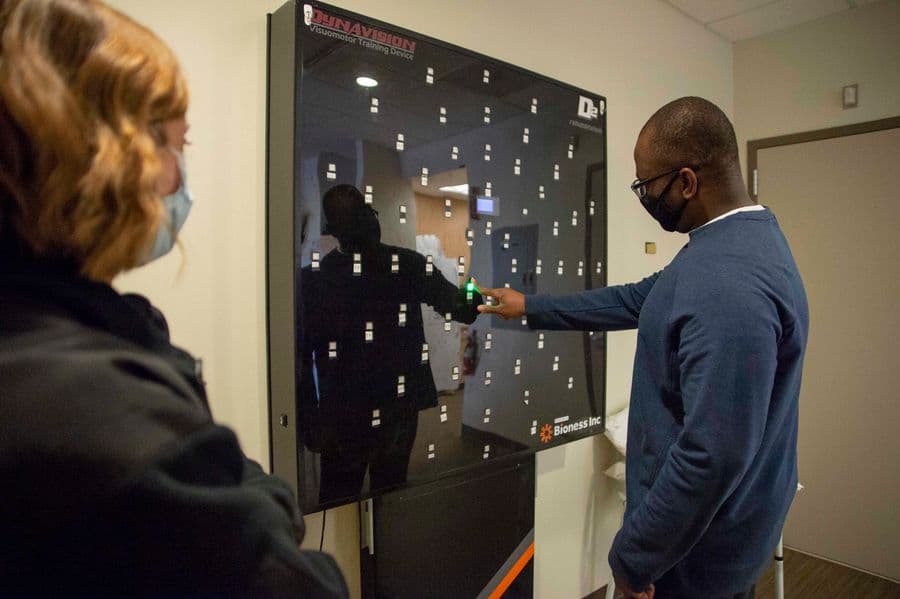
Some Soldiers Never Fully Come Home
Last updated 07:12 AM EDT • Read time: 5m
Sometimes when our nation’s warriors return home from war, they don’t make it all the way. We’re familiar with the physical signs of unimaginable trauma when legs and arms are amputated. But for the hundreds of thousands of veterans of Iraq and Afghanistan who received traumatic brain injuries (TBIs) from explosions and other concussive injuries, their wounds remain invisible to the public.
Four decades of military and private sector experience have provided me with a front-row seat to our government’s failure to address TBI, PTSD, and the related epidemic of veteran suicides. This unique vantage point is based on multiple combat commands in both Iraq and Afghanistan, and a decade of work at a leading academic medical center developing innovative models of care and treatment programs for mental health and brain injury.
The evidence is clear – a new comprehensive national strategy for TBI is required for our veterans, to include suicide and the related comorbid injuries.
TBIs result in serious long-term physical, psychological, functional, cognitive, and occupational deficits that become more complex with age and comorbidities. More than 444,300 service members experienced at least one traumatic brain injury during their military service since 2000, and according to the Journal of the American Medical Association there is a need to develop improved treatments to address the wide range of needs for veterans with TBI, including mental health, memory and executive functioning deficits, physical well-being, and social support.
These men and women then face a two-fold increase in risk for suicide. This epidemic has resulted in more than 114,000 veteran suicides since 2001, despite the 500% increase in the VA’s budget during that time, and 20 veterans each day continue to lose all hope and take their lives.
A National Institutes of Health study noted that 80% of those diagnosed with a TBI have also sustained a comorbid psychiatric diagnosis. Based on the mission and training associated with our special operations forces (Green Berets, SEALS, DELTA, etc.) these hidden injuries are even more prevalent, and contributed to the 300% increase of suicides within our special operations community in 2018.
Consider the story of decorated Navy SEAL Ryan Larkin, who ended his life by suicide, surrounded by the medals that celebrated events leading to his own TBI. “Ryan died from combat injuries, just not right away … The system he trusted failed him and turned on him,” his father said in a Washington Post article highlighting the shortages in care and science.
Ryan Larkin’s repeated exposure to blast waves severely damaged his brain by causing microscopic tears in the tissue, internal lining, and blood vessels.
As he struggled, Larkin was diagnosed with several possible causes and was given more than 40 medications as he wandered through a myriad of government healthcare options, but nothing stopped the brain fog, headaches, and confusion. Before he died, Larkin asked that his body be donated for research, which led researchers to find a “severe level of microscopic brain injury that was uniquely related to blast exposure.”
I retired from the Army in 2012 and was asked to lead an organization called Home Base, a partnership between Massachusetts General Hospital and the Boston Red Sox. With limited funding and absolutely no financial support from the VA, Home Base has leveraged the incredible resources and faculty of MGH and Harvard Medical School to fill the gaps in mental health and brain injury care for our 21st century veterans.
With a fraction of the VA’s budget, Home Base developed new models of care and treatment programs and provided evidenced-based care and support for more than 30,000 U.S. veterans and families from all 50 states. We have also trained thousands of clinicians, and we work with communities from across the country to develop local private-sector clinical solutions for the invisible wounds of war. Thanks to a grateful nation and great partners, this care, as well as travel, lodging, and meals, is provided at no cost to our veterans and families.
Collaborative partnerships are the keys to success, and a vision without resources is a hallucination. The VA was never designed to care for all of our veterans on their own. In fact, 70% of veterans who die by suicide every day do not receive their healthcare from the VA. To break this cycle of death, treat these complex injuries, and stem the tsunami of veteran suicide, we must shift to an “all-hands” strategy that engages and funds our top academic medical centers and premier healthcare systems – without having the VA as a gatekeeper to access mental health and brain injury care.
Working with a traumatic brain injury means never accepting the status quo because, frankly, the status quo is dismal.
When dealing with TBI, it’s as though veterans are stuck with an A.M. radio, in a world of digital medical solutions. But given the damage these injuries cause, and the record-high number of suicides among our veterans and military members, this should serve as a wake-up call to those in VA healthcare to look for new models to address mind-injuring events before it’s too late.
Brigadier General (U.S. Army, Ret.) Jack Hammond serves as executive director of Home Base and its National Center of Excellence for Veteran Mental Health and Brain Injury. He also leads an advisory board at NanoDX, focused on traumatic brain injury diagnostics.

The U.S. is Overpaying for Missiles
By Alex Lee • RealClearDefense
The U.S. Nuclear Deterrent Umbrella
By Peter Huessy • RealClearDefense
The Islamic Republic Can Lose the War and Still Win
By Nima Gholam Ali Pour • RealClearDefense
Talent Ecosystems: Building a Scalable National Security STEM Workforce
By Payuna Uday • RealClearDefense
The Underground Cloud
By Ben Poulin • RealClearDefense
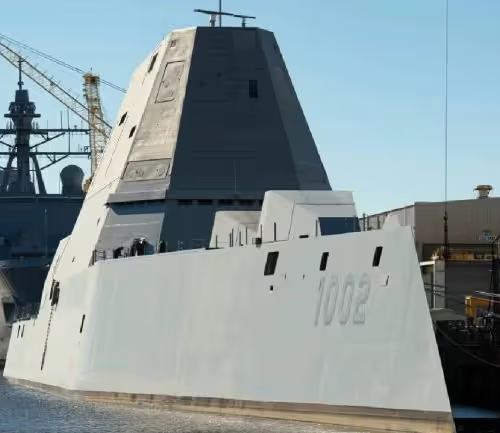
U.S. Navy to Begin Testing for USS Lyndon B Johnson (DDG 1002)
By Naval-Technology
Marine Corps Moves To Expand Maven Smart System Account Access
By DefScoop
Navy F/A-18 Spotted With New AIM-174B And AIM-260 Long-Range Missiles
By TWZ
Pentagon’s 6th Generation Stealth Fighter Will Control Drone Swarms
By Warrior M.
Air Force Needs 1,509 Combat-Ready Jets by 2035
By Michael Marrow, Breaking Defense