
China
RealClear Context
Click below to continue reading this story, discover more China stories from over 25 years of RealClear archives, or follow this topic to stay in the know.
China Overtakes America in Presidential Diplomacy
The Ring of Global Compute and the Limits of Chip Export Controls
The scandal embroiling Jensen Huang, the former chief executive officer of Nvidia, has become nothing less than “Jensanity,” a global wave of...
9h agoRead it on Foreign Policy Research Institute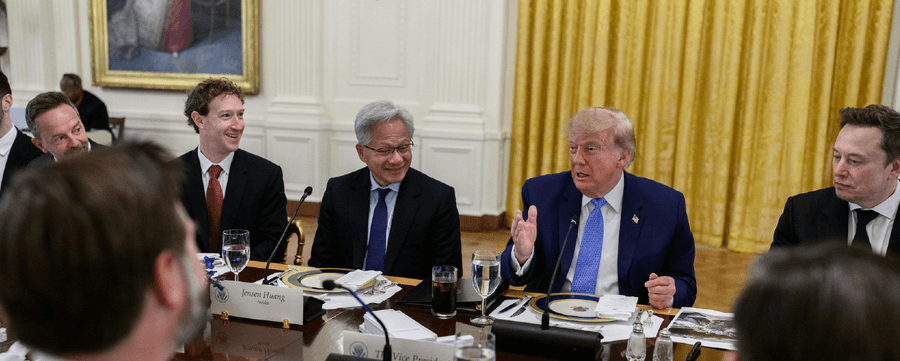
The Ring of Global Compute and the Limits of Chip Export Controls
The scandal embroiling Jensen Huang, the former chief executive officer of Nvidia, has become nothing less than “Jensanity,” a global wave of celebrity adulation for the co-founder of the company behind the world’s AI infrastructure. For Huang, the massively lucrative Chinese market was much like J.R.R. Tolkien’s “One Ring”: once slipped on, it proved nearly impossible to remove, compelling him to do whatever it demanded to preserve market domination. Huang spent years meticulously tending to government relations from Washington to Taipei and to Beijing. As the world’s finest “chip diplomat,” Huang clearly understood the value of becoming a welcome partner in every capital across rival jurisdictions with an eye to continuing to sell Nvidia’s processors to China. On November 12, that balancing act collapsed with Huang’s abrupt resignation after reports of an affair with Alice Huang, a former executive at Singapore-based cloud partner Megaspeed whom US intelligence officials reportedly suspected of aiding Beijing. While official probes remain ongoing and unresolved, Huang’s network allegedly channeled or leased roughly 240,000 restricted Nvidia chips worth $7.5 billion toward Chinese users. From Congress to corporate boardrooms, debate continues over how controls were bypassed. How the control of the chokepoint of critical chips can be manipulated will be of strategic interest for US economic security moving forward.
Advanced semiconductor trade and production cannot simply be turned on and off, as global tech industries have spent decades developing a sprawling, multi-tiered web of third-party suppliers known as the Original Equipment Manufacturer (OEM) model. Chip designers such as Nvidia do not ship chips directly to end users. Instead, processors move from Taiwanese foundries such as TSMC to server integrators such as Supermicro, then to regional distributors and cloud operators such as Megaspeed. Centralizing “bill-to” invoicing in hubs such as Singapore while dispersing physical server deliveries across Asia obscure the flow of supply chains. More importantly, commercial incentives widen those cracks, which are the very dynamic behind Huang’s vision of domination. Because chipmakers and server vendors profit from hardware volume and software ecosystem lock-in, they face weak incentives to audit lucrative downstream buyers beyond baseline compliance paperwork. Jurisdictional divergence compounds the challenge: while transit hubs such as Singapore and Malaysia prosecute domestic customs fraud, they decline to enforce unilateral foreign export bans. The biggest challenge, though, may be that compute itself is borderless, allowing overseas data centers to rent AI processing power over fiber-optic cables without crossing physical custom checkpoints. Simply put, a deeply interlocked global commercial web defies the neat theory of a semiconductor chokepoint. There are always loopholes.
Beijing Showcases Its Vision for a New Tech Megapolis
Shenzhen gives Beijing a stage to showcase its ambitions for the “Greater Bay Area” and China’s next phase of growth....
2d agoRead it on Asia TimesDaigou: The Gray Market That Moves Nvidia’s Chips to China
Megaspeed’s role in moving restricted chips to China is in the spotlight, but the smuggling system behind it will outlast any new U.S. curbs...
2d agoRead it on Asia TimesChina’s Revised Mobilization Law
China’s revised National Defense Mobilization Law (中华人民共和国国防动员法), which took effect on October 1, 2026, marks a significant development in China’s...
3d agoRead it on RealClearDefense
China’s Revised Mobilization Law and the Expanding Reach of National Defense
China’s revised National Defense Mobilization Law (中华人民共和国国防动员法), which took effect on October 1, 2026, marks a significant development in China’s strategy of managing its national security and preparing for war. The substantially expanded 2026 law, which replaces the 2010 legislation, establishes a more comprehensive framework for organizing and coordinating China’s economic, technological, and human resources for national defense mobilization. Containing 82 articles across 14 chapters, the law provides an institutional mechanism for China to facilitate a rapid transition between peacetime and wartime conditions, converting economic and social resources into national defense capabilities.
China’s Drone Carrier Swarms Ahead
Beijing is at the forefront of developing drone carriers as combat platforms, especially compared to the United States. But will that translate into...
1w agoRead it on The DiplomatBehind the Nvidia Affair Sits a Vast Chinese Spying Machine
Beijing is deploying the world’s biggest intelligence-gathering operation to bolster its tech industry. U.S. officials worry Jensen Huang was...
1w agoRead it on The Wall Street JournalChina’s Epic Campaign To Steal America’s Secrets
China’s efforts, both legal and illegal, to acquire America’s intellectual property (IP) have long been a central theme in the U.S.–China...
1w agoRead it on The Strategist (ASPI)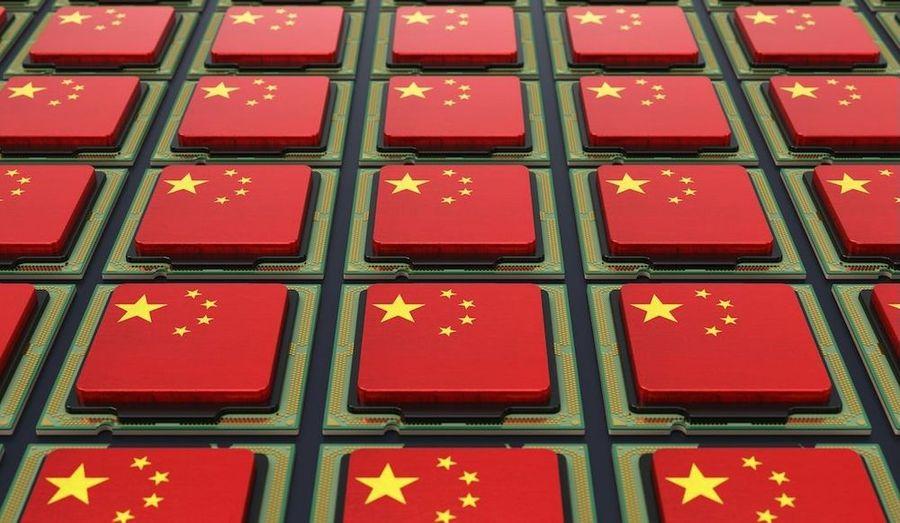
China’s Epic Campaign To Steal America’s Secrets
China’s efforts, both legal and illegal, to acquire America’s intellectual property (IP) have long been a central theme in the U.S.–China relationship. A new book, The Great Heist: China’s Epic Campaign to Steal America’s Secrets, by David R Shedd and Andrew Badger, both formerly of the U.S. Defense Intelligence Agency, offers a welcome and up-to-date forensic analysis of the issue.
The authors cite the FBI estimate of IP theft (mainly by China) which has cost the U.S. economy up to U.S. $600 billion (A$860 billion) a year over the past decade. Industrial espionage has been a driving catalyst for the rise of China, even if other factors have also played a role. According to some estimates China may already have a technological edge against the United States. ASPI’s Critical Technology Tracker estimates that China now publishes the most high-impact research in 69 of the 74 technologies tracked, with the U.S. leading in the remaining five.

Batteries Can Power a Win for America in Super Intelligence
By Manisha Singh • RealClearDefense
Poland’s Fighter Fleet Is Growing: Can Its Training System Keep Up?
By Bruce Allen Lubbering • RealClearDefense
Why Iran is Not Vietnam
By Kevin Brown • RealClearDefense
Closing the Missile (Defense) Gap
By Jason Camilletti • RealClearDefense
Part of a Larger Secret, Hidden World
RealClearDefense
Closing the Missile (Defense) Gap
By Jason Camilletti • RealClearDefense
U.S. Navy Prepares for Third Zumwalt Hypersonic Upgrade
By C. Johnston, Naval N.
Pearl Harbor Hero Doris Miller Will Stay Namesake of CVN-81
By Mongilio, USNI News
Navy CCA Plans Will Not Wait For F/A-XX Next Generation Fighter
By The WarZone
Navy’s Shipbuilding Plan Would Require Massive Hike in Appropriations
By BrDef