
China
RealClear Context
Click below to continue reading this story, discover more China stories from over 25 years of RealClear archives, or follow this topic to stay in the know.
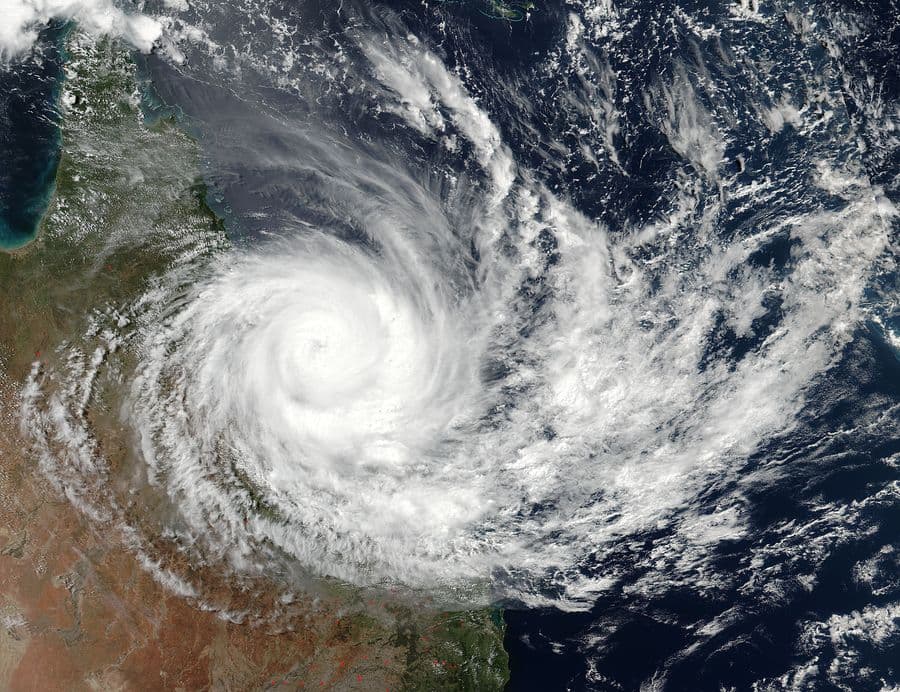
China Is Collecting Militarily Useful Weather Data Abroad
A global meteorological warning system has become an excuse for China to embed AI-feeding weather stations on foreign territory, gathering data that would help its armed forces in war.
Solomon Islands and countries surrounding India are among the many locations at which the system is collecting weather data, and perhaps other information, then sending it back to China.
China Sends Navy After U.S. Warship
China dispatched naval forces to shadow an American warship near a disputed South China Sea shoal Tuesday as Taiwan confronted a Chinese Coast Guard...
21h agoRead it on Daily SignalIn Seeking Peace With Beijing, Taipei Is an Asset, Not a Burden
Taipei’s consistent assertion of its national interests, of its right to self-determination, and its participation within international frameworks...
2d agoRead it on RealClearDefense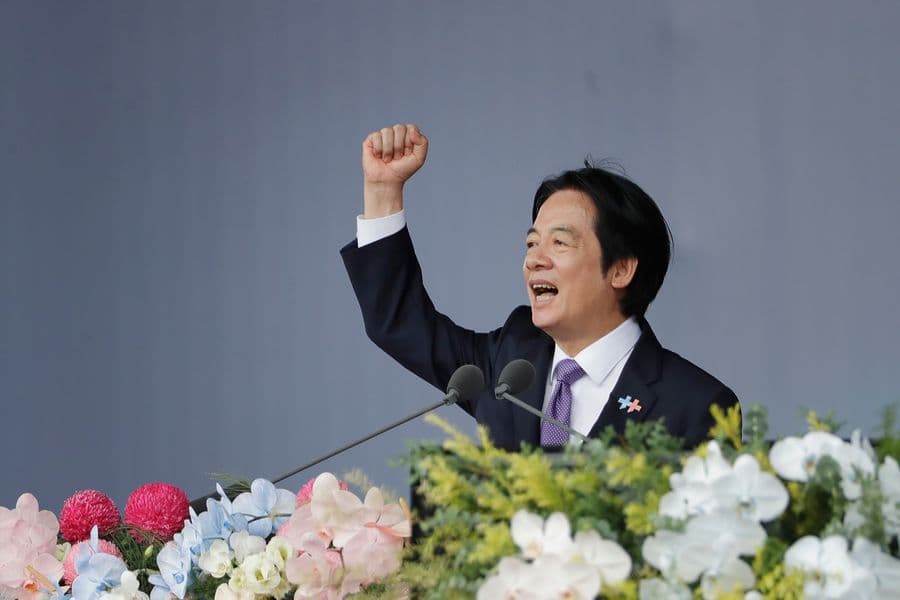
In Seeking Peace With Beijing, Taipei Is an Asset, Not a Burden
On October 10, in his Republic of China National Day address, Taiwanese President Lai Ching-te made his country’s position clear: “Taiwan cherishes peace, but we will not give up our freedom. We are open to exchanges but will not accept subordination.” As evidenced by Taiwan’s recent arms build-up, in direct response to Beijing’s aggression, the conventional wisdom which has come to regard Taiwan’s security situation as being partially bound by the resolve of Western states is flawed. A better explanation is rooted in understanding the managerial role Taipei plays against the internal dynamics of the Chinese Communist Party (CCP), which incentivize external aggression. Despite not being formally recognized as a sovereign state, the Republic of China is a full member of 45 intergovernmental organizations and holds a further 30 positions which range from observer roles to non-member participant status. Taipei’s consistent assertion of its national interests, of its right to self-determination, and its participation within international frameworks make it a source of moral legitimacy for its democratic allies, in stark contrast to Beijing's revisionism.
In the context of cross-Strait security, declarations made in Washington or Brussels, while reassuring, are not the most effective tool of support for Taiwan, as the People's Republic of China (PRC) either ignores the messaging or responds by reasserting the “One-China Principle”. While democracies almost uniformly perceive the PRC's view of Taiwan as an affront to the values of self-determination, Beijing does not. This is because it sincerely believes in the strength of its “reunification” narrative, due to its domestic legitimation. To counter this, Western support should not solely seek to confront Beijing; it should also seek to validate and moralize Taiwan's position as a self-governing democracy which seeks to safeguard its own national interest.
Talking With China - Say What You're Told You Can't Say
When it comes to the Chinese Communists, if you won’t say it in public – like Reagan did with the Soviets - it’s a win for the communists....
3d agoRead it on AND MagazineChina’s Advance in the Bahamas
Beijing’s presence in the Bahamas and its military implications for the U.S. are often overshadowed by discussion of Chinese activities elsewhere in...
3d agoRead it on The DiplomatChina’s Rare Earth Strategy and the Future of the South China Sea
The rise of seabed mining will add new complexity to the South China Sea disputes....
6d agoRead it on The DiplomatA Surfacing Strategy: Chinese Unconventional Oceanic Warfare
The evolution of maritime warfare has largely moved in expanding the form of conflict and the direction of it...
6d agoRead it on CIMSECThe New Geography of America’s China Dependence
... the American de-risking approach has not eliminated dependence on China so much as rerouted and obscured it....
1w agoRead it on OrbisRussia, China and Iran Harness AI for U.S. Midterm Disinformation
Russia, Iran and China are using artificial intelligence tools to turbocharge disinformation efforts ahead of the midterm elections...
1w agoRead it on Bloomberg
The Services Do Not Need a Four-Star Autonomous Warfare Command
By Steven Wills • RealClearDefense
Honor Them While There Is Still Time
By Jeffrey Rosales • RealClearDefense
From Siberia to Fairford: How Operation Spider’s Web Has Changed the Rules of Airpower
By Frank A. Rose • RealClearDefense
Faster Simulations, Better Defense Decisions
By Rut Lineswala • RealClearDefense
Will HASC Have an Oversight Subcommittee in the Next Congress?
By Christopher J. Bright • RealClearDefense

Hegseth Barred Trans Troops. Military Boards Are Rejecting Those Orders.
By NYT
Closing the Sea: Lessons from Ancient Mediterranean Blockades
By DeCasien, CIMSECFrom Siberia to Fairford: How Operation Spider’s Web Has Changed the Rules of Airpower
By Frank A. Rose • RealClearDefenseFaster Simulations, Better Defense Decisions
By Rut Lineswala • RealClearDefense
Bombers Could Have a Major Air-to-Air Combat Role
By Joseph Trevithick, The WarZone