
To Support Africa, Build Infrastructure
Last updated 05:28 PM EDT • Read time: 5m
The African continent is a rapidly growing market. Foreign direct investment (FDI) patterns are steady, if not growing, as countries around the world invest in Africa. However, the U.S. is woefully behind. This is due in large part to a lack of investment incentives for American companies. These firms lack necessary funding to compete against their state-subsidized counterparts from countries such as China, Turkey, and Brazil.
Washington’s strategic interests are linked to FDIs because they make Africa more accessible and easier to operate in without requiring the U.S. government to take on a long-term, extensive commitment in leading and managing such investments. Therefore, the Trump Administration should pass policies that support American companies’ investments in the continent, as it would also serve its overall goals for stable, secure, free market African states.
One clear area for investment that would benefit local communities, commercial companies, and Washington is infrastructure development. Local economies are struggling because a lack of physical infrastructure hinders trade. Most notably, farms are not able to access urban markets. International companies struggle to operate in new markets because of logistical difficulties.
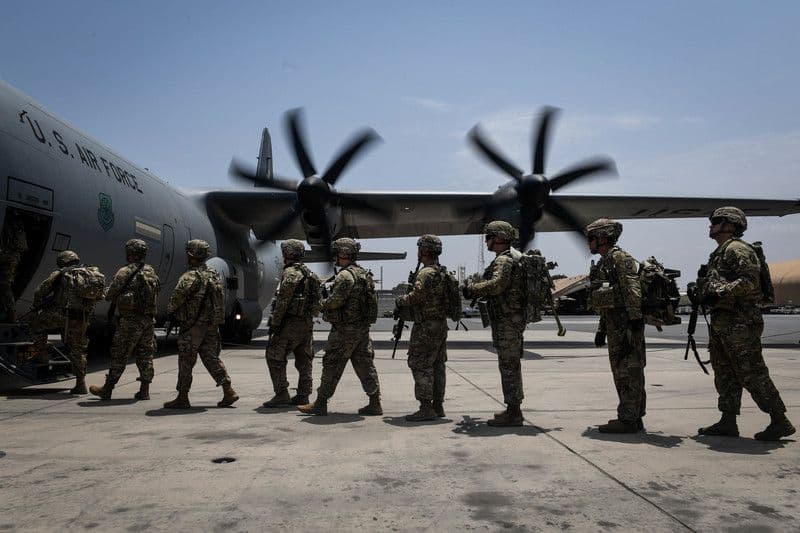
The lack of networks also hinders U.S. government operations. All of the U.S. government’s objectives in Africa depend on access. Washington cannot provide support for security, aid, or development if it is not able to reach areas of operations. Many missions in Africa, from counterterrorism and counter drug-trafficking to responding to disease epidemics, cannot succeed without logistical support and network access.
Washington should develop and modify programs to support FDI by American companies in Africa to build out infrastructure. These developments can be leveraged by U.S. federal organizations when carrying out security and aid missions. They would also benefit local communities trying to grow and expand their economies.
To effectively collaborate with industry to build networks and ensure logistical access, Washington needs to incentivize investment and streamline access to new markets. By utilizing lessons learned, the U.S can use proven methods to guarantee that infrastructure is built and maintained at a level necessary to support current and future operations. For example, U.S. federal organizations operating in Africa should map out networks on a regional or continental level and then have private partners bid to develop sections.
The Pentagon should also consider establishing facility programs that are contractually owned and operated by commercial partners like it did in the Middle East. Incentivizing investments would ensure that infrastructure is maintained at a level that meets the needs of federal organizations, without requiring long-term or extensive commitment from the defense department or its counterparts.
However, none of this will be effective if commercial partners are not able to travel around the continent. Therefore, the State Department should consider adopting new policies and changing its visa processes to make it easier for companies to work across borders to build relations and establish a more expansive network.
Washington needs to make sure that its programs that are in place to support FDIs are functioning as intended. The Ex-Im Bank should raise limits for U.S. companies entering emerging markets to promote larger and more diverse investment in Africa, as it is congressionally mandated to do. The Trump administration should look to renewing support for Obama-era infrastructure programs that received bipartisan support, such as Power Africa.
The president should also reconsider decreasing funding for programs run by the U.S. Overseas Private Investment Corporation (OPIC) and the U.S. Trade and Development Agency (USTDA). Since 2009, OPIC and USTDA have invested more than $7 billion and $14 billion dollars respectively in Africa build and ensure infrastructure projects. USTDA’s investments have boosted U.S. exports by at least $2.5 billion. These programs are effective in building African economies and supporting our own.
It is vital that Washington consider the future as much as the present. In the event of armed conflict in Africa, U.S. military and aid response cannot be effective without logistical capacity. Based on past experiences, the Pentagon should include its commercial partners in pre-planning phases now to ensure that strategies are executed seamlessly in the event of crises. For example, when responding to the Ebola crisis, USAID included commercial partners, such as Crowley Maritime, early in the response process to transport personnel and supplies without delay.
Participation in the planning will also make industry partners more aware of the capacity they need to support future operations. Firms can then work to build out inventory to the level necessary to respond to future crises. Similar to incentivizing investments in Africa, Washington should also encourage a buildup in capacity so that supplies can meet demand in an emergency.
Local communities would support private investment in Africa. Many politicians and businesses see the necessity of FDIs for their economic growth and are willing to pass legislation to encourage investing. At the 2017 World Economic Forum, Rwandan president Paul Kagame stated,
"We have to accept the fact that the private sector holds huge resources that could be deployed together with the government for the benefit of infrastructure…government has to make sure we put in place policies…that work to encourage this kind of investments and partnerships to happen.”
The U.S. has many natural allies and friends on the African continent based on shared political and strategic goals. These relationships have been growing stronger in recent decades and could be leveraged by the Trump administration to encourage allies to pass legislation that supports FDI.
By helping American companies invest in Africa’s infrastructure and promoting its development, Washington can leverage these investments to aid its security and development missions and support economic development throughout the continent.
Rathna K. Muralidharan is a program director at the Lexington Institute with a focus on global security and regional politics. You can follow her at @RathnaKM and the Lexington Institute @LextNextDC. Read her full biography here.

The Emerging SQUAD
By Muhammad Shoaib • RealClearDefense
Somebody Has to Hold the Ground
By Jay Rogers • RealClearDefense
U.S. Navy Shipbuilding: The Good, the Bad and the Ugly
By Brent Ramsey • RealClearDefense
The Services Do Not Need a Four-Star Autonomous Warfare Command
By Steven Wills • RealClearDefense
Honor Them While There Is Still Time
By Jeffrey Rosales • RealClearDefense

U.S. Military Gives Elon Musk’s SpaceX Access to Sensitive Tracking Data
By Guardian
USS McFaul Returns to Norfolk After 332 Day Deployment
By Sam LaGrone
The U.S. Shipbuilding Revival Is Taking Lessons Halfway Around the World
By WSJ
Hypersonic -Firing B-1B Lancer To Fly Into the 2040s
By Kris Osborn, Warrior MavenU.S. Navy Shipbuilding: The Good, the Bad and the Ugly
By Brent Ramsey, RCDefense