
Trump's Truancy in Asia Could Hasten a Hegemon's Demise
Published Nov. 22, 2017 • Read time: 5m
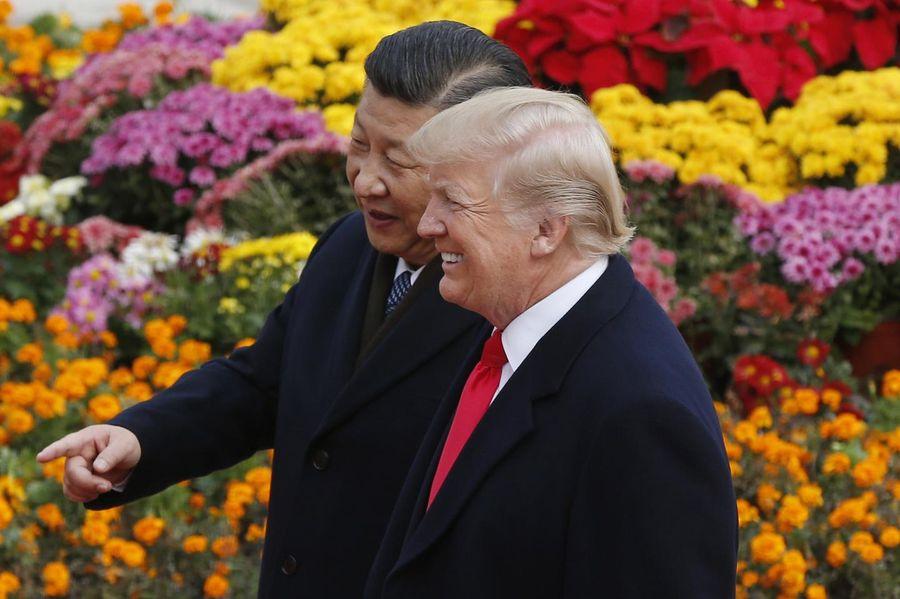
Donald Trump’s no-show at the East Asia Summit last week sparked fresh anxiety from Asia-watchers worried about Washington’s commitment to the region. These concerns are hardly new and Trump is not the first U.S. president to bypass this summit. But his truancy comes at an especially delicate time for Asia. As the region’s incumbent hegemonic power, the U.S. is now more distracted by domestic division than at any time since Watergate. China is meanwhile skilfully exploiting American introversion, pursuing a grand strategy that seeks to ease out and ultimately displace America as Asia’s dominant power.
Seen in this light, Trump’s summit snub risks amplifying existing Asian fears about America’s appetite for leadership, furthering China’s end-game of hegemonic displacement.
A Distracted And Divided Hegemon
American grand strategy in Asia has never been motivated by altruism, but by a far-sighted view that Washington’s interests could best be advanced by building a hegemonic regional order that recognized, accommodated and advanced the security and prosperity of its Asian allies.
Given its densely institutionalized character, this order has persisted on auto-pilot since Trump’s election. But during his Asian sojourn, the President showed little appreciation for the value of this order or the larger advantages accrued for both the U.S. and its partners. Trump’s ostentatiously transactional view of alliances has instead spooked Asian friends already fretful about American commitment to the region, following the underwhelming Obama ‘pivot’, and Trump’s decision to trash the Trans-Pacific Partnership. His budding bromance with the Philippines’ Rodrigo Duterte has meanwhile downgraded human rights promotion as a focus of American regional engagement, undercutting America’s self-identification as an avowedly liberal hegemonic power.
International Allied Reliability of States: Criteria and Evolution
Why Iran is Not Vietnam
The Pressure Is the Message: What Xi and Putin Faced in Shenzhen
Previewing The Shenzen Summit: A Critical View
A Hegemon In Waiting
The Trump Administration’s Asia policy lays bare real tensions between Washington’s traditional role as Asia’s hegemonic power and the strategic solipsism of ‘America First.’ Coinciding with increased Chinese assertiveness, such tensions only help advance China’s aspiration to displace America as Asia’s dominant power.
The military dimensions of China’s challenge to American regional hegemony are well-known. China’s development of Anti-Access/Area Denial (A2/AD) capabilities has already substantially raised the costs of U.S. military intervention along China’s immediate maritime periphery, while Beijing’s militarisation of the South China Sea constitutes an ambit claim for control over the sea lines vital to sustaining Asia’s trade and prosperity. Together, these twin policies undermine the credibility of American security guarantees to its Asian allies.
Besides military challenge, however, China is also emerging as a clear rival to the U.S. as a provider of hegemonic services to Asian partners. Hegemony is not merely a by-product of military and economic paramountcy; it is ultimately a claim to leadership, a guarantee of collective goods (most notably peace and security) in exchange for junior partners’ willing acquiescence and cooperation.
With this goal in mind, Chinese-led initiatives such as the Regional Comprehensive Economic Partnership, the Asian Infrastructure and Investment Bank (AIIB) and the Belt and Road Initiative mark a long-term effort to displace America through hegemonic ‘goods substitution’ in the economic domain. China’s co-leadership (alongside Russia) of the Shanghai Cooperation Organization (SCO) offers a similar challenge in the realm of multilateral security cooperation – one far more ideologically congenial for Eurasia’s autocracies than established Western-led alternatives.
A New Order Matures
Washington’s Asian allies have survived bouts of U.S. fitfulness before. What distinguishes this moment is that contemporary China is not merely gearing up to challenge U.S. power at the top of the Asian pecking order but is also in the early stages of sponsoring its own institutionalised counter-order to displace America as regional hegemon. Critically, Trump did nothing on this trip to reassure allies that American hegemony is here to stay - inaction that helps clear the path for the Chinese challenge.
The U.S. retains immense advantages of hegemonic incumbency, not least in the ‘hub and spokes’ alliance system that China cannot copy any time soon. It’s also possible that the American order and a nascent Chinese counter-order might somehow peacefully co-exist in the medium term, allowing canny Asian middle powers to extract benefits from both without submitting wholesale to either.
But it is far more likely Trump’s disregard for Asian opinion, illustrated by his EAS no-show, will embolden China’s leadership ambitions. Regional U.S. allies will not wait indefinitely on Washington for normal hegemonic services to resume. This is especially so, as a prospective Chinese alternative matures. For this reason, now that he has returned to Washington, it is vital that Trump stop tweeting distractions and start meaningfully re-engaging Asia, lest America’s current inward turn forever forfeit its claims to regional leadership.
Andrew Phillips (PhD, Cornell) is an Associate Professor in International Relations and Strategy in the School of Political Science and International Studies at the University of Queensland. His research focuses on the global state system’s evolution from 1500 to the present, and on contemporary security challenges in East and South Asia, with a particular focus on Great Power rivalry and counter-terrorism. He is the author of War, Religion and Empire: The Transformation of International Orders (Cambridge University Press) and (with J.C. Sharman) International Order in Diversity: War, Trade and Rule in the Indian Ocean (Cambridge University Press). He is also most recently the author of From Hollywood to Bollywood? Recasting Australia’s Indo/Pacific Strategic Geography (Australian Strategic Policy Institute).
This article appeared originally at Lowy Institute's the interpreter.

When Losing Control of AI Becomes a Weapon
By Yunus Emre Tumen • RealClearDefense
International Allied Reliability of States: Criteria and Evolution
By Sergey E. Ivashchenko • RealClearDefense
Your Military Paycheck Has an End Date
By Sean Ofeldt • RealClearDefense
Masters of Command
By Travis A. Karnes • RealClearDefense
A Sweet American Original
By Greg Maresca • RealClearDefense

Monty: Riding the Pendulum
By Zachery Thomas, DODReads
Sign of the Times: CCAs Dominate a Major Fighter Conference
By Bill Sweetman • The Strategist (ASPI)
Marines Want Naval Strike Missiles With Double The Range
By The WarZone
U.S. Navy Targets 79 New Cutter-Based FF(X) Frigates
By A. Servaes, Global Defense
The Hegseth Grenade: A Sea Change at Newport
By Robert C. Rubel, CIMSEC