
Playing Games With the Russian Military
Last updated 05:26 PM EDT • Read time: 7m
Highlights
- The International Army Games have grown in popularity and participation since the Russian Defense Ministry founded them four years ago.
- The games give the Russian military a chance to show off its latest hardware to prospective defense industry customers and to solidify relationships with the armed forces of other participating nations.
- NATO countries have established a similar event, harkening back to the Cold War-era competition between East and West.
Scene: As dusk settles over China's Xinjiang autonomous region, a Venezuelan tank commander consults with a technical adviser from the People's Liberation Army. Meanwhile, in Belarus, a contingent of Philippine army snipers squares off with squads from Morocco, Serbia and Myanmar.
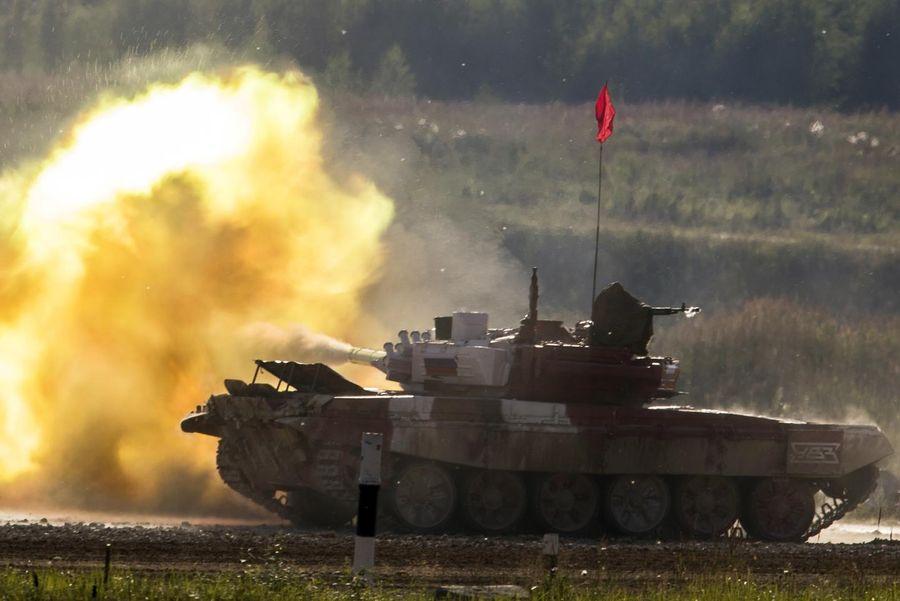
This is not the premise of the latest installment of the popular "Call of Duty" video game series. Nor is it the beginning of a dystopian military thriller starring Tom Cruise (though it could be). No, this was just another day at the fourth annual International Army Games, which concluded about a month ago. With over 30 nations participating in 28 events staged in seven countries, the games are an international affair. But make no mistake, the competition is a loud and proud production of the Russian Ministry of Defense. And we mustn't confuse this affair with other military "Olympics" like the Military World Games, in which athletes representing global militaries compete in traditional sports. The International Army Games are largely the brainchild of Russian Defense Minister Sergei Shoigu, who has called them a "holiday of peaceful weapons." Shoigu and his ministry stress that the event is about camaraderie and cooperation, and I'm sure those sentiments are present to an extent. Ultimately, though, the International Army Games are all about firepower, and its most popular contests feature all manner of tanks, cutting-edge aircraft and heavy artillery.
A Celebration of Military Skill
While its various competitions might fall under the broader umbrella of traditional "war games," they are probably better conceived as distillations of war, the parsing of combat into quasi-sports. The so-called "tank biathlon," for example, is the gathering's premier event. As its name suggests, it resembles the popular Winter Olympics sport: Competitors maneuver, then shoot, getting points for speed and accuracy. But, you know, in a tank instead of on skis. Another event, "aviadarts," serves as a bit of a catchall for aerial tactics, described by the Russian hosts as a contest for flight crews to "show mastership in low-altitude piloting and using their aircraft combat capabilities."
The games' domestic and international PR message appears to be one and the same: We are confident, and we are strong.
Though tank biathlon and aviadarts make for the best YouTube segments, the International Army Games are committed to celebrating an array of military functions. It's not all mortar shells and loud ordnance: There's an event for service dogs and their handlers (wonderfully named "true friend") and a field kitchen contest that includes the "peeling potatoes" trope of military life. Lest the cook-off come across as too wimpy, cooks must shoot some targets before they turn on their stoves — I can only assume to approximate the act of hunting.
Sending a Message
It's easy to be amused by the spectacle and occasional absurdity of the whole thing, but the International Army Games are certainly a serious affair. Russia debuted the event in 2015, only a year after it annexed Crimea and soured its relations with the West. The games have grown significantly over the last four years, evolving into a multipronged tool of the Russian state and Defense Ministry. Teams use Russian equipment almost exclusively, at once showcasing Russia's capabilities and giving the current and potential arms customers among the competing nations a try-before-you-buy opportunity. Given their familiarity with the gear (and the home-field advantage they gain by training on the courses used in competition), it should come as no surprise that the Russian team has always won the overall competition — providing Russia a nice ego boost in the international community and confirming for its citizens the country's powerful standing in the world. Several foreign correspondents have noted the festivallike atmosphere surrounding the event, with ample opportunities for fans of all ages to buy military merchandise, and for youths of the appropriate age to meet with military recruiters. The domestic and international PR message appears to be one and the same: We are confident, and we are strong.
As the event has grown, other countries have stepped up to support Russia with hosting duties. China, Azerbaijan, Belarus and Kazakhstan each put on events in 2017; Armenia and Iran joined them this year. Like Russia, China appears to have embraced the opportunity to leverage the event for both external and internal benefit. Contestants in China use domestically made equipment and receive ample technical support from People's Liberation Army advisers. State media celebrate PLA successes in the events but also highlight the deep gratitude and collegial spirit of new friends from Belarus, Venezuela and Pakistan.
Like the list of co-hosts, the roster of participating militaries has grown in both number and diversity. Among them are the predictable former Eastern Bloc states, but also traditional U.S. allies like the Philippines and Israel. That Israel competed only in less combat-oriented events, like field medicine and the cook-off, seems to indicate the balancing act required of certain participants.
A NATO Alternative
The United States and other NATO members have traditionally turned down invitations to join the fray at the International Army Games, though Greece bucked that trend this year and sent a small delegation. The NATO group has opted instead to put on its own event, the German-based Strong Europe Tank Challenge. That competition appears to be a less overtly raucous affair than the Russian-organized games, focusing on military partnerships and enhancing interoperability across NATO forces. Given the timing of the first tank challenge in 2016, it seems a safe bet that the United States and Germany launched the joint venture in response to the International Army Games. The U.S. command in Europe has stressed that collaboration and cooperation are the event's chief concerns, but has acknowledged that there is always an intentional layer of deterrence in such exhibitions.
It is trendy these days to play the "return of the Cold War" card. Then again, it's hard not to when the world's powers are staging such high-visibility events. The modern competitions harken back to the Canadian Army Trophy, a tank gunnery contest for NATO's Western European forces that ran from 1963 to 1991. Like its contemporary descendants, the event was promoted as healthy competition, but it played a dual purpose as a public show of force serving greater geopolitical ends. And beyond these parallels is the larger reminder that during the Cold War, international sports competitions became geopolitically meaningful. Yes, sports had always been militaristic, but it was not until after World War II that their role in the nation-state fundamentally changed. What the International Army Games (and, to a lesser extent, the tank challenge) suggest is that the global system has absorbed and reconfigured some of the underlying structures of international sport in unexpected ways. These events, like the Olympics or the World Cup, offer a fruitful excuse to get influential people in the same room and allow for contests of national superiority without actual war. The truly postmodern twist is that these ends no longer need to be sublimated into ballgames and tumbling contests; we can just have them out in the open.
Tolga Ozyurtcu, Ph.D., is a clinical assistant professor in the Department of Kinesiology and Health Education at the University of Texas at Austin. As a faculty member in the Sport Management and Physical Culture and Sports programs at UT, he teaches classes on the history, sociology and philosophy of sport, as well as on the administration of sport organizations and businesses. His research takes an interdisciplinary perspective on the relationship between sport and mass culture.
This article appeared originally at Stratfor Worldview.

Counterterrorism and the Growing Convergence in Homeland Security and Homeland Defense
By Austin Doctor • RealClearDefense
The Future of Space Power Depends on Integration
By Damian DiPippa • RealClearDefense
America Should Unleash Cyber Privateers
By Jacob Schelp • RealClearDefense
America Invented the Battery, but China Controls the Factory
By William Crane • RealClearDefense
A Defense Win for Americans and Israelis in Arkansas
By Bradley Bowman • RealClearDefense

Key Space Force Satellites Can’t Talk to Each Other
By T. Hitchens, Breaking Defense
Blue Angels Pilot Scott Laux Removed for Failing To Uphold Standards
By Johnson, PNJ
The Future of the Ground Reconnaissance Enterprise
By Joe Albano, The Connecting File
The Future of the ARG/MEU
By William Yale, Proceedings
Big Surface Combatants are so Hot Right Now
By CDR Salamander