
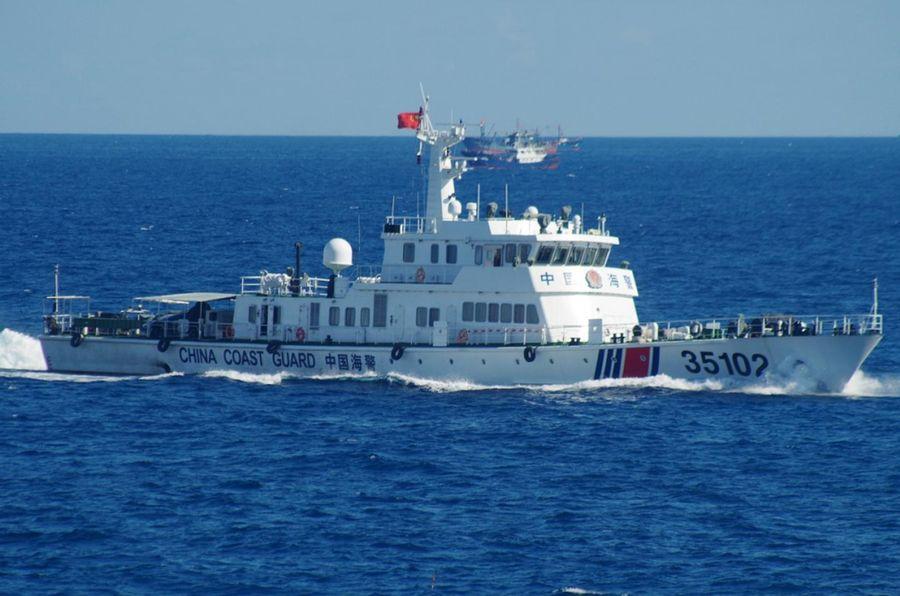
China's Military Activities in the East China Sea
Published Dec. 11, 2018 • Read time: 3m
Implications for Japan's Air Self-Defense Force
A long-standing rivalry between China and Japan has intensified in recent years, owing in part to growing parity between the two Asian great powers. Although the competition involves many issues and spans political, economic, and security domains, the dispute over the Senkaku Islands remains a focal point. The authors examine how China has stepped up its surface and air activities near Japan, in particular near the Senkaku Islands. They survey the patterns in Chinese vessel and air activity and consider Japan's responses to date. The authors conclude that resource constraints and limited inventories of fighter aircraft pose formidable obstacles to the Japanese Air Self-Defense Force's ability to match Chinese air activity. Given China's quantitative advantage in fighter aircraft, Japan's current approach may not be sustainable. The authors offer recommendations for the United States and Japan to manage emerging challenges.
Key Findings
China and Japan have experienced a dramatic increase in nonlethal encounters between military aircraft near Japan
- Chinese military aircraft have flown with increasing frequency near the Senkaku Islands and the Miyako Strait, which Chinese strategists regard as a critical passageway through the first island chain.
- The higher rate of activity has spurred Japan to adjust deployments and increase its acquisitions to keep pace with the growing Chinese presence and defend what Japan views as its airspace.
Military improvements are Japan's most significant effort to push back on China's increased air activities
- The Japanese government has prioritized a defense posture more focused on the region and the procurement of assets meant to strengthen the capabilities of the Japanese Self-Defense Force in island defense.
- It has also increased the Japan Coast Guard (JCG) budget and established a JCG patrol unit tasked specifically with patrolling the Senkaku Islands.
The stress of constantly responding to the Chinese air activities has added pressure to an already overstretched Japanese Air Self-Defense Force (JASDF)
- The increased operational tempo exacerbates maintenance issues, as the frequency with which aircraft require inspections and maintenance is increasing.
- Although the real-world experience that JASDF pilots are gaining is useful, the increased incursions into Japanese airspace are also negatively impacting pilot training, as pilots are unable to devote this time to the study of other missions.
Recommendations
- U.S. and Japanese officials should exchange views on ways that Japan could respond quickly and effectively to any surge scenarios involving sudden, large numbers of Chinese military aircraft flight operations near Japan.
- The allies should include the issue of Japanese reprioritization of assets to the southwestern region in their discussions of U.S. force realignment.
- U.S. officials can share experiences of how scrambling protocols evolved during the Cold War to meet the changing situation.
- The United States should work with Japan to train in how to rely on existing and planned ground-based air defenses as a suitable and appropriate counter to some Chinese air incursions.
- Japan might also want to consider cross-domain and bilateral responses with other nations in its efforts to counter Chinese intransigence.
Table of Contents
- Chapter One
Introduction - Chapter Two
Strategic Context - Chapter Three
Chinese-Japanese Maritime Vessel Interactions - Chapter Four
Chinese-Japanese Military Aircraft Interactions - Chapter Five
Conclusion
South Korea’s Nuclear-Powered Submarines After the Midterms
By Jihoon Yu • RealClearDefense
Why Build a Billion-Dollar Warship if a Cheap Drone Can Sink It?
By Ege Can Gün • RealClearDefense
Megaspeed Proves: Congress Must Act on Chip Security
By Michael Groen • RealClearDefense
Creating a MEF Insurance Policy
By Steven Bancroft • RealClearDefense
Operation Epic Fury and the Illusion of Victory
By Stephen D. Cook • RealClearDefense
South Korea’s Nuclear-Powered Submarines After the Midterms
By Jihoon Yu • RealClearDefenseWhy Build a Billion-Dollar Warship if a Cheap Drone Can Sink It?
By Ege Can Gün • RealClearDefenseCreating a MEF Insurance Policy
By Steven Bancroft • RealClearDefense
U.S. Navy Used Expired Munitions During Iran War
By Riley Ceder, Navy Times
The Coast Guard Icebreaker Nobody Wanted
By David Roza, Task & Purpose