
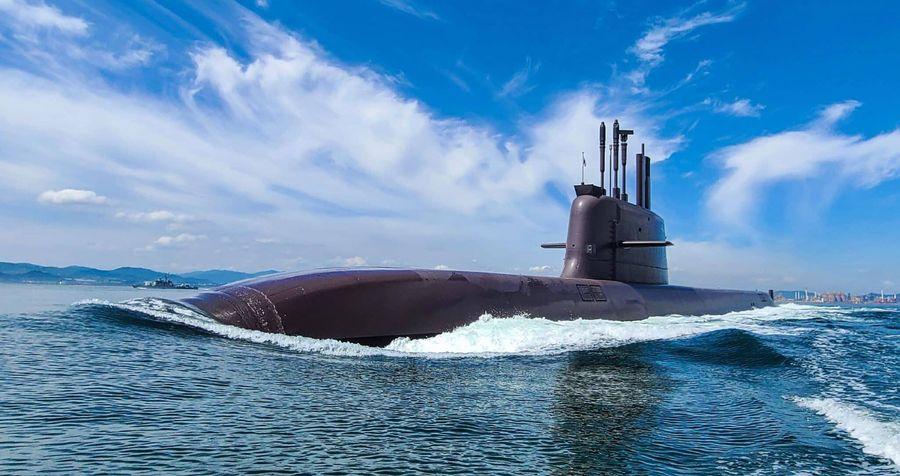
South Korea’s Nuclear-Powered Submarines After the Midterms
A Bipartisan Path Forward
Published Nov. 19, 2026 • Read time: 5m

South Korea’s nuclear-powered submarine initiative has entered a consequential phase. On November 6, Seoul approved the basic acquisition strategy for its Jang Bogo-N program, just days after Democrats won control of both chambers of Congress in the U.S. midterm elections. The coincidence raises a question for the U.S.–Republic of Korea alliance: how can political support for the program become a durable framework that survives changes in Washington?
The challenge is not a lack of shared strategic interests. It is translating those interests into practical agreements on nuclear fuel, safeguards, industrial responsibilities, and operational missions. The midterms make sustained congressional engagement more important, but they do not alter the underlying logic of maritime cooperation between the allies. A clearer division of labor could also reduce uncertainty for planners balancing peninsula defense with wider regional responsibilities.
The November 2025 bilateral joint fact sheet endorsed South Korea’s construction of nuclear-powered attack submarines and committed Washington to exploring fuel arrangements. That political commitment was significant, yet it did not settle the legal requirements for naval nuclear propulsion. The existing U.S.–ROK civil nuclear agreement covers peaceful nuclear cooperation; any arrangement for military propulsion must address separate legal and regulatory questions. Congressional scrutiny is therefore a necessary part of implementation, not evidence of an alliance disagreement.
When the new Congress convenes in January 2027, Democratic majorities will shape legislation, oversight, and discussion of sensitive nuclear cooperation. Some Democratic lawmakers have voiced concerns about expanded uranium enrichment and spent-fuel reprocessing, but these concerns should not automatically be interpreted as opposition to conventionally armed submarines. The Senate Armed Services Committee’s 2026 report recognized potential benefits from bilateral submarine manufacturing cooperation while requesting an assessment of regional stability, costs, proliferation risks, and implications for wartime operational control. The report due February 1, 2027, offers an opportunity to make the strategic case on a bipartisan basis. Congressional involvement can help sustain commitments across successive administrations when the program's long-term costs and benefits are clearly established.
That case begins with North Korea. Its evolving undersea and missile capabilities reinforce the need for persistent surveillance and antisubmarine operations. Nuclear propulsion would allow South Korean submarines to remain submerged longer, move at sustained speed, and operate across greater distances. Yet this capability should be assessed alongside conventional submarines, maritime patrol aircraft, underwater sensors, and unmanned systems. Seoul should explain which missions require nuclear propulsion and why the additional capability justifies its substantial lifetime cost.
The broader alliance contribution may be equally important. More capable South Korean submarines could improve maritime awareness, strengthen allied antisubmarine operations, and help safeguard vital sea lines of communication. Such missions would enable Seoul to assume greater responsibility for regional maritime security while complementing U.S. naval forces. They need not imply automatic participation in every regional contingency. Clearly agreed operational roles and consultation procedures would strengthen deterrence while respecting each ally’s national decision-making.
Nuclear fuel remains the program’s most sensitive challenge. Seoul’s intention to use low-enriched uranium for conventionally armed submarines provides an important basis for nonproliferation discussions, but enrichment level alone cannot resolve questions of fuel supply, custody, material accounting, reactor security, and spent-fuel management. A tailored bilateral framework, supported by appropriate engagement with the International Atomic Energy Agency, will be essential. Keeping naval propulsion negotiations distinct from broader civilian enrichment and reprocessing questions could help maintain focus and confidence on both sides.
Industrial cooperation offers another opportunity, provided expectations remain realistic. South Korea possesses advanced shipbuilding capabilities, while the United States contributes decades of naval nuclear expertise. Cooperation on workforce training, shipyard modernization, maintenance, and supply chains could support American maritime readiness as well as Korean submarine development. But U.S. shipbuilding capacity is already constrained. Any proposal must demonstrate that cooperation expands practical capacity rather than competing for scarce personnel, facilities, and components. Agreement on maintenance responsibilities and nuclear-qualified workforce development would also help ensure that initial construction plans are matched by decades of safe operations.
Seoul should therefore develop a single negotiating agenda linking military requirements, nuclear diplomacy, industrial planning, and financial oversight. It should specify intended missions, requested U.S. cooperation, safeguards commitments, and measurable benefits for both countries. Such coordination would help prevent separate negotiations from producing conflicting expectations or unnecessary delays. Regular discussions with Republican and Democratic lawmakers—including those overseeing defense, foreign affairs, and nuclear policy—would help address concerns before positions harden. Transparent milestones and credible cost estimates would also sustain confidence within South Korea.
The midterms have changed the political environment, not the foundations of the alliance. A sustainable submarine partnership will require more than presidential endorsement: it will require bipartisan understanding, technical discipline, and reciprocal strategic value. By approaching nuclear propulsion as a long-term alliance undertaking rather than a narrowly national acquisition, Seoul and Washington can turn stronger South Korean defense capabilities into more effective combined deterrence and a more resilient Indo-Pacific maritime partnership.
Jihoon Yu, Ph.D., is a research fellow at the Korea Institute for Defense Analyses. He served in the ROK Navy for 27 years as a submarine officer and a strategic officer.
South Korea’s Nuclear-Powered Submarines After the Midterms
By Jihoon Yu • RealClearDefense
Why Build a Billion-Dollar Warship if a Cheap Drone Can Sink It?
By Ege Can Gün • RealClearDefense
Megaspeed Proves: Congress Must Act on Chip Security
By Michael Groen • RealClearDefense
Creating a MEF Insurance Policy
By Steven Bancroft • RealClearDefense
Operation Epic Fury and the Illusion of Victory
By Stephen D. Cook • RealClearDefense
South Korea’s Nuclear-Powered Submarines After the Midterms
By Jihoon Yu • RealClearDefenseWhy Build a Billion-Dollar Warship if a Cheap Drone Can Sink It?
By Ege Can Gün • RealClearDefenseCreating a MEF Insurance Policy
By Steven Bancroft • RealClearDefense
Five Takeaways From Navy Nominee’s Rocky Hearing
By Seligman & Weisgerber, WSJ
U.S. Air Force Taps Anduril for Containerized Launcher
By Global Defense News