
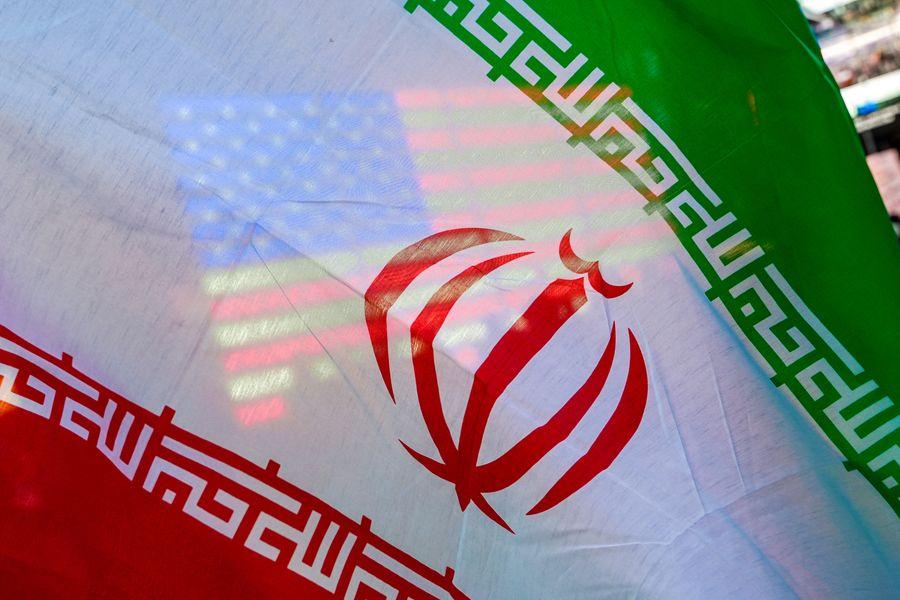
Operation Epic Fury and the Illusion of Victory
Published Nov. 18, 2026 • Read time: 7m
As the dust settles on the midterm elections, the American political landscape has been reshaped. Democrats have executed a sweeping victory across Congress, securing a mandate from an exhausted electorate. In the weeks since this political earthquake, Republicans are slowly beginning to acknowledge that the 2026 Iran War played a role in their widespread defeat. Yet, many within the party continue to marginalize the conflict, treating it as one of several variables that contributed to their loss. This assessment is inaccurate and ignores the reality of the American voter. The war with Iran is not a peripheral issue. It is the core catalyst for the political realignment we just witnessed.
Before the bombs fell, the administration was riding a stabilizing economy and tamed inflation—a domestic narrative strong enough to carry them through November. That advantage evaporated on February 28 with the untelegraphed launch of Operation Epic Fury. The administration made little to no attempt to garner public support beforehand, and no evidence of an imminent Iranian attack on American interests has ever been provided to the public. There was no intelligence released suggesting an impending strike that could not have been repelled by United States air defense systems. By initiating a conflict in the heart of the global energy supply chain and enforcing a naval blockade across the Strait of Hormuz, the administration triggered a spike in global crude prices. The resulting surge in domestic fuel and logistical costs functioned as a crippling tax on the American consumer, reigniting inflation and suffocating the recovery. Americans were reminded of the war's economic toll on a daily basis as they drove past gas stations, and on a weekly basis as they paid for groceries. The electorate went to the polls with empty wallets, punishing the party that traded domestic stability for an ill-explained military engagement.
Iran was, undoubtedly, a regional menace and a persistent global disruptor. The regime in Tehran has spent decades sponsoring terrorism, funding proxy militias, and destabilizing neighboring governments. It was a threat that needed to be addressed. The tactical trigger to initiate the conflict was that Iranian leaders assembled at a key time and place, presenting an irresistible opportunity for a decapitation strike. By exploiting this gathering, the military executed a classic implementation of the "surprise" principle of war, paralyzing the Iranian command structure in the opening hours of the campaign.
Following the initial shock, the United States clearly implemented the principles of "mass" and the "offensive." Over the ensuing weeks, American forces unleashed a torrent of firepower. The military concentrated overwhelming combat power to achieve results. Simultaneously, the U.S. seized and exploited the initiative, maintaining an offensive posture. Advanced stealth fighters and precision guided munitions reduced Iranian military targets, naval installations, and missile production facilities to rubble.
However, amidst this display of military power, the United States lost sight of the most critical principle of war: the "objective." Military doctrine dictates that every operation must be directed toward a clearly defined and attainable goal. The stated objective of Operation Epic Fury was absolute in its clarity. U.S. leadership declared that we went to war to ensure Iran would never obtain a nuclear weapon.
What planners failed to acknowledge is that to achieve that objective, the ruling regime in Iran had to be dismantled. Yet, inexplicably, the United States paused. The administration relinquished the principle of the offensive. We voluntarily gave up the initiative, shifting from a posture of attack to one of observation. We executed a devastating bombing campaign, crippled their military capabilities, and then simply stopped, hoping the destruction would somehow force a political capitulation.
This strategic pause was a miscalculation. It allowed the Iranian regime precious time to calibrate its response and stabilize its internal control. More dangerously, it permitted our global adversaries to intervene in the aftermath. Moscow, seeking to bleed American resources, stepped in to provide critical satellite imagery and targeting intelligence to the reeling Iranian military. Meanwhile, Beijing worked to salvage its disrupted energy supply. While the U.S. Navy's blockade successfully slashed Iranian crude exports by more than half, Beijing utilized a sprawling "ghost fleet" of illicit tankers conducting ship-to-ship transfers in the South China Sea to maintain a 500,000-barrel-a-day financial lifeline to Tehran. This combined intelligence sharing and shadow-market economic relief gave the clerics the breathing room they needed to survive the initial shock of the campaign.
Because the United States failed to press its advantage, the oppressive Iranian theocracy survived. While new leadership stepped in to replace those killed in the February strikes, the apparatus of state terror remained largely intact. They are now utilizing this reprieve to reconstitute their forces, rebuild their infrastructure, and harden their surviving facilities deep underground where conventional weapons cannot easily reach.
The Commander in Chief now faces a newly empowered Democratic Congress to salvage his defining legacy. A legacy that stands to be tarnished by a failure to use the full extent of American military and political power to remove the Iranian theocracy. The destruction of military hardware means absolutely nothing if the radical ideology guiding that hardware remains in control. Unless the administration acknowledges that Iran's clerics are the center of gravity of their nuclear ambitions, the threat will continue to persist. If they are left in power, this war will have to be fought all over again in the relatively near future, likely at a much higher cost in American lives.
It is imperative that United States policy in Iran shift to one of regime change. We must pursue decisive victory, not for the sake of political vindication, but for the fundamental safety and security of all Americans.
Achieving this does not require a land invasion or an occupation by conventional ground forces. The solution lies in the realm of unconventional warfare. The United States must commit its Special Operations forces, working in coordination with the Central Intelligence Agency and the Israeli Mossad, to cultivate an insurgency within Iran's borders.
The Iranian population is dissatisfied with their rulers. Decades of economic mismanagement, corruption, and domestic repression have created a society desperate for liberation. The United States and its allies must train, arm, and equip a resistance force drawn from this population. This insurgency must be capable of applying credible, lethal pressure to the regime's internal security apparatus.
The NAJA, Iran's sprawling law enforcement command, and the Basij, the volunteer paramilitary militia loyal to the Supreme Leader, have long served as the enforcers of the state. They suppress protests with lethal force and terrorize the civilian population into submission. A homegrown insurgency—made up of disaffected youth and led by defecting Artesh officers—supplied with weapons, encrypted communications, and tactical training, could turn the tables on these oppressors. We must force the regime to expend its dwindling resources defending itself from its own citizens rather than projecting terror abroad. By empowering the Iranian people to fight for their own freedom, we can create an internal crisis that the regime simply cannot survive.
A well-funded and armed resistance movement is the only path to a sustainable and decisive victory. We must unseat the theocratic regime from within, replacing a hostile adversary with a nation focused on its own prosperity rather than regional domination. The United States smacked the hornet's nest of the Middle East with Operation Epic Fury. The thought that this war can simply be brought to a tidy end through diplomatic maneuvers or tactical pauses is a foolish illusion. The ruling clerics in Tehran will never forget what the American military did to their country. If they are left in power, revenge will become their singular, unifying goal. They may lack the capability to strike back this year. They may even lack the capability in five years. But retaliation will remain on their horizon. We have a two-year window to finish what we started, and we must seize it before the hornet's nest swarms again.
Stephen D. Cook is a retired U.S. Army Special Forces lieutenant colonel with 25 years of service. A combat veteran decorated for both heroism and valor, he is the author of the field manuals “When We’re Finished” and “Choose the Heavier Ruck,” and the techno-thriller precision-strike trilogy leading with “In the Shadows of the Sky.” His work explores the intersection of elite military decision-making, intuition, and disruptive leadership. He is based in St. Augustine, Florida
Operation Epic Fury and the Illusion of Victory
By Stephen D. Cook • RealClearDefense
Previewing The Shenzen Summit: A Critical View
By Stephen Blank • RealClearDefense
How to Win Without Military Victory
By Kevin Eyer • RealClearDefense
We Keep Funding ‘Shared Infrastructure.’ Nobody Has Defined It.
By Frederick Gale • RealClearDefense
Congress Must Reauthorize Section 702 of the Foreign Intelligence Surveillance Act
By Bryce G. Poole • RealClearDefense

Five Takeaways From Navy Nominee’s Rocky Hearing
By Seligman & Weisgerber, WSJ
U.S. Air Force Taps Anduril for Containerized Launcher
By Global Defense News
Time To Say Goodbye to the NMESIS and NSM
By Marine Corps Compass Points
HII and U.S. Navy Break Ground on Shipyard Complex
By George Allison, UKDJ
Rare U.S. Air Force Spy Plane Spotted Over the Black Sea
By D. Malyasov, Defence Blog