
Shoring Up NATO's Eastern Flank
Last updated 06:34 AM EST • Read time: 6m
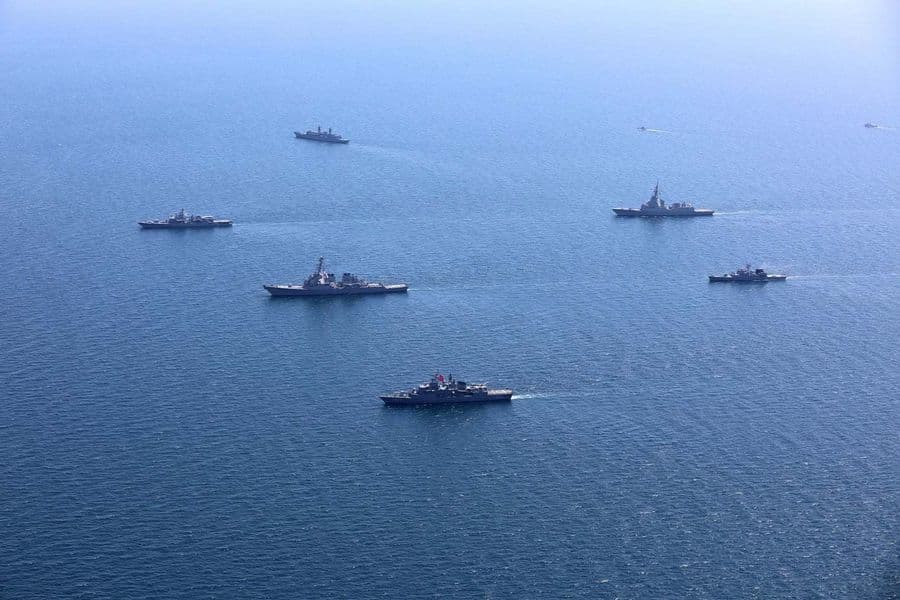
The Ukraine crisis demonstrates the need to shore up NATO's eastern flank. Yet a question exists of prioritization. Typically, the Baltic States are of greatest concern. Estonia, Latvia, and Lithuania are geographically isolated from the rest of the Atlantic Alliance, given Russia's Baltic Sea naval strength, its forces in the Kaliningrad Exclave, and the Baltic republics' lack of strategic depth. However, the current situation calls for increased attention to NATO's southeastern flank, namely its Black Sea member states of Romania and Bulgaria. If Russia escalates in Ukraine, forces there will be critical to deterring or defeating broader pressure against NATO.
Russian escalation in Eastern Europe appears highly likely. According to the U.S. and NATO, around half of Russian ground forces, with air and naval support, are already in position to invade Ukraine. Russia has multiple axes of advance – through Donbas, from Crimea, across the Russo-Ukrainian border near Kharkiv, and from Belarus. Russia has multiple political incentives for escalation. The Ukrainian military and economy are improving, potentially jeopardizing Russia's ability to support the Donbas separatists and the Crimean exclave in the near future. Ukrainian President Vladimir Zelensky appears to be extremely sensitive to domestic pressure, hence his shift from a conciliatory to a bellicose Russian policy and his persistent unwillingness to compromise Ukraine's NATO aspirations.
Offensive operations against Donbas and Crimea may be off the current political agenda. However, a Ukrainian population emboldened by accelerating prosperity, a diffused Russo-Ukrainian crisis, and a military equipped with UCAVs and cruise missiles could pressure Zelensky to recover the occupied territories, forcing Putin into a more costly war at a later date. Putin may not wish to devour Ukraine. Indeed, his most likely operational objective remains establishing a land link between Donbas and Crimea that passes through Mariupol. But Moltke's dictum, no plan survives contact with the enemy, is instructive: Putin may be forced to push farther into Ukraine than he wishes to solidify Russia's operational position.
A large-scale successful Russian invasion is unlikely. Ukraine's population is thoroughly anti-Russian, despite the "Russian-speaking" epithet of which Western media is so fond. The country's morale is high, and its population has military experience, making a post-invasion insurgency likely. Military needs will compel Russia to engage in urban combat, the precise situation that favors insurgents. And the Ukrainian spring thaw, due by mid-March, will transform the country's east into a muddy morass that bogs down Russian armored units and favors lighter anti-tank missile-armed Ukrainians.
All this points to the possibility of horizontal escalation. As Russian casualties mount and the Russian people and oligarch class realize the scale of the war Putin has begun, domestic opposition may mount. Moreover, NATO will support Ukraine. Its sanctions will damage Russia's economy, while its promised weapons convoys will continue once the fighting starts. In this context, escalation against NATO may appear necessary to demonstrate Russian resolve, indicate the conflict's stakes to NATO, and compartmentalize Ukraine from the Atlantic Alliance.
The Baltics may be a Russian target, along with Poland. However, political calculations militate against this choice. Russia's best chance of victory against NATO is to "Crack" the Atlantic Alliance, diminishing the stakes for at least one Western European power and thereby suppressing an Amero-European response. Germany, Russia's most reliable NATO interlocutor, will feel more threatened by escalation against Poland or the Baltics than a Black Sea power farther from its borders. Russian forces are prepositioned for escalation in the Black Sea, considering its expanded naval and air presence. The logistics for a Ukrainian conflict incentivize a turn towards the western Black Sea, while an additional operation in another theatre would stress Russian command and control bandwidth. Moreover, Russian informational presence in the Balkans could create pressure from the Romanian and Bulgarian rear.
Indeed, Russian information manipulation has begun in the Balkans. Russian-influenced media outlets foster the view that Ukraine wishes to expel Russian-speaking populations from Donbas and compare the Ukraine question to the Kosovo situation. Russia has strong links with the Serbian government and Bosnian Serb leadership. A renewed Balkan conflict is unlikely but would destabilize Bucharest and Sofia if concurrent with Russian pressure. Additionally, a Russian offensive would coincide with activity in the Russian-backed separatist territory of Transnistria and throughout Moldova, providing another avenue of pressure against NATO's Black Sea members.
All this points to the possibility of pressure against Romania and Bulgaria, a reality for which NATO must prepare, concurrently with its actions to ward off Russian pressure in Poland and against the Baltic States. Four steps should be considered independently of NATO's fighter deployments to the Black Sea.
First, NATO should consider forward-deploying short-range air and missile defenses to Romania and Bulgaria to ward off a short-notice Russian first strike. Russia likely will employ its missiles, rather than its air forces, to destroy NATO's Black Sea defenses, especially if its operational requirements in Ukraine demand a greater fixed-wing presence. Hardening Romanian and Bulgarian targets with additional ground-based air defenses will complicate any Russian first strike.
Second, NATO must prepare for cyber pressure in Romania and Bulgaria, ideally constructing a joint Black Sea command center to coordinate Black Sea responses. Russia's cyberattack on Ukrainian banks and government institutions was a demonstration of capability to disrupt Ukrainian society rather than a strategically directed attack. But a similar attack on Romania and Bulgaria concurrent with Russian provocation could elicit a NATO response, providing Moscow with a pretext to widen a conflict. A cyber coordination center would preclude this possibility, affording NATO escalation control.
Third, NATO should maintain a significant naval presence in the Eastern Mediterranean past the end of its joint exercises. An American carrier likely should be shifted to the Indo-Pacific to demonstrate to China and the U.S. regional allies that Washington still prioritizes the Taiwan question, and other Asian interests, despite European instability. However, NATO allies France and Italy can be called upon to provide naval support, especially in conjunction with American surface combatant escorts and submarines.
Fourth, the U.S. should consider placing surface-to-surface and anti-ship missiles in Romania and Bulgaria in sufficient numbers to complicate Russian maritime pressure against the western Black Sea and deter Russian activity after an offensive from an occupied southwestern Ukraine. Much as improved air and missile defenses would increase the resources needed to knock out Romania and Bulgaria, so would NATO offensive capabilities raise the cost of an attack.
The Baltic and Black Seas and regions are separated by distance. They are united by their critical strategic value as NATO's eastern frontier and, thus, the U.S.'s century-old interest in preventing a great power from dominating Europe.
Seth Cropsey is president of the newly founded Yorktown Institute (yorktowninstitute.org). He served as a naval officer and as deputy Undersecretary of the Navy.
Is It Déjà vu All Over Again: The 2012 Report on Global Zero
By Peter Huessy • RealClearDefense
As Private Investment Pours Into Defense, the Clock Is Ticking
By Elaine McCusker • RealClearDefense
The First Test of Peace Lies in Ukraine's Borderlands
By Dennis T. Cosgrove • RealClearDefense
The VFW’s Gambling Addiction Victimizes Veterans
By Jack Yoest • RealClearDefense
Superintelligence Exposes a Gap in the Law of Delegated Authority
By Sue Ghosh Stricklett • RealClearDefense
When Your Navy is too Small, the Bill Comes Due Bigly
By CDR Salamander
Quo Vadis MCU?
By Marine Corps Compass Points
When the Network Goes Dark, Who Controls the Battlefield?
By Jonathan K. Corrado • RealClearDefense
Air Force Should Buy 250 Blended-Wing Tankers, as 2027 Demo Looms
By A&SF Mag.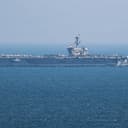
Long Deployments to Be Navy Standard For Next Couple Years
By Mongilio, USNI News