
What Ukraine Needs Now
Last updated 06:06 AM EDT • Read time: 6m
Moscow has announced a change of strategy in its war of aggression against Ukraine that has wrongly been assumed to be a retreat. Rather than continue its abortive effort to encircle Kyiv, it will not concentrate on encircling the Ukrainian brigades in the Donbas—among the best forces in that army – to forge a land bridge to Crimea and, as part of a negotiated or imposed military outcome, truncate Ukraine's territorial integrity. This is not a retreat but rather a recalibration of Russian objectives, for it does not exclude the possibility of new attacks upon Ukraine’s cities. Territorial abridgments of Ukraine and the coercive imposition of recognition of Russia's seizure of Crimea and Donbas may be the maximum feasible option as currently judged by Moscow. But it is merely the prelude to resumption of the multi-domain efforts involving energy, cyber, information, and political warfare directed by Moscow against what would be a new rump Ukrainian state while those conquered territories either receive “independence’ from Moscow or simply incorporated into the Russian Federation. Indeed, to find the manpower for its new strategy, Moscow is seeking reservists, mercenaries from its Vagner private military company, and bringing forces from Georgia and the Far East to the front. The purpose is to replenish the serious losses suffered by the Russian army and use its quantitative superiority over Ukraine in a war of attrition to achieve these reformulated objectives.
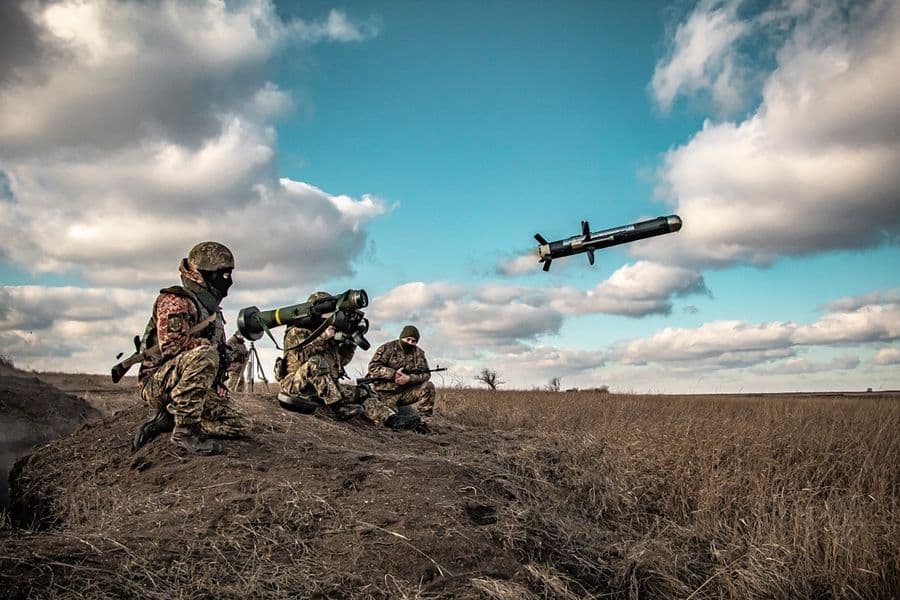
While these decisions represent an acknowledgment of Ukraine's heroic defense; it also places new as well as continuing challenges before Ukraine, in particular the need to sustain and increase the volume, and pace of foreign weapons supplies, and the types of weapons it needs. Beyond its need for tanks, air defenses, and planes to counter Russian aerial and ground offensives and provide tactical air support for its forces. Concurrently it needs continuing large-scale shipments of anti-tank, anti-air capabilities, and now to forestall naval and/or amphibious attacks and shelling, it needs rapid delivery of more anti-ship missiles. The urgency and pace of these deliveries must be speeded up, for as the Ukrainian government observed, NATO showed "insufficient bravery" in its decisions despite its soaring rhetoric. In order to get these deliveries rapidly to the front in sufficient numbers, President Biden should implement the Defense Production Act to ensure a wartime pace of deliveries while also working more intensely with allies to overcome their hesitations about sending these weapons.
Even if one argues that the negotiations between the belligerents are, despite difficulties, making progress, it is clear from the historical record that Putin and Moscow regard such agreements, as did Germany in 1914, as mere "scraps of paper" to be broken expedient once it becomes to do so. We must therefore realize and then act accordingly that it does not serve Ukraine's or the West's interests. that this war "ends' with an inconclusive agreement that merely sets the stage for another round of hostilities. Instead, to prevent that kind of denouement, i.e. an endgame comparable to that of the Korean war or to other frozen conflicts in Eurasia that, as often as not, erupt into war, e.g., Nagorno-Karabakh, we must flood Ukraine with the weapons and technologies it needs to defeat Russia decisively and comprehensively.
Indeed, it has long since become clear that if Europe, as well as the Russian people, are to have real security than Moscow’s imperial option must be foreclosed. Given the long and conjoined association of empire and autocracy in Russia and the fact that Putin and his entourage deeply believe that they have been at war with the West since 2004 when they first tried to take over Ukraine, preservation of peace in Europe, not merely in Ukraine but also regarding Russia’s “political warfare” against the rest of the continent.
Therefore, we must do everything in our power to provide Ukraine with victory and not be frightened by Russian threats, especially given NATO's conventional superiority. Moscow, in previous conflicts, has shown no compunction about even flying missions against the U.S.. and its allies, whether it be in the Korean war or against Israel in the 1969-70 "War of Attrition." And during our war with North Vietnam, Moscow transferred to Hanoi 95 S-75 air defense missile systems, over 500 airplanes, 120 helicopters, more than 5,000 anti-aircraft guns and 2,000 tanks. Over 10,000 Soviet military specialists were dispatched to Vietnam: from missile crews, pilots and signalmen to tank crews and doctors. And throughout that war, no escalation occurred or came close to occurring.
Therefore, we should be able to repay Moscow now, given our superiority and call its bluff. Not only would doing so decisively demonstrate our resolve to support Ukraine and match if not surpass Russian escalations, like bombing L'viv and the threats to use chemical warfare discerned by allied intelligence. It would also show that we will not permit a Russian victory under any circumstances, an outcome that is the sole ending to this war that can assure peace for years to come. During World War II, Prime Minister Churchill told the U.S., "Give us the tools and we'll finish the job." Inasmuch as Ukraine has been winning this war and has forced Russia to change its strategy, this imperative is no less urgent today.
Stephen J. Blank, Ph.D., is Senior Fellow at FPRI’s Eurasia Program. He has published over 1500 articles and monographs on Soviet/Russian, U.S., Asian, and European military and foreign policies, testified frequently before Congress on Russia, China, and Central Asia, consulted for the Central Intelligence Agency, major think tanks and foundations, chaired major international conferences in the U.S. and in Florence; Prague; and London, and has been a commentator on foreign affairs in the media in the U.S. and abroad. He has also advised major corporations on investing in Russia and is a consultant for the Gerson Lehrmann Group. He has published or edited 15 books, most recently Russo-Chinese Energy Relations: Politics in Command (London: Global Markets Briefing, 2006). He has also published Natural Allies? Regional Security in Asia and Prospects for Indo-American Strategic Cooperation (Carlisle, PA: Strategic Studies Institute, U.S. Army War College, 2005). He is currently completing a book entitled Light From the East: Russia’s Quest for Great Power Status in Asia to be published in 2014 by Ashgate. Dr. Blank is also the author of The Sorcerer as Apprentice: Stalin’s Commissariat of Nationalities (Greenwood, 1994); and the co-editor of The Soviet Military and the Future (Greenwood, 1992).

Trump's Disrupt First, Negotiate Second: Greenland in Focus
By Meda Parameswara Reddy • RealClearDefense
In Seeking Peace With Beijing, Taipei Is an Asset, Not a Burden
By Alexandru Filip • RealClearDefense
Strike First: Israel's Inevitable Doctrine for the Iranian Axis
By Lance Gordon • RealClearDefense
It’s Not President Trump but Thomas Friedman Who Should Be Ashamed
By Francis P. Sempa • RealClearDefense
Putin, Plague, and America’s Biodefense Gap
By Ryan Kane • RealClearDefense
U.S. and Japan Begin Naval Exercises Near Taiwan
By Mari Yamaguchi • Associated PressU.S. and Japan Begin Naval Exercises Near Taiwan
By Mari Yamaguchi, AP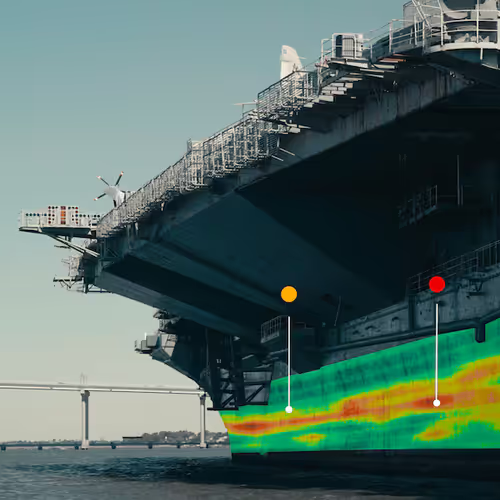
U.S. Navy, Gecko Robotics Surge AI Maintenance Contract
By Ceder, Simkins, Navy T.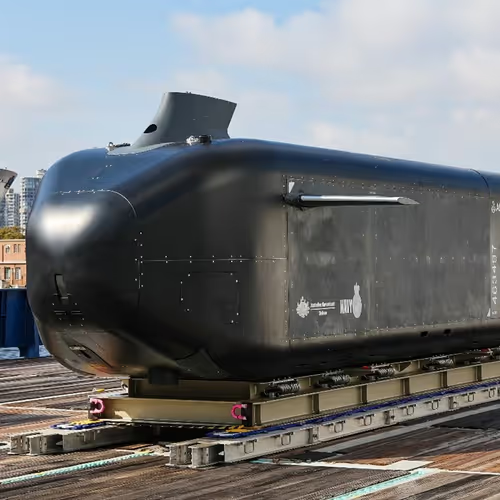
Ghost Shark XL-AUV Payload Bay Seen For First Time
By Thomas Newdick, The WarZone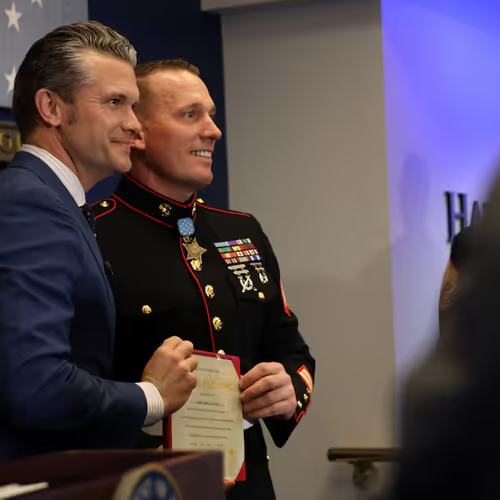
Dakota Meyer Tapped As Barracks Task Force Senior Advisor
By C. Stassis, MC Times