
The War at Sea
Published April 18, 2022 • Read time: 7m
Naval Power has been the Ukraine War’s most underrated element
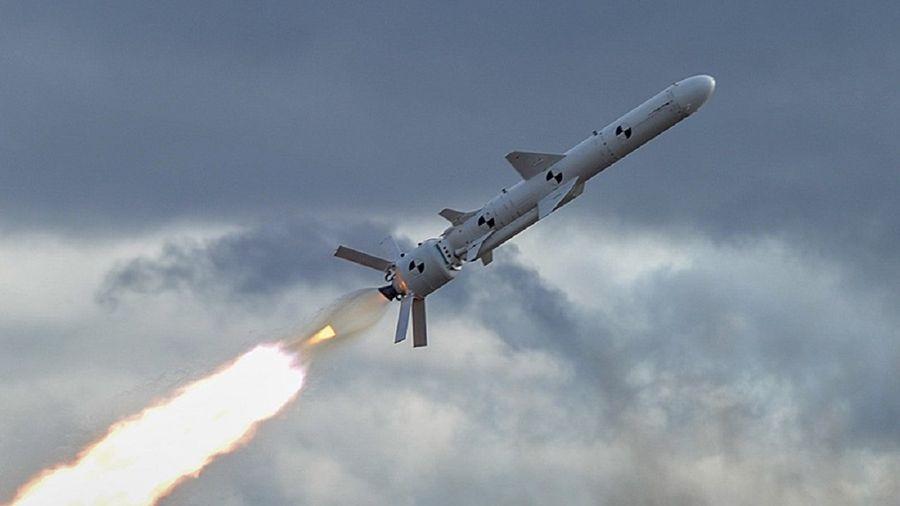
Ukraine’s sinking of the Russian cruiser Moskva received significant attention in Western media. But there has been little investigation of the Ukraine war's naval elements. Naval considerations motivated Russian intervention, while Russia's naval supremacy has reduced Ukrainian freedom of action and shaped its strategic and operational decision making. Most critically, Russian naval losses will weaken its ability to project power into the eastern Mediterranean, regardless of the Ukraine conflict's result. U.S. policy should grasp this and provide Ukraine with sufficient anti-ship capabilities to destroy the Russian Black Sea Fleet.
Russia’s invasion of Ukraine had several causes. Vladimir Putin's imperial ambition, the FSB's incompetence, and the Russian policy establishment's pervasive paranoia all drove the Kremlin to war. However, Russian intervention also stemmed from concrete military shifts between Kyiv and Moscow. As the war has demonstrated, the Ukrainian Armed Forces are experienced, have high morale, and are well-led. They possess an excellent doctrinal understanding of employing missile-armed light infantry and unmanned combat aerial vehicles (UCAVs) to conduct deep battle against a quantitatively and qualitatively superior adversary. This should have come as no surprise. The Donbas War created an excellent Ukrainian officer corps and provided combat experience to hundreds of thousands of Ukrainian soldiers.
Months before the war began, in October 2021, Ukraine began employing the same Turkish-built TB2 Bayraktar UCAVs it used against Russia to combat separatist forces in the Donbas, launching strikes against the so-called Donetsk Peoples Republic (DNR) and Luhansk Peoples Republic (LNR) artillery from beyond the Line of Contact. Similarly, Ukraine has invested for years in cruise missile technology.
The Readiness Cliff: Pacific Lessons Drawn from the Middle East
Not Like the Old Days: Modern Sea Control Will Be Episodic and Local
To Build Golden Fleet Frigate Fast, Two Shipyards are Needed
Building Durable Demand for American Ships
By April this year, major Ukrainian combat formations would have received the Neptune anti-ship cruise missile (ASCM), the same ones that struck the Moskva. From the Kremlin’s view, Ukrainian military advances were likely to threaten Russia in the long term. The "Ukrainian-Nazi regime" that rules in Kyiv – a regime headed by a Jew descended from Holocaust survivors – in Putin's view, was likely to assault the pro-Russian Donetsk and Luhansk enclaves, use their improving cruise missiles to destroy the Russian Black Sea Fleet, and even bombard Russian cities with future land-attack missiles.
Without sea control, Russia's Crimea exclave would be vulnerable. With the Crimea Canal blockaded, Crimea's cities would experience water shortages. Without a land bridge to Crimea, Ukrainian missiles or saboteurs could destroy the Kerch Strait Bridge, further precluding resupply of the peninsula. Naval issues were paramount for the Russians.
In Putin's eyes, the invasion on February 24th was thus a preventive war, not simply to stop Ukraine from joining NATO but also to preclude a military buildup that would jeopardize Russian interests in the next half-decade. Putin likely saw a stark choice: attack now, with Russia's apparent relative advantage still high, or wait several years and risk Ukrainian strikes on Russian territory.
Russia has used its naval forces to constrain Ukrainian – and American – freedom of action throughout its invasion. A clear signal for the invasion was Russia's concentration of warships and submarines in the Black Sea and eastern Mediterranean. Russia deployed a Surface Action Group to the Black Sea centered upon the Moskva, multiple landing ships to lift two Battalion Tactical Groups of Naval Infantry in an amphibious assault, two Bastion-P land-based coastal defense systems, four Kilo-class submarines, and two repair ships.
This combination provided three benefits. First, the Kilo-class submarines, Grigorovich-class frigates, and Bastion-Ps, armed with Kalibr land-attack cruise missiles, provided additional strike capability, necessary given the Russian air force’s limitations. Second, the Moskva, as a Slava-class cruiser, carried eight S-300 launch tubes, each with eight missiles. This offers Russia air defense coverage of the entire southern Ukrainian coastline. Finally, the naval/amphibious force also serves as coverage for a Russian invasion, complicating any planned U.S. or NATO intervention.
Russian naval forces could, thus, hold Ukrainian units in place in anticipation of an assault on Odesa, improve missile coverage, and prevent Ukraine from using its aircraft, UCAVs, and missiles between Odesa and Mariupol.
Ukraine has gained two important footholds along the Dnipro River. The loss of the Moskva knocked out a significant Russian air defense system. This will force Russia to redeploy air defenses to the south or allow Ukrainian forces to surge remaining manned and unmanned aircraft between Mykolaiv and Kherson. Ukraine has counterattacked tactically but not operationally. Absent the Moskva’s additional air defenses, Ukraine can time a major counterattack with the Russian Odesa offensive, forcing newly appointed commander General Aleksandr Dvornikov to redirect resources or risk pressure on crucial gains in the south.
Unless Russia’s impending Donbas offensive succeeds clearly, the war is likely to continue. Russia is not likely to win convincingly. It has not taken a needed operational pause to refit its units, its logistics and communications remain poor, and its reserve hardware is outdated and poorly maintained. Russia may envelop Severodonetsk, Slovyansk, and Kramatorsk. But this does not make the Donbas a viable Russian enclave, consolidate a defensible land bridge through Mariupol to Crimea, or break Ukrainian will and force a peace settlement with Kyiv.
But details should not obscure the broad picture. Russia has a clear interest in the eastern Mediterranean. China's aggression toward Taiwan has increased the demands on the U.S. Navy. Russia hopes to capitalize, gaining local sea control. Absent this pressure point on NATO, it cannot threaten the Atlantic Alliance's soft Mediterranean underbelly, nor can it manipulate a new round of violence in Libya to its own benefit.
Without sufficient forces in the Black Sea, however, Russia will be hard-pressed to sustain its eastern Mediterranean positions. Turkish closure of the Bosphorus and Dardanelle straits may prevent transfer of Russian forces in the East Mediterranean to replace the Moskva, at least until the Ukraine War ends. And, the resurrected Russian Fifth Eskadra (Mediterranean squadron) is cut off and overextended, absent viable long-term resupply.
That is if Ukraine can destroy the Russian Black Sea Fleet.
The United States should provide Ukraine with the anti-ship missiles it needs to eliminate Russian warships and ideally submarines. The U.S. is already assisting Ukraine with Unmanned Surface Vehicles and tactical UCAVs. This is a foundation, not a fully completed work. It should be expanded.
First, the U.S. should give the Ukrainian military with any remaining Soviet anti-ship missiles in NATO stockpiles. Ukraine needs weapons as quickly as possible. Its limited Neptune anti-ship cruise missile stocks are likely running low. Legacy Soviet equipment will be the easiest for Ukraine to use effectively.
Second, the U.S. should dip into its own stocks of anti-ship missiles or those of its NATO allies. Transferring Harpoon anti-ship missiles would be a good start, along with any equipment its allies can supply. Harpoons have been sold to U.S. allies and partners around the world and have been used effectively since the 1980s.
Third, the U.S. should procure any available Soviet-model missile-launched torpedoes and transfer them to Ukraine along with anti-submarine technology. Russia's Kilo-class submarines can only operate effectively in the central Black Sea, considering the shallowness of the sea's coastal areas. Ukraine needs the ability to target Russian submarines that approach too close to its coastline, particularly near Odesa.
The Black Sea is a moat against Russian access to the East Mediterranean. There it seeks to solidify its position as the region’s Middle East’s external power and ultimately project power into the central and western parts of the inland sea. The U.S. and NATO have a geo-strategic and humanitarian interest in turning back Russia’s invasion of Ukraine. The West has the same interest in frustrating Russia’s longer-term goal to replace the U.S. as the Mediterranean’s dominant naval power.
The U.S. and NATO should recognize the maritime character of the current war and act swiftly to assist Ukraine’s naval offensive ability.
Seth Cropsey is founder and president of Yorktown Institute. He served as a naval officer and as deputy Undersecretary of the Navy and is the author of Mayday and Seablindness.
The Pressure Is the Message: What Xi and Putin Faced in Shenzhen
By Emzari Gelashvili • RealClearDefense
China’s Revised Mobilization Law and the Expanding Reach of National Defense
By Muhammad Shoaib • RealClearDefense
U.S. Putting Weapons in Space: A Strategic Blunder?
By Ajey Lele • RealClearDefense
The Clearance Myth Is a Readiness Problem
By Elijah Fernandez • RealClearDefense
The Pentagon's Next Readiness Test Should Begin When the Cloud Goes Dark
By Colton Overcash • RealClearDefense
U.S. Putting Weapons in Space: A Strategic Blunder?
By Ajey Lele • RealClearDefense
U.S. Senate Seeks to Exchange Shipbuilding Funds for More Munitions
By Naval News
F-35C Completes First Launch and Recovery Trials on a Ford-Class Carrier
By Navy T.
USS George Washington Leaves Mideast As Trump Mulls Ending Iran War
By S&S
ULA’s Latest Launch Failure Spells Trouble for Space Force
By Greg Hadley, A&SF