
Insourcing Military Spending Enhances National Security
Published Feb. 13, 2024 • Read time: 4m
As a former member of the U.S. Senate Armed Services Committee, I have personally witnessed numerous contractor disputes and spending problems. It is critical that these issues should not lead to contracting that will have a negative impact on national security. Using U.S. contractors protects national security from supply chain disruptions as well as foreign companies that may have priorities that conflict with protecting America.
Unfortunately, the urge to keep prices low has led to the Pentagon looking overseas to contract with foreign producers of inexpensive military hardware. Foreign companies can frequently undercut American companies because of foreign subsidies, or unethical or illegal business practices not accepted in the U.S.
I have seen a spike in contracting expenses borne by the taxpayer since I left Congress in 2003. Within the framework of fair and honest competitive bidding by American companies, money should be spent domestically to protect American jobs. More importantly insourcing military spending protects national security and prevents the U.S. from becoming reliant on foreign sources for defense needs.
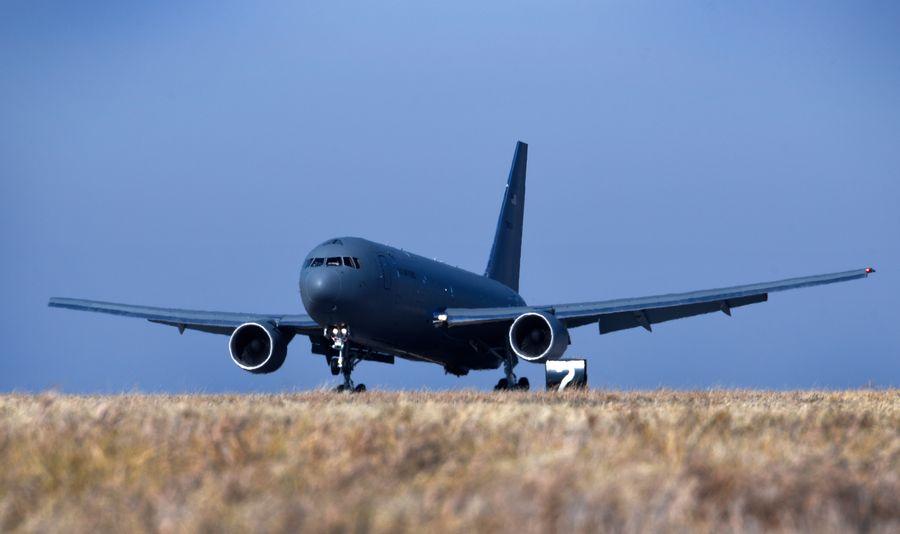
The global aerospace giant, Airbus, based in France, is angling for a contract with the Pentagon to provide the future refueling tanker to the U.S. Air Force. According to Reuters, American contractor, Lockheed-Martin, ended a partnership with Airbus to secure a $12 billion contract to build 75 refueling tankers. This means that now there are no American contractors partnering with Airbus to bid for this critical defense platform. Now is the time to make it clear to politicians that taxpayers do not want to outsource their dollars overseas for military hardware.
If we truly support an America First foreign policy, we should realize that outsourcing billions to create jobs in France makes no sense. A struggling economy and a hollowing out of American manufacturing, not to mention becoming reliant on a foreign source for a critical defense program, are ample reasons for the Pentagon to toss this contract aside today.
If loss of American jobs and national security risk are not sufficient to deter terminating this contract, consider the added legal costs of doing business with a foreign provider. As Attorney Bruce DelValle wrote in The Washington Times on December 27, 2023, one potential legal cost of contracting with Airbus is the “practice known in trade circles as an illegal subsidy whereby governments subsidize development costs through loans that are repaid only if the developed technology product is a success.” A prior act by Airbus resulted in the company being hit with a $7.5 billion penalty from the World Trade Organization (WTO), as announced by the Office of the U.S. Trade Representative on October 2, 2019. That illegal subsidy cost American aerospace companies billions in lost revenues. Why would American taxpayers want to reward this behavior with a new contract?
Other factors that should be considered when using foreign contractors are who bears the cost of a failure to deliver on time and is the quality of the product acceptable? For example, in the Airbus refueling tanker contract, it would be a lot easier to resolve a dispute between the U.S. government and a domestic contractor than to deal with a company subject to a sovereign government across the ocean. Allowing France to have the contract will give them more power than an American company because it will be more difficult to enforce any breaches by Airbus.
Although France is an ally, the idea of outsourcing the manufacture of the tanker makes the U.S. vulnerable, if alliances from the company or the government of France should shift in the future. This contract will take years to complete and changes in company or foreign policy will make the contract problematic to the U.S. military. When I was in the U.S. Senate, during the first Persian Gulf War in 1991, I was told that if the war lasted more than 6 months, we might be dependent upon China for spare parts for some of our military equipment. That got my attention!
In conclusion, I call on Members of Congress and the Pentagon not to be influenced by a bid from a foreign company to produce a new Air Force refueling tanker just because the bid might be a bit lower than an American company, You have a responsibility to consider the impact on national security, American jobs, sending taxpayer cash overseas, as well as long term litigation and repair costs that will balloon the contract expense.
Bob Smith is a former U.S. Senator from New Hampshire (1990-2003) who served for 12 years on the U.S. Senate Armed Services Committee (SASC) and Chairman of the Acquisition and Technology Subcommittee of the SASC.

The Army’s AI Cyber Defenders Need a Proven Stand-Down Order
By Gleb Tsipursky • RealClearDefense
After the Silence
By Chase Skylar DeMayo • RealClearDefense
Defense Chip Procurement Needs a Recovery Test
By Percy Yixuanchen Yu • RealClearDefense
FORTRESS America Must Measure Missions, Not Megawatts
By Burak Oktenli • RealClearDefense
After the Midterms, the Right Strategy Against Iran
By Lance Gordon • RealClearDefense
After the Silence
By Chase Skylar DeMayo • RealClearDefense
Underwater Arms Race Puts U.S. Naval Supremacy at Risk
By Tom O'Connor, Newsweek
New Facilities To Pump Out Upgraded F/A-18E/F Super Hornets
By Trevithick, WarZone
U.S. Navy Expands Tomahawk Warhead Production
By Naval News Staff, Naval News
SSN(X) Attack Boat Will be a Swift, Lethal Mothership for Undersea Drones
By USNI N.