
Our National Security Depends on Fluorochemistries
Last updated 07:01 PM EST • Read time: 4m
Keeping America safe is a fundamental responsibility of our federal government. To do so, the military relies on equipment that simply must work when needed—there is no room for error. So, when the Pentagon makes clear what it needs to accomplish its mission, we should listen.
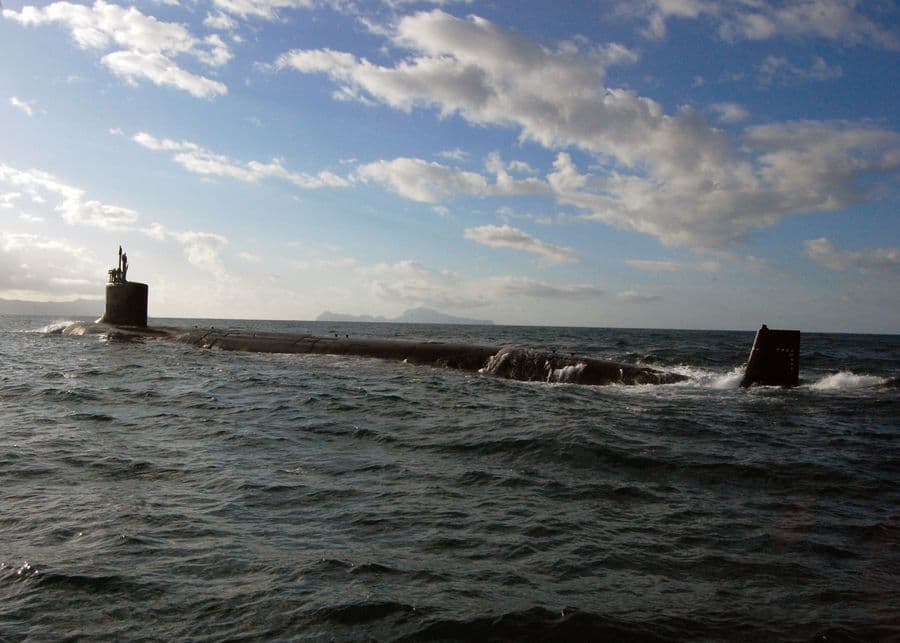
According to a Department of Defense (DoD) report last year, PFAS are a common chemical relied upon “in almost every major weapon category,” including aircraft, ships, submarines, missiles, torpedoes, radar systems, battle tanks and infantry carriers.
PFAS are fundamentally included in a group of thousands of fluorochemistries that have durable, heat-resistant properties. And that makes them essential for their role in supporting mission-critical component production and supply. However, the availability of these essential chemistries is at risk due to the potential for overly broad regulations. While the Chamber supports an accelerated cleanup of PFAS in the environment, banning fluorochemistries or regulations that are not based on the best science and risk data is an overreaction. Unfortunately, several states have done exactly that, and the National Defense Authorization Act (NDAA)—which may be re-authorized in the coming days—often sees amendments in Congress that are designed to restrict access to flurochemistries. According to the Pentagon, such efforts could have dire consequences. They wrote that losing access to PFAS “due to overly broad regulations or severe market contractions would greatly impact national security and DoD’s ability to fulfill its mission, and impact domestic defense industrial base manufacturing and supply.”
Discussions of complex chemistries can be confusing. That is why lawmakers must ensure they follow a risk-based, scientific approach to regulation. As a start, the Chamber has called for consensus-based, consistent federal definitions of PFAS that acknowledge the differences that exist between various chemistries, and provide needed exemptions for chemistries of low concern, such as fluoropolymers and f-gases.
For instance, two of the most critical types of PFAS for military applications are F-gases and fluropolymers. F-gases are an innovative class of chemicals, including hydrofluoroolefins (HFOs) and HFO blends, primarily used as refrigerants, propellants, and solvents. They have superior environmental and heat management properties compared to legacy products and alternatives, potentially helping to avoid up to .5 degrees of global warming. Among the critical military uses for F-gases are thermal management for electronics systems, such as those on submarines, ships, and vehicles; preservation of medicines, vaccines, and other life-saving medical treatments; specialty fluids for defense systems; and insulation.
Fluoropolymers are also essential to countless defense applications. A specialty plastic with unmatched stability, durability, and water and high-temperature resistance, fluoropolymers are ideal for uses such as pyrotechnics, munitions manufacturing for certain missile systems, subcomponents in modern lithium-ion batteries, semiconductor fabrication, sealants, and encapsulants to protect microelectronic components from degradation. All of these are applications where performance is a must. Both F-gases and fluoropolymers lack alternatives for most applications.
Broad bans of either the chemistries themselves or products that depend on them would threaten not only our national security, but also significantly impact our economy. DoD relies on over 200,000 companies to provide supplies, parts, and manufacturing for weapons systems, with fluorochemistries playing a critical role in this vast supply chain. Ultimately, barriers impeding these companies and DoD from procuring fluorochemistries would have significant implications for defense manufacturing capacity, with the potential to cause major disruptions and drive higher costs, which ultimately would impact force readiness and capability. Restricting access to fluorochemistries in the U.S. also risks creating reliance on foreign competitors for procuring critical technologies and may allow other nations to gain global market share in the development of vital products that will no longer be available to the U.S.
The Chamber urges lawmakers at all levels of government to proceed with caution, and most importantly, heed the warning of our Department of Defense by maintaining appropriate access to PFAS, including f-gases and fluoropolymers. Our national security depends on it.
Martin Durbin, Senior Vice President for Policy, U.S. Chamber of Commerce.

The U.S. Nuclear Deterrent Umbrella
By Peter Huessy • RealClearDefense
The Islamic Republic Can Lose the War and Still Win
By Nima Gholam Ali Pour • RealClearDefense
Talent Ecosystems: Building a Scalable National Security STEM Workforce
By Payuna Uday • RealClearDefense
The Underground Cloud
By Ben Poulin • RealClearDefense
Trump's Disrupt First, Negotiate Second: Greenland in Focus
By Meda Parameswara Reddy • RealClearDefense

U.S. Navy to Begin Testing for USS Lyndon B Johnson (DDG 1002)
By Naval-Technology
Marine Corps Moves To Expand Maven Smart System Account Access
By DefScoop
Navy F/A-18 Spotted With New AIM-174B And AIM-260 Long-Range Missiles
By TWZ
Pentagon’s 6th Generation Stealth Fighter Will Control Drone Swarms
By Warrior M.
Air Force Needs 1,509 Combat-Ready Jets by 2035
By Michael Marrow, Breaking Defense