
DoD's Digital Future
Last updated 09:17 AM EST • Read time: 5m
Looking Forward to the 21st Century Department of Defense Smart Buyer – Digital Engineering Aware
On December 19th, 2024, a ribbon cutting event was held for the opening of a new commercial digital engineering facility at Wright-Patterson Air Force Base. While extremely significant to the Department of Defense (DoD) and to the entire DoD ecosystem, (with the exception two publications) it was mainly ignored by the mainstream defense media. Given the amount of press and pressure put on the struggling F-35 Joint Strike Fighter (JSF) acquisition program, one would have expected such a positive development to garner more recognition. Despite a bipartisan embrace of digital engineering methods and methodology on Capitol Hill and in Washington, D.C., more needs to be done and vigilance needs to be maintained in DoD oversight. Now more than ever, taxpayers deserve a 21st century DoD Smart Buyer, educated in the ways of digital engineering.
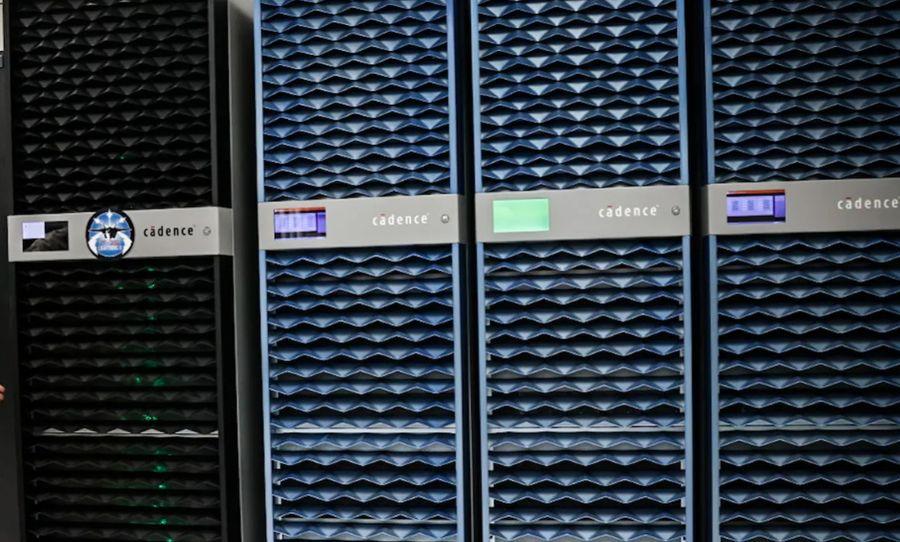
The ribbon cutting of the JSF-funded Digital Electronic Systems Engineering/Hardware Accurate Digital Twinning Emulation and Design Center is a significant step in correcting one of the major consequences of 1990’s DoD Acquisition Reform – the decimation of the DoD Smart Buyer. Our country won the Cold War because of a strong partnership between the DoD engineering centers and the robust Defense Industrial Base technical staff. The DoD engineering centers developed challenging, technically confirmed requirements, and staff members from those centers served as the “Smart Buyer” when evaluating the Defense Industrial base proposals especially when providing technical and engineering management and support to the acquisition programs. Holding these acquisition programs to military standards, these Smart Buyers helped ensure that the developed system was affordable to operate and sustain.
The confluence of winning the Cold War and the U.S. industry’s drive to adopt “commercial best practices” which have been proven to be the foundation of successful commercial companies that compete in a free market were mutated to be applied to a Defense industry that has a single customer. The use of “commercial off the shelf” (COTS) coupled with allowing the Defense Industrial Base to develop their own techniques to meet requirements became mantras within the Defense Acquisition process. Although well-intended, these actions have proven to be misguided. Not only were they used to shrink in-house DoD acquisition workforce expertise to unsupportable levels (a 50 percent reduction between 1989-1999), their effect on industry was equally jarring.
Today’s Defense Industrial Base has bifurcated into two factions: The first being large primes that live off cost-plus fixed-fee development programs that are continually behind schedule, over budget, and produce systems that do not meet operational requirements. The second being “blacksmith” companies that produce inexpensive to acquire systems that meet immediate needs, but unaffordable to sustain and impossible to modernize.
The Joint Strike Fighter is now the poster child for everything that went wrong with DoD Acquisition Reform. The root cause is simple – in general neither the DoD, (and its federally funded research and development centers, (FFRDCs), university affiliated research centers (UARCs) and systems engineering and technical assistance (SETAs), nor the Defense Industrial Base are experts, they are much less aware of the current state and practice of the digital electronic systems engineering product development process, based on the use of hardware accurate digital twins.
In the commercial world, systems do NOT go into production until the hardware and software designs are verified and validated to ensure that the system will meet operational, performance, and quality requirements, while still being affordable to operate and sustain, be agile to modernize at the speed of relevance, and avoid product liability issues. The first hardware produced is a “sellable” unit – hence no expensive hardware mistakes.
In rare company these days, both Democrats and Republicans see the need to embrace digital engineering and digital twinning. In announcing the latest tranche of funding for the CHIPS Act, President Biden’s U.S. Secretary of Commerce Gina Raimondo stated, “Digital twin technology opens the door for unparalleled opportunities for manufacturers to collaborate with researchers to develop and produce the next frontier of technological advancements…..” In Section 174 of the Fiscal Year 2025 National Defense Authorization Act, the Congress demands that DoD develop and field F-35 aircraft and mission systems digital twin models across the F-35 enterprise.
Following the recommendation of the GAO Report GAO-23-106222 “Leading Practices: Iterative Cycles Enable Rapid Delivery of Complex, Innovative Products”, the JSF Joint Program Office (JPO) invested in the Air Force Research Lab (AFRL) Emulation and Design Center, bringing that center up to commercial and design standards. While intended to be used by the DoD workforce to quickly fix the current model of F-35 (TR3/Block 4) deficiencies, this facility is available to all of the DoD to meet the FY25 National Defense Authorization requirement for the Secretary of Defense to provide a briefing to the House Committee on Armed Services no later than March 1, 2025, on Acquisition Category 1 Major Defense Acquisition Programs utilization of digital twinning. The report goes on to mandate that the briefing should include plans and resourcing for both the Department and performer workforce in digital electronic systems engineering and digital twinning.
The significance of the December 19th, 2024, ribbon cutting for the facility cannot be overstated or ignored. The potential new Administration figures such as Elon Musk and Vivek Ramaswamy appear to be aligning the tech industry (well versed in the digital world) with better government practices. Hopefully, this signals the beginning of a new 21st Century DOD Smart Buyer era for the Department of Defense.
Gregory T. Kiley, former senior professional staff member, Senate Armed Services Committee; and U.S. Air Force Officer

Don’t Be Swayed by Tactical Nukes
By Benjamin Giltner • RealClearDefense
How Seoul’s Break With Kyiv Serves Trump’s Russia Turn
By Sang Won Pyo • RealClearDefense
When the Grid Goes Down, the Mission Must Go On. Solar and Storage Can Help.
By John Szoka • RealClearDefense
Data and Communications Technology are the Hidden Keys to Success for Golden Dome
By Eric Velte • RealClearDefense
The Dual Threat: Why Beijing’s Collapse Is Just As Dangerous as Its Rise
By Efraín Vázquez-Vera • RealClearDefense

USS Stout Loses Power During Port Visit Due to ‘Engineering Casualty’
By USNI News
Air Force Lessons Learned From Operation Epic Fury
By Tabitha Reeves, National Defense
Marines Need Nine More Amphibious Warships To Carry Out Its Missions
By TWZ
AFRL, ACC Fly XQ-67A Drone To Test Autonomous Teaming
By Airforce Technology
F-35B Releases Meteor BVRAAM for the First Time
By Parth Satam, The Aviationist