
The Destruction of Iran's Nuclear Weapons Program
Published July 3, 2025 • Read time: 19m
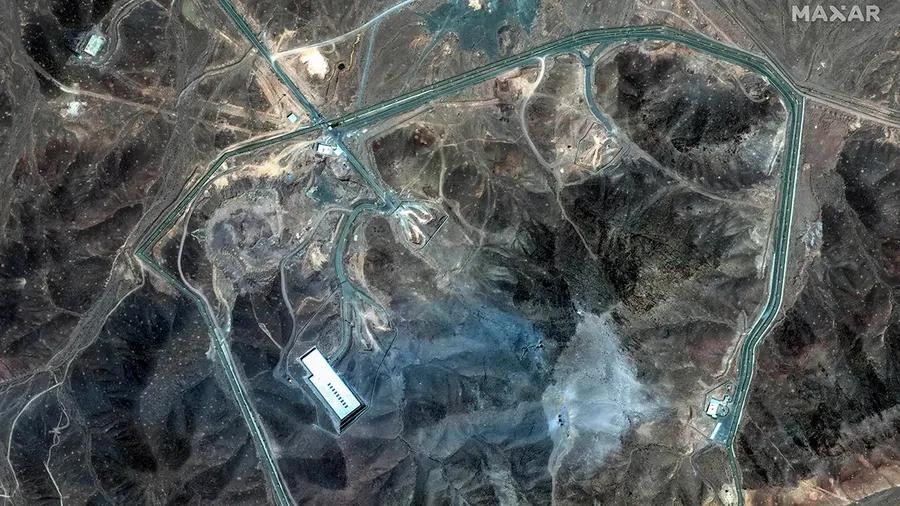
After 20 years of feckless diplomacy during which time Iran increased its nuclear weapons potential, the United States and Israel took decisive action to eliminate the threat. Even using commercial satellite photography, nuclear physicist and former International Atomic Energy Agency nuclear weapons inspector David Albright and Senior Research Fellow at the Institute for Science and Internation Security Spencer Faragasso were able to conclude that, “Israel’s historic Operation Rising Lion and the United States Operation Midnight Hammer have targeted many Iranian nuclear sites, causing massive damage to its nuclear program and setting it back significantly.”[1] Israel's Atomic Energy Commission concluded that “…that the American strikes on Iran's nuclear facilities, combined with Israeli strikes on other elements of Iran’s military nuclear program, has set back Iran’s ability to develop nuclear weapons by many years.”[2] Israel Defense Forces Chief of Staff Lieutenant General Eyal Zamir said that Iran is no longer a nuclear weapons threshold state.[3] Even Iranian Foreign Ministry spokesman, Esmail Baghaei admitted, “Our nuclear installations have been badly damaged, that’s for sure.”[4] If this were not true, the clerical dictatorship that runs Iran would be staging guided tours of their nuclear facilities.
After the attack, the Director of the International Atomic Energy Agency (IAEA), Rafael Grossi, while admitting that the damage had been “severe,” stated that, “They can have, you know, in a matter of months…a few cascades of centrifuges spinning and producing enriched uranium.”[5] What he did not say was that the output of “a few cascades” would be insignificant. In 2024, “Iran already had well over 10,000 centrifuges…”[6] Any facility that could be set up in a few months could be obliterated by a cruise missile or two. The IAEA opposes attacks on nuclear facilities.
Radio Frequencies in the Intelligence Ecosystem
The Strategic Technology Incubation Model
Exemptions and Enablers: The Accountability Gap in Unmanned Warfare
Why U.S. Intelligence Keeps Getting Blindsided
Through excellent attack planning the U.S. Air Force was able to exploit a vulnerability in the Fordo underground enrichment facility[7] to achieve results that normally would have not been possible without the use of a low-yield nuclear weapon.
The leak of a very dubious preliminary Defense Intelligence Agency assessment once again illustrated the inability of major elements of the U.S. intelligence community to assess accurately the Iranian nuclear threat. In a blatant attempt to undermine Trump Administration policy, CNN reported that, “The US military strikes on three of Iran’s nuclear facilities last weekend did not destroy the core components of the country’s nuclear program and likely only set it back by months, according to an early US intelligence assessment that was described by seven people briefed on it.”[8] This position was so divorced from reality that John Ratcliffe, Director of Central Intelligence, issued a statement which said:
CIA can confirm that a body of credible intelligence indicates Iran’s Nuclear Program has been severely damaged by the recent, targeted strikes. This includes new intelligence from a historically reliable and accurate source/method that several key Iranian nuclear facilities were destroyed and would have to be rebuilt over the course of years. CIA continues to collect additional reliably sourced information to keep appropriate decision-makers and oversight bodies fully informed. When possible, we will also provide updates and information to the American public, given the national importance of this matter and in every attempt to provide transparency.[9]
The inability of the Intelligence Community to do accurate bomb damage assessment is not new. Bomb damage assessment is difficult and in some respects it is an art form. Several months after the end of Desert Storm, the late General H. Norman Schwarzkopf, probably the most successful U.S. military commander since World War II, told the Senate Armed Services Committee that, “I would tell you very candidly that based on some of the [intelligence] analysis that we were getting, we’d still be sitting over there waiting if we were dependent upon that analysis.”[10] He noted that the “…intelligence agencies were ‘caveated, disagreed with, footnoted and watered down’ and led to major disagreements between the nation’s key intelligence agencies and military leaders in the combat theater.”[11]
In his memoire, General Schwarzkopf wrote the intelligence analysts “had us going in circles.”[12] He relates that he told his senior intelligence officer, “Well, if we knocked out one span of a four span bridge so that anything that tried to cross it fell into the Euphrates, you guys would tell me the bridge was only 25% damaged.”[13] He said that the intelligence he was getting was a mixed bag. Some of it was “superb, [but] just as often they made no sense…”[14] It resulted in wasting attack missions, putting pilots at risk to attack targets that already had been neutralized and threatened to delay the amazingly successful ground attack on Iraqi forces which within 100 hours liberated Kuwait, devastated the Iraqi Army and ended the war.
Ultimately, the George H. W. Bush White House rejected the Intelligence Community’s bomb damage assessment. Schwarzkopf later said that then-Chairman of the Joint Chiefs of Staff the late General Colin Powell informed him, “The decision has been made that we are going to take the assessment of you, the commanders in the field.”[15]
As a result of the ground war, the United States actually occupied some of the Iraqi air bases and got to see the damage that was actually done to the hardened aircraft shelters. A later analysis concluded that, “The [Intelligence] community disregarded the traditional art of damage assessment (analysis of pilot reports, gunsight photos, follow up reconnaissance images/reports, and human resources intelligence (HUMINT) that trickled in from behind enemy lines) and tried to make it into a science relying primarily on national reconnaissance.”[16]
Bomb damage assessment is not the only problem. It is not even the most important one. Assessing how long the Iranian nuclear weapons program has been set back depends on extensive knowledge of nuclear weapons and how they are made. Nuclear weapons literacy in Washington has dramatically declined since the end of the Cold War. This can impact bomb damage assessment against nuclear weapons development and production targets. Moreover, the Intelligence Community was been consistently wrong about Iran and its nuclear intentions since at least 2007. In that time period, the Intelligence Community had become increasingly politicized and parts of it began to pursue its own defense and foreign policy agenda. It later attempted to impact U.S. elections. This reached a peak when the infamous 51 former intelligence officers influenced the 2020 election by making the absurd claim that the Hunter Biden laptop was Russian disinformation.[17] In 2024, the “The Committee on the Judiciary, its Select Subcommittee on the Weaponization of the Federal Government, and the Permanent Select Committee on Intelligence have revealed that in the final weeks before the 2020 presidential election, 51 former intelligence officials “…coordinated with the Biden campaign to discredit serious allegations about Biden family influence peddling.”[18]
This was not a simple intelligence assessment error. The statement by the 51 former intelligence officials and officers was partisan politics in the extreme. The Russians know how to do information operations and this not how to do it. This would have required a gigantic amount of work and there was no possible way that Russian intelligence could have known in advance that Hunter Biden’s laptop would break, that he would have brought it in for repair and data recovery, and that he would then abandon it and that its content would have been made public. Indeed, the authenticity of the Hunter Biden laptop was later confirmed when the Biden Justice Department entered it into evidence in the Hunter Biden criminal trial. Hunter Biden’s lawyer did not even object.[19]
After the Republicans lost both houses of Congress in the 2006 election, President George W. Bush was seriously weakened, and he seemed unwilling or unable to control what is now called the “deep state.” The key judgements from the 2007 National Intelligence Estimate (NIE) on Iran: Nuclear Intentions and Capabilities were officially made public. This is not the way the U.S. Intelligence Community normally does business. Hence, the NIE release seems to have had a political motive. Indeed, in 2008, “NIC [National Intelligence Council] Chairman Fingar, speaking at CFR [Council of Foreign Relations] in March 2008, said the intelligence community has actively resisted Congress’s calls for declassifying past and future estimates.”[20] This is a very convenient way to avoid legitimate criticism of the quality of these estimates.
The NIE concluded:
We assess with high confidence that until fall 2003, Iranian military entities were working under government direction to develop nuclear weapons.
- We judge with high confidence that the halt lasted at least several years. (Because of intelligence gaps discussed elsewhere in this Estimate, however, DOE and the NIC assess with only moderate confidence that the halt to those activities represents a halt to Iran's entire nuclear weapons program.)
- We assess with moderate confidence Tehran had not restarted its nuclear weapons program as of mid-2007, but we do not know whether it currently intends to develop nuclear weapons.
- We continue to assess with moderate-to-high confidence that Iran does not currently have a nuclear weapon.
- Tehran’s decision to halt its nuclear weapons program suggests it is less determined to develop nuclear weapons than we have been judging since 2005. Our assessment that the program probably was halted primarily in response to international pressure. suggests Iran may be more vulnerable to influence on the issue than we judged previously.[21]
The 2007 Iran NIE was extremely controversial.[22] A 2015 IAEA report stated almost the opposite: “From 2002 onwards, the Agency became increasingly concerned about the possible existence in Iran of undisclosed nuclear related activities involving military related organizations, including activities related to the development of a nuclear payload for a missile.”[23]
In my view, the NIE qualifies as one of the worst intelligence documents ever produced. President George W. Bush stated, “The NIE had a big impact—and not a good one.”[24] He also said that he certainly hoped intelligence analysts weren’t trying to influence policy.[25] Unfortunately, this appears to be the case.
The claim by then-National Intelligence Council Chairman Dr. Thomas Fingar that the NIE has 1,500 source notes[26] is implausible. NIE’s are not drafted as academic documents. A review of the declassified NIEs in the National Achieves will demonstrate beyond any doubt that these documents are not heavily sourced.
The 2007 NIE appears to be based on Iranian disinformation resulting from its concern that after the successful U.S. invasion of Iraq the next target would be Iran. A 2009 IAEA report indicated that, “The Agency further assesses that Iran has sufficient information to be able to design and produce a workable implosion nuclear device based upon HEU [Highly Enriched Uranium] as the fission fuel. The necessary information was most likely obtained from external sources and probably modified by Iran. The Agency believes that non-nuclear experiments conducted in Iran would give confidence that the implosion system would function correctly.”[27] Yet, this dubious NIE analysis has become virtual dogma in the U.S. Intelligence Community. Even in 2025 Congressional testimony, the Director of National Intelligence (DNI) Tulsi Gabbard said that, “The country [Iran] was not building a nuclear weapon, she told lawmakers, and its supreme leader had not reauthorized the dormant program even though it had enriched uranium to higher levels.”[28] The obvious inconsistency between claiming that Iran is not developing nuclear weapons while enriching uranium to weapons grade is ignored.
DNI Gabbard subsequently said Iran could have nuclear weapons “within weeks.”[29] This is not a nuclear weapons development timeline. It is more like final assembly. Indeed, in November 2024, reportedly, “Mohammad-Javad Larijani, a close aide to Iran’s Supreme Leader Ayatollah Ali Khamenei, made a shocking statement, declaring that Iran could develop military nuclear capabilities within just one day.”[30] In December 2024, Rear Admiral (ret.) John Kirby, then-White House Communications Advisor, acknowledged that the Biden Administration’s effort to prevent Iran from obtaining nuclear weapons “…didn’t work….”[31]
A May 2025 International Atomic Energy Agency report reportedly said, “…Iran has amassed 900.8 pounds of uranium enriched up to 60%. That’s an increase of 294.9 pounds — or almost 50% — since the IAEA’s last report in February.”[32] Reportedly “…40-42 kilograms (kg) of 60 percent enriched uranium…suffices to create a relatively compact nuclear explosive; further enrichment to 80 or 90 percent is not needed.”[33] Moreover, in 2023, press reports indicated that reporters had obtained an International Atomic Energy Agency report that stated that inspectors found uranium particles enriched up to 83.7% at Fordo.[34] By comparison, the World War II Little Boy nuclear bomb dropped untested on Hiroshima used uranium enriched to 80%.[35]
This is apparently why Israel and the United States acted when they did. Iran was clearly on the verge of a significant nuclear weapons arsenal. In June 2025, Israeli Prime Minister Benjamin Netanyahu said, “We saw enough uranium, enriched uranium for nine bombs.”[36] Depending upon the level of enrichment Iran has attained, this may even be an underestimate particularly if Iran has enriched a significant amount of uranium to 83.7 percent or even greater levels because the evidence of such enrichment is more than two years old. Continued highly enriched uranium production would rapidly increase the number of weapons.
To stick with an assessment of no Iranian nuclear weapons program after proof of enrichment to levels that can only be used by Iran to make nuclear bombs is irresponsible. This is not the only evidence that has appeared in press reporting of Iranian nuclear weapons development after 2007. In November 2009, the London Guardian reported that the IAEA had concluded “…that Iranian scientists have experimented with an advanced nuclear warhead design” known as “a ‘two-point implosion device” which allowed for smaller nuclear warheads.[37]
In 2012, the journal Nature indicated that, “North Korea may have conducted two covert nuclear weapons tests in 2010 [with yields of 50-200 tons of TNT], according to a fresh analysis of radioisotope data.”[38] Hans Ruehle, who from 1982–1988 headed the German Defense Ministry’s planning staff, has stated that, “Several intelligence services believe that at least one of them was commissioned by Iran.”[39] The Wall Street Journal reported that Obama Administration officials believed that a September 2012 agreement between North Korea and Iran could involve cooperation in both ballistic missiles and nuclear programs. The agreement was reportedly similar to the agreement between North Korea and Syria that was related to the development of nuclear weapons.[40]
In June 2025, Joint Chiefs of Staff Chairman General Dan Caine revealed that the U.S. military does not do damage assessment. This should be changed. There is too much risk in this policy. The track record of the Intelligence Community on bomb damage assessment is obviously poor.
The Intelligence Community is clearly capable of understating the evidence available when there is an issue of political correctness. The following exchange between Representative Raja Krishnamoorthi (D-IL) and Deputy Director of Naval Intelligence Scott W. Bray, concerning UFO/UAP issue illustrates this problem:
Mr. Krishnamoorthi. Okay. I think one of the biggest questions that I have is we say with a lot of probability, we say that they, quote/unquote, probably do represent physical objects, close quote. When we say “probably,” is that because we cannot conclusively say that they are physical objects?
Mr. Bray. In a task force report, when I say probably represent physical objects, most of them represent physical objects. There could be some that are more of a, of a, you know, meteorological phenomena, or something like that, that may not be a physical object in the sense that most people think of something you go up and touch.[41]
The issue of UFOs/UAPs has nothing to do with bomb damage assessment or intelligence assessments concerning Iranian nuclear capabilities. I am quoting this exchange because there are no other instances that I know about where: 1) the text of Intelligence Community report was released to the public, 2) there is a public Congressional hearing on it and 3) a senior intelligence official in an open hearing actually answered a specific question about the fact situation described in the report which indicated that the report did not mean what the plain meaning of its words would suggest. If the word “probably” in intelligence speak can be used to mean “certainty,” intelligence assessments can substantially understate the evidence that is available. The word “probably” frequently appears in unclassified intelligence assessments.
There is a clear need for a “Team B” type assessment of the accuracy of U.S. intelligence assessments concerning foreign nuclear threats. The original Team B effort was the result of legitimate concerns that intelligence assessments were understating the Soviet nuclear threat. There is a similar concern today about the totality of the nuclear threat, particularly the growth of Chinese capabilities.
The terrorist clerical regime that runs Iran will not give up its efforts to obtain nuclear weapons.[42] Unless there is regime change in Iran, strong economic sanctions must continue. At some point, it will likely be necessary to launch attacks on rebuilt Iranian nuclear facilities. President Trump says he will order more bombing if Iran pursues nuclear weapons.[43] This should not be put off until the last minute.
Mark B. Schneider is a Senior Analyst with the National Institute for Public Policy. Dr. Schneider previously served in DoD as Principal Director for Forces Policy, Principal Director for Strategic Defense, Space and Verification Policy, Director for Strategic Arms Control Policy and Representative of the Secretary of Defense to the Nuclear Arms Control Implementation Commission. He also served in the senior Foreign Service as a Member of the State Department Policy Planning Staff.
Notes:
[1] David Albright and Spencer Faragasso, “Post-Attack Assessment of the First 12 Days of Israeli and U.S. Strikes on Iranian Nuclear Facilities,” Institute for Science and International Security, June 24, 2025 available at https://isis-online.org/isis-reports/post-attack-assessment-of-the-first-12-days-of-israeli-strikes-on-iranian-nuclear-facilities.
[2] “Iran’s Fordow nuclear facility inoperable, Israel’s Atomic Energy Commission says,” The Jerusalem Post, June 25, 2025, available at https://www.jpost.com/middle-east/iran-news/article-858987.
[3] Emanuel Fabian, “IDF chief believes Iran no longer a nuclear threshold state after Israeli, US strikes,” Times of Israel, June 27, 2025, available at https://www.timesofisrael.com/idf-chief-believes-iran-no-longer-a-nuclear-threshold-state-after-israeli-us-strikes/.
[4] “US strikes caused significant damage to nuclear sites, Iran admits,” Reuters, June 25, 2025, available at https://www.jpost.com/middle-east/article-858981.
[5] Ellen O’Regan, “Iran could resume uranium enrichment in ‘months,’ says IAEA chief,” Politico, June 29, 2025, available at https://www.politico.eu/article/iran-resume-uranium-enrichment-months-iaea-rafael-mariano-grossi/.
[6] “Iran plans new uranium-enrichment expansion, IAEA report says,” Reuters, November 28, 2024, available at https://www.reuters.com/world/middle-east/iran-plans-uranium-enrichment-expansion-natanz-fordow-iaea-report-says-2024-11-28/.
[7] U.S. Department of Defense, “Defense Secretary Pete Hegseth and Joint Chiefs of Staff Chairman Gen. Dan Caine Hold News Conference,” June 26, 2025, available at https://www.defense.gov/News/Transcripts/Transcript/Article/4227366/defense-secretary-pete-hegseth-and-joint-chiefs-of-staff-chairman-gen-dan-caine/.
[8] Natasha Bertrand, Katie Bo Lillis and Zachary Cohen, “Exclusive: Early US intel assessment suggests strikes on Iran did not destroy nuclear sites, sources say,” CNN, June 25, 2025, available at https://www.cnn.com/2025/06/24/politics/intel-assessment-us-strikes-iran-nuclear-sites.
[9] Central Intelligence Agency, “Statement from Director John Ratcliffe about Intelligence on Iran's Nuclear Program,” June 2025, available at https://www.cia.gov/stories/story/statement-from-director-john-ratcliffe-about-intelligence-on-irans-nuclear-program/.
[10] Molly Moore, “SCHWARZKOPF: WAR INTELLIGENCE FLAWED,” The Washington Post, June 12, 1991, available at https://www.washingtonpost.com/archive/politics/1991/06/13/schwarzkopf-war-intelligence-flawed/2c33d9b3-e56e-47bb-9e29-a99c986681ca/.
[11] Ibid.
[12] H. Norman Schwarzkopf with Peter Petre, General H. Norman Schwarzkopf, The Autobiography; It Doesn’t Take A Hero, (NY: Bantam Books, 1992), p. 498.
[13] Ibid., p. 499.
[14] Loc. cit.
[15] “oral history; norman schwartkopf,” PBS, No date, available at https://www.pbs.org/wgbh/pages/frontline/gulf/oral/schwarzkopf/1.html.
[16] Schwarzkopf with Petre, General H. Norman Schwarzkopf, The Autobiography; It Doesn’t Take A Hero, op,. cit., p. 498.
[17] Natasha Bertrand, “Hunter Biden story is Russian disinfo, dozens of former intel officials say,” Politico, October 19, 2020, available at https://www.politico.com/news/2020/10/19/hunter-biden-story-russian-disinfo-430276.
[18] Staff of the House Judiciary Committee, “THE INTELLIGENCE COMMUNITY 51: HOW CIA CONTRACTORS COLLUDED WITH THE BIDEN CAMPAIGN TO MISLEAD AMERICAN VOTERS,” House Judiciary Committee, June 25, 2024, available at https://intelligence.house.gov/uploadedfiles/the_intelligence_community_51-_how_cia_contractors_colluded_with_the_biden_campaign_to_mislead_american_voters.pdf.
[19] Ashley Oliver, “Hunter Biden’s silver laptop shown to courtroom during gun trial,” Washington Examiner, June 4, 2024, available at https://www.washingtonexaminer.com/news/justice/3028301/hunter-biden-silver-laptop-shown-courtroom-gun-trial/.
[20] Quoted in Greg Bruno and Sharon Otterman, “National Intelligence Estimates,” Council on Foreign Relations, May 14, 2008, available https://www.cfr.org/backgrounder/national-intelligence-estimates.
[21] National Intelligence Council, Iran: Nuclear Intentions and Capabilities, National Intelligence Estimate, November 2007, p. 1, available at https://www.iranwatch.org/sites/default/files/us-cia-irannie-1107.pdf.
[22] Gregory F. Treverton, “The 2007 National Intelligence Estimate on Iran’s Nuclear Intentions and Capabilities,” Center for the Study of Intelligence, May 2013, p. 1, available at https://psu.pb.unizin.org/app/uploads/sites/65/2018/01/support-to-policymakers-2007-nie.pdf.
[23] Director General of the International Atomic Energy Agency, “Final Assessment on Past and Present Outstanding Issues, regarding Iran’s Nuclear Programme,” December 2, 2015, available at https://www.iaea.org/sites/default/files/documents/gov-2015-68.pdf
[24] Treverton. “The 2007 National Intelligence Estimate on Iran’s Nuclear Intentions and Capabilities,” op. cit., p. 1.
[25] Ibid., p. 5.
[26] Ibid., p. 2.
[27] “Excerpts from Internal IAEA Document on Alleged Iranian Nuclear Weaponization,” Institute for Science and International Security, October 2, 2009, available at https://isis-online.org/uploads/isis-reports/documents/IAEA_info_3October2009.pdf.
Chris Megerian and David Klepper, “US spies said Iran wasn’t building a nuclear weapon. Trump dismisses that assessment,” Associated Press, June 17, 2025, available at https://www.adn.com/nation-world/2025/06/17/us-spies-said-iran-wasnt-building-a-nuclear-weapon-trump-dismisses-that-assessment/.
[28] “America’s spies say Iran wasn’t building a nuclear weapon. Trump dismisses that assessment,” PBS.org, June 17, 2025, available at https://www.pbs.org/newshour/politics/americas-spies-say-iran-wasnt-building-a-nuclear-weapon-trump-dismisses-that-assessment.
[29] Sofia Ferreira Santos, “Tulsi Gabbard now says Iran could produce nuclear weapon 'within weeks',” BBC News, June 20, 2025, available at https://www.bbc.com/news/articles/c056zqn6vvyo.
[30] “In 24 Hours, Nukes...’: Iran’s Shocking Nuclear Announcement After Russia's Warning,” The Times of India, November 19, 2024, available at https://timesofindia.indiatimes.com/videos/international/in-24-hours-nukes-irans-shocking-nuclear-announcement-after-russias-warning/videoshow/115458978.cms.
[31] “Our Attempts at Keeping Iran from Getting Nukes Through Diplomacy ‘Didn’t Work’,” Breitbart.com, December 14, 2024, available at https://www.breitbart.com/clips/2024/12/14/white-house-our-attempts-at-keeping-iran-from-getting-nukes-through-diplomacy-didnt-work/.
[32] “Iran has increased its stockpile of near weapons-grade uranium, nuclear watchdog says,” CBS News, May 31, 2025, available at https://www.cbsnews.com/news/iran-has-amassed-even-more-near-weapons-grade-uranium-un-watchdog-says/.
[33] David Albright and Sarah Burkhard, “Entering Dangerous, Uncharted Waters: Iran’s 60 Percent Highly Enriched Uranium,” Institute for Science and International Security, April 11, 2022, available at https://isis-online.org/isis-reports/entering-uncharted-waters-irans-60-percent-highly-enriched-uranium.
[34] Stephanie Liechtenstein, “UN report: Uranium particles enriched to 83.7% found in Iran,” Associated Press, February 28, 2023, available at https://apnews.com/article/iran-nuclear-uranium-enrichment-germany-israel-c9b3669a7721bd8929d465117c81b70f.
[35] “Enriching uranium is the key factor in how quickly Iran could produce a nuclear weapon – here’s where it stands today,” The Conversation, July 14, 2022, available at https://theconversation.com/enriching-uranium-is-the-key-factor-in-how-quickly-iran-could-produce-a-nuclear-weapon-heres-where-it-stands-today-186985.
[36] Ryan King, “Netanyahu vows ‘we will not have a second Holocaust,’ says ‘clear’ intel warned Iran was on verge of a nuclear weapon,” The New York Post, June 15, 2025, available at https://nypost.com/2025/06/15/world-news/netanyahu-vows-we-will-not-have-a-second-holocaust-says-clear-intel-warned-iran-was-on-verge-of-a-nuclear-weapo.n/.
[37] Julian Borger, “Iran Tested Advanced Nuclear Warhead Design—Secret Report,” Guardian.co.uk, November 2009, available at http://www.guardian.co.uk/world/2009/nov/05/irantested-nuclear-warhead-design
[38] Geoff Brumfiel, “Isotopes Hint at North Korean Nuclear Test,” Nature, February 3, 2012, available at http://www.nature.com/news/isotopes-hint-at-north-korean-nuclear-test-1.9972.
[39] “German Expert Suggests Iran Tested Nuclear Bomb in North Korea in 2010,” BBC Monitoring International Reports, March 7, 2012, available at http://www.accessmylibrary.com/article-1G1-2824 11462/german-expert-suggests-iran.html.
[40] Hay Solomon, “Iran-North Korea Pact Draws Concern,” Wall Street Journal, March 8, 2013, available at http://online.wsj.com/article/SB10001424127887323628804578348640295282274.html.
[41] House Permanent Select Committee on Intelligence, Subcommittee on Counterterrorism, Counterintelligence, and Counterproliferation, “UNIDENTIFIED AERIAL PHENOMENA,” May 17, 2022, available at https://www.congress.gov/117/meeting/house/114761/documents/HHRG-117-IG05-Transcript-20220517.pdf.
[42] Sandy Fitzgerald, “Former Amb. Joseph to Newsmax: Iran Report Leaked to Undercut Trump,” Newsmax, June 29, 2025, available at https://www.newsmax.com/us/robertjoseph-iran-nuclearstrikes/2025/06/29/id/1216931/.
[43] “Trump Says He'd Bomb Iran Again If Nuclear Activities Start,’ Newsmax, June 27, 2025, available at https://www.newsmax.com/world/globaltalk/iran-bomb-nuclear/2025/06/27/id/1216786/?ns_mail_uid=b2918d85-c71f-4938-b08f-6ae491bc8820&ns_mail_job=DM812811_06282025&s=acs&dkt_nbr=010504bizdqo.

Batteries Can Power a Win for America in Super Intelligence
By Manisha Singh • RealClearDefense
Poland’s Fighter Fleet Is Growing: Can Its Training System Keep Up?
By Bruce Allen Lubbering • RealClearDefense
Why Iran is Not Vietnam
By Kevin Brown • RealClearDefense
Closing the Missile (Defense) Gap
By Jason Camilletti • RealClearDefense
Part of a Larger Secret, Hidden World
RealClearDefense

Sign of the Times: CCAs Dominate a Major Fighter Conference
By Bill Sweetman • The Strategist (ASPI)Closing the Missile (Defense) Gap
By Jason Camilletti • RealClearDefense
U.S. Navy Prepares for Third Zumwalt Hypersonic Upgrade
By C. Johnston, Naval N.
Pearl Harbor Hero Doris Miller Will Stay Namesake of CVN-81
By Mongilio, USNI News
Navy CCA Plans Will Not Wait For F/A-XX Next Generation Fighter
By The WarZone