
Wars Make or Break Presidencies
Published April 11, 2026 • Read time: 8m
The late presidential scholar R. Gordon Hoxie in his book Command Decision and the Presidency noted that “in the system conceived by the framers of the Constitution and set in motion by the first Washington administration, command decision is inherent in the commander in chief office.” Historian Herbert Feis agreed: “When peace or war is at issue, the president cannot leave the decision to others without forfeiting the responsibility of his office.”
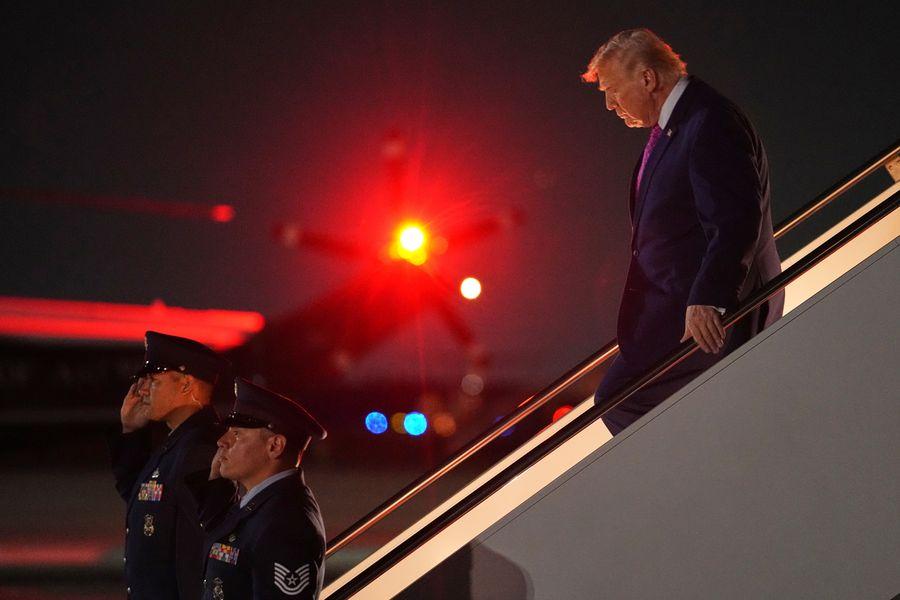
In June 2025, President Trump made the command decision to strike Iran’s nuclear weapons program. In March 2026, he launched air and missile strikes against Iranian political and military targets in an effort to systematically degrade Iran’s capability to wage successful war and aid its proxies in the region. By doing so, President Trump has entered the crucible of history that has often made or broken American presidencies.
The great political scientist Aaron Wildavsky wrote about the “two presidencies: “one presidency is for domestic affairs, and the other is concerned with defense and foreign policy.” Wildavsky noted that presidents tend to gravitate toward foreign and defense policy because the Constitution affords them broader latitude there than in domestic policy. This has been true throughout the history of our republic, but increasingly so since the emergence of the nuclear era and the creation of the national security state during and immediately following the Second World War.
George Washington angered his Secretary of State Thomas Jefferson by declaring neutrality in the war between France and Britain. Jefferson, aroused by the ideology of the French Revolution and remembering France’s help during our war of independence against Britain, urged belligerency. Washington, however, recognized that U.S. interests required prudently staying out of that war. Washington is considered one of our two greatest presidents.
President James Madison asked Congress to declare war against Britain in 1812 when the United States was woefully unprepared for war. The result was the burning of Washington, D.C., including the Capitol building and the presidential mansion. It was only Britain’s distraction in Europe that saved the United States from suffering even greater harm.
In 1823, an aging Thomas Jefferson responded to a letter from Adamantios Koraes who sought U.S. assistance for Greece’s independence movement. Since 1821, sentiment within the United States had grown for aiding the Greeks against their Ottoman overlords. Senator Daniel Webster, among others, argued that America must help those who are resisting oppression. Jefferson, however, had lost his enthusiasm for foreign adventures on behalf of democracy. He responded to his Greek correspondent as follows:
No people sympathise more feelingly than ours with the sufferings of your countrymen, none offer more sincere and ardent prayers to heaven for their success: and nothing indeed but the fundamental principle of our government, never to entangle us with the broils of Europe, could restrain our generous youth from taking some part in this holy cause.
President Monroe adhered to what Jefferson called “the fundamental principle of our government” and followed the wise counsel of Secretary of State John Quincy Adams who had declared two years earlier that America “goes not abroad in search of monsters to destroy. She is the well-wisher to the freedom and independence of all. She is the champion and vindicator only of her own.”
Freshman Congressman Abraham Lincoln in 1846 was a chief critic of America’s involvement in the war with Mexico, a war engineered by President James Polk and later criticized as unjust by Ulysses S. Grant, but a war that led to the completion of America’s “Manifest Destiny.” Polk has been treated rather well by historians, but at the time he refused to run for reelection to a second term. Later as president, Lincoln tried to avoid waging civil war against his countrymen but ultimately did so relentlessly—sometimes acting unconstitutionally—to preserve the Union. Lincoln is considered by most historians as our greatest or second-greatest president.
President William McKinley went to war against Spain based on erroneous intelligence that the USS Maine was blown up by a Spanish mine in Havana’s harbor. The resulting Spanish-American War was short and swift, and resulted in the United States acquiring the Philippines, Guam, and Puerto Rico, and militarily occupying parts of Cuba. McKinley’s successor, Theodore Roosevelt, who had promoted war against Spain and served bravely in the fighting in Cuba, as president intervened in Central America to facilitate America’s construction of the Panama Canal, dealt brutally with the insurrection in the Philippines, and auspiciously sent the “Great White Fleet” around the world to display American sea power, was otherwise cautious in the use of his commander-in-chief powers.
World War I, especially its aftermath, broke the presidency of Woodrow Wilson, who had entered office determined to focus on domestic policy and ended up militarily intervening in Mexico, and waging a global war and promoting peace as a democratist ideologue, setting in motion events that led to an even greater war two decades later. His fervent, idealistic and uncompromising crusade for the League of Nations doomed his health and the last years of his presidency. Conversely, our victory in World War II was the greatest accomplishment of Franklin Roosevelt’s presidency. Although liberal historians still credit him for the New Deal, it is now clear that Roosevelt’s interventionist policies prolonged rather than ended the Great Depression.
The Korean War doomed Harry Truman’s presidency. Dwight Eisenhower ended the Korean War, threatened war in the South China Sea, refused to intervene when the Soviets invaded Hungary, ended the Suez Crisis, and sent troops to Lebanon to protect U.S. interests in the Middle East. Ike as president was prudent and sparing in the use of force. John Kennedy’s reputation was bolstered by his handling of the Cuban Missile Crisis. The Vietnam War doomed Lyndon Johnson’s presidency. Meanwhile, Richard Nixon won a landslide election in part by waging war in Southeast Asia more effectively than Johnson did, but also because he ended U.S. involvement in that unpopular war.
Jimmy Carter’s presidency collapsed after Iran seized the American Embassy in Tehran and held Americans hostage for 444 days. Carter’s response was a failed, half-hearted rescue mission and an unwillingness to seriously confront our enemies, who returned those hostages as soon as Ronald Reagan took office as president. Strategist Edward Luttwak, who was on Reagan’s transition team, revealed that the Iranians released the hostages because Reagan communicated to Iran’s leaders that he would order the bombardment of Iranian cities unless the hostages were released. Reagan as president used the military sparingly (e.g, Grenada), but built-up American power and waged political warfare to bring about the collapse of the Soviet empire.
George H.W. Bush skillfully managed the end of the Cold War and used force prudently during the Gulf War in 1991. After the war, Bush’s approval rating reached 90 percent, but he squandered that political advantage by raising taxes when he promised not to, and by conducting a less than skillful political campaign against a politically savvy (“it’s the economy, stupid”) Clinton campaign. Bill Clinton as president mostly avoided wars and foreign crises, except for limited and unnecessary interventions in Somalia and the Balkans.
George W. Bush’s presidency was defined by his response to the terrorist attacks on September 11, 2001. At first, Bush 43 responded well in Afghanistan by retaliating against the terrorist enemies that attacked America, but he then in Wilsonian fashion launched a “global war on terror,” which included the invasion of Iraq and a crusade to bring “democracy” to Iraq, Afghanistan and elsewhere in the world. Those wars broke the Bush presidency, if not politically, at least in the crucible of history.
President Trump effectively campaigned and spoke out about the “endless wars” that had drained American resources and claimed American lives. As president, he forged the Abraham Accords, has sought to end the Ukraine War, and helped facilitate peace negotiations between Armenia and Azerbaijan, the Congo and Rwanda, Israel and Hamas, Pakistan and India, and Serbia and Kosovo. He appears to understand the costs of wars. With the attacks on Iran in June 2025 and the current war against Iran, Trump has entered the crucible of history as a war president. It is possible, though not inevitable, that this war will make or break his presidency in that historical crucible.
One of our country’s best observers of the presidency, the late Hugh Sidey, once wrote that for American presidents:
Displaying military power, with all its bands and thunder, can become dangerously addictive. And dispatching battle units can begin to look like the cleanest, easiest exercise of power that a President can undertake. The ships and planes are magnificent machines, the crews totally responsive. Orders are instantly carried out, unlike those given in the glutenous world of Government. Sometimes the moment of command is unforgettable, its recollection stirring.
But history shows that wars—all wars—produce casualties and tragedy. That doesn’t mean that they shouldn’t be fought or that waging war is always unnecessary. Sidey noted in that same column that presidents must also not buy into the idea that “mediation in hushed sanctuaries can solve the world’s problems.” President Trump’s actions in Iran demonstrate that he understands that, too.
Francis P. Sempa writes on geopolitics.
The Pressure Is the Message: What Xi and Putin Faced in Shenzhen
By Emzari Gelashvili • RealClearDefense
China’s Revised Mobilization Law and the Expanding Reach of National Defense
By Muhammad Shoaib • RealClearDefense
U.S. Putting Weapons in Space: A Strategic Blunder?
By Ajey Lele • RealClearDefense
The Clearance Myth Is a Readiness Problem
By Elijah Fernandez • RealClearDefense
The Pentagon's Next Readiness Test Should Begin When the Cloud Goes Dark
By Colton Overcash • RealClearDefense
U.S. Putting Weapons in Space: A Strategic Blunder?
By Ajey Lele • RealClearDefense
U.S. Senate Seeks to Exchange Shipbuilding Funds for More Munitions
By Naval News
F-35C Completes First Launch and Recovery Trials on a Ford-Class Carrier
By Navy T.
USS George Washington Leaves Mideast As Trump Mulls Ending Iran War
By S&S
ULA’s Latest Launch Failure Spells Trouble for Space Force
By Greg Hadley, A&SF