
Trump Wants Canada. America Already Tried That in 1776.
Published June 8, 2026 • Read time: 5m
As Americans prepare to celebrate their country’s 250th birthday this summer, Canadians have their own anniversary to remember. It comes a month earlier and helps explain why Canada exists at all.
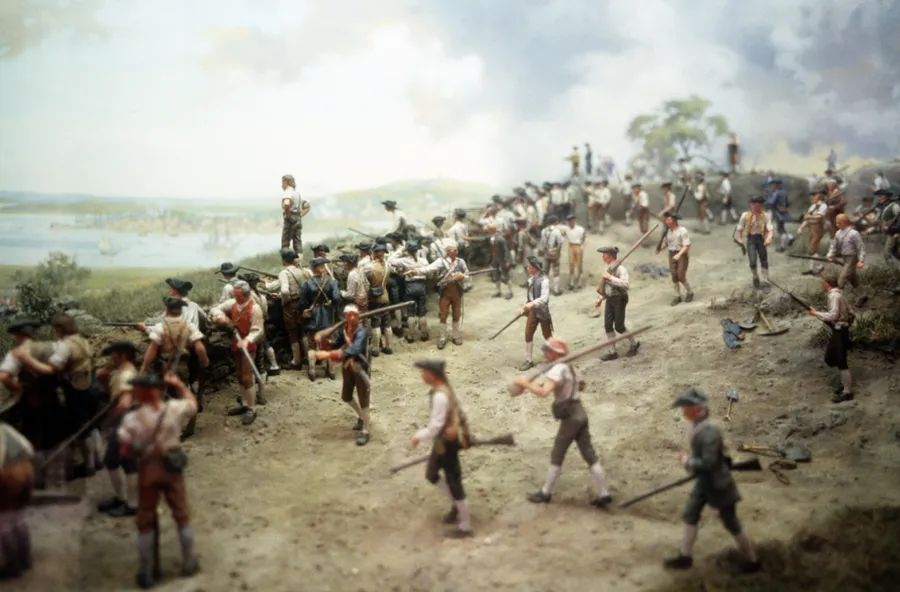
On June 8, 1776, near Trois-Rivières in Quebec, the Continental Army suffered one of the most consequential defeats in North American history. The battle ended the first American invasion of Canada and helped ensure that the new United States would have a northern border rather than a northern half.
Today, Donald Trump is once again talking casually about annexing Canada. His comments are usually dismissed as trolling or political theater. But they echo an American ambition older than the nation itself.
At the beginning of the Revolutionary War, many American leaders believed Canada would become the rebellion’s “14th colony.” The Continental Congress invited Canadians to join them and send delegates to Philadelphia. Revolutionary leaders assumed that French-speaking Catholics in Quebec would welcome liberation from British rule.
When that outreach failed, American troops marched north instead.
The invasion initially seemed promising. In 1775, American forces under General Richard Montgomery captured Montreal while a second force under Benedict Arnold survived a brutal march through the Maine wilderness to reach Quebec City.
The two armies joined forces outside Quebec City, Britain’s last major stronghold in Canada. Had the city fallen, British control of Canada might well have collapsed entirely.
Part of a Larger Secret, Hidden World
2949 Marine Prisoners, Hostages, and Peacetime Governmental Detainees Since Our Corps' Founding
When Memory Fades, So Does the Superpower
Taiwan's 'Ohio Problem'
Instead, the invasion unraveled.
With enlistment terms about to expire and winter conditions worsening, the Americans launched a desperate New Year’s Eve assault during a blizzard. The attack failed catastrophically. Montgomery was killed and Arnold was wounded. So, the Americans settled into a siege. But disease spread through their camp, enlistments expired, and soldiers went home. The expected outpouring of Canadian support never materialized. Many Canadians remained neutral, while others viewed the Americans less as liberators than as poorly supplied foreign invaders, who took their property and paid for it with worthless paper notes.
The springtime arrival of a British fleet finally ended the siege and forced the Americans to retreat toward Montreal.
Still, the Continental Army refused to give up. American leaders understood that if Canada could be brought into the Revolution, Britain would lose its foothold in northern North America. Their new republic could emerge as the dominant power on the continent.
Fortified with reinforcements, on June 8, 1776, American forces launched one final counterattack near Trois-Rivières. Though the Americans now outnumbered their opponents, their attack got bogged down in the marshes surrounding the town. Instead of a surprise nighttime attack they emerged from the woods at daybreak. They found the British waiting for them, tipped off by loyalist Canadians. The attack dissolved into confusion and retreat.
Within weeks, the Americans abandoned Canada entirely and withdrew back into New York just days before independence was declared on July 4. The United States entered the world with 13 states instead of 14. For decades, the two powers would continue to jostle for dominance in North America.
Had the invasion succeeded, there is little reason to think an independent Canada would eventually have emerged to America’s north. Quebec likely would have been absorbed into the new United States, while the rest of British North America — sparsely populated and lightly defended — could easily have followed. During the peace negotiations ending the war, American diplomats requested that Britain cede Quebec, despite having lost the military campaign there. The British relinquished less populated land south of the Great Lakes but refused to give up any of Canada's cities.
Without a separate Canada, North America would look radically different today. There would have been no Canadian Confederation, no distinctive parliamentary tradition north of the border, and no long national habit of defining Canadian identity in contrast to the United States. “Canadian” might simply have become another regional American identity.
The United States tried repeatedly to push northward after the Revolution. During the War of 1812, many Americans once more believed Canada could be conquered and absorbed. Thomas Jefferson confidently predicted taking Canada would be “a mere matter of marching. “Instead, the war ended in stalemate.
Over time, Americans gradually abandoned the dream of annexing Canada and turned their expansionist energy south and west instead, toward Florida, Texas, and California. Spain and Mexico proved easier targets than Britain and Canada. The shape of modern North America slowly hardened.
Repeated American pressure helped strengthen Canadian nationalism. Every invasion threat, border dispute, and annexation fantasy encouraged Canadians to see themselves as something distinct from the United States. “[T]he very first elements out of which our social system was framed were repugnance and contempt for the new institutions of the United States, and a dislike to the people of that country,” wrote diarist Anna Jameson of Toronto in 1838.
Trump is rediscovering that dynamic now. His rhetoric about annexing Canada has triggered a surge of Canadian patriotism and anti-American sentiment, including everything from increased military enlistments to liquor stores pulling California wines from their shelves. American expansionism is again helping Canadians define themselves against the United States.
This is one of the historical lessons of the failed invasion of Quebec: Attempts to expand often produce a backlash. Instead of neighboring identities dissolving, they harden. So, for Canadians happy to be living in an independent country of their own, June 8 might be an appropriate day to reflect on a turning point 250 years ago — perhaps even a kind of Canadian counterpart to America’s Independence Day next month.
Mark Kawar is the author of America, but Bigger, a history of American territorial expansion. He’s a former newspaper reporter and media executive. His writing focuses on America history and institutions.

Batteries Can Power a Win for America in Super Intelligence
By Manisha Singh • RealClearDefense
Poland’s Fighter Fleet Is Growing: Can Its Training System Keep Up?
By Bruce Allen Lubbering • RealClearDefense
Why Iran is Not Vietnam
By Kevin Brown • RealClearDefense
Closing the Missile (Defense) Gap
By Jason Camilletti • RealClearDefense
Part of a Larger Secret, Hidden World
RealClearDefense
Closing the Missile (Defense) Gap
By Jason Camilletti • RealClearDefense
U.S. Navy Prepares for Third Zumwalt Hypersonic Upgrade
By C. Johnston, Naval N.
Pearl Harbor Hero Doris Miller Will Stay Namesake of CVN-81
By Mongilio, USNI News
Navy CCA Plans Will Not Wait For F/A-XX Next Generation Fighter
By The WarZone
Navy’s Shipbuilding Plan Would Require Massive Hike in Appropriations
By BrDef