
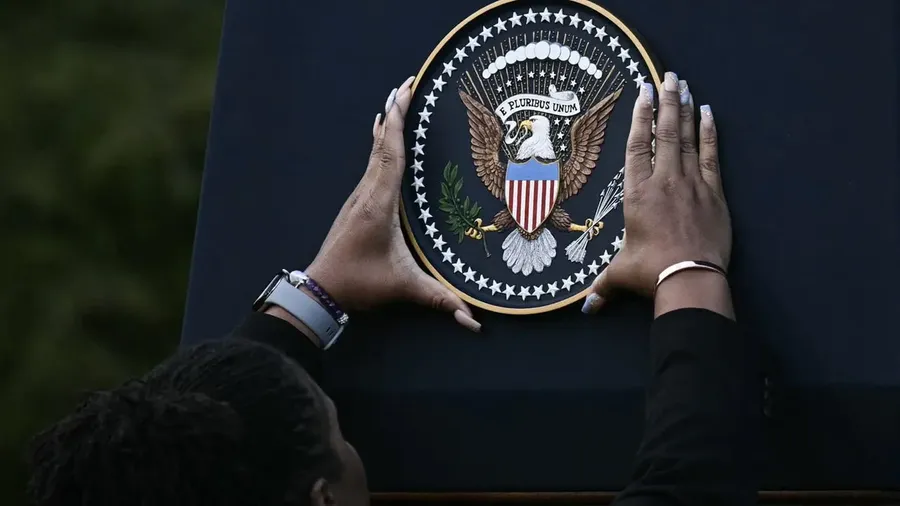
China and the Sleeping Giant Theory of American Power
Published June 19, 2026 • Read time: 5m
China’s rise may prove less a verdict on American decline than the jolt that forces democratic renewal – if history is any guide.
For much of the past two decades, discussions about China’s rise have revolved around a single question: when will it overtake the United States?
The assumption behind the question is rarely challenged. China rises. America declines. The transition may be gradual or abrupt, peaceful or turbulent, but the destination is ultimately the same.
Yet history suggests another possibility.
China’s rise may ultimately become the catalyst for American renewal.
This sounds counterintuitive. After all, the evidence of Chinese success is visible everywhere. China has become the world’s manufacturing powerhouse. It dominates industries ranging from batteries and solar panels to electric vehicles. Its infrastructure often looks more modern than that of many Western nations. Meanwhile, American politics seems increasingly polarised, dysfunctional and exhausted.
To many observers, the contrast appears obvious. China looks focused. America looks distracted.
But this view confuses peacetime efficiency with long-term adaptability.
One way of understanding this is through what I call the “Sleeping Giant Theory of American Power” – the tendency of the United States to appear divided, complacent, and strategically adrift until confronted by a challenge sufficiently large to force national mobilisation. The very institutions that create friction in peacetime can become sources of resilience in periods of competition, allowing those societies to mobilise capital, talent, innovation, and public support on a remarkable scale.
The Ring of Global Compute and the Limits of Chip Export Controls
China’s Revised Mobilization Law and the Expanding Reach of National Defense
America Must Win the Biotech Race Against China
China’s Epic Campaign To Steal America’s Secrets
The United States has demonstrated this repeatedly.
In the 1930s, many observers viewed Imperial Japan and Nazi Germany as ascendant powers while the United States remained inward-looking and reluctant to engage in another overseas conflict. Pearl Harbor transformed that calculation. Within a few years, America had become the arsenal of democracy and the largest industrial mobilisation effort in history.
A similar pattern emerged during the Cold War. The result was not merely containment. It was renewal. The Soviet challenge did more than shape American foreign policy. It helped reshape American society, spurring investment in education, scientific research, defence and technology.
The crucial point is that democracies rarely mobilise because they are comfortable. They mobilise because they believe they are falling behind.
This raises a more provocative possibility. What if the widely predicted moment when China overtakes the United States is not the end of the story, but the beginning of a new one? A China that briefly surpasses America economically may not represent the culmination of Chinese power. It may represent the trigger for a far more determined phase of American competition.
President Donald Trump delivers his State of the Union address on 24 February 2026 at the US Capitol in Washington, DC (Andrea Hanks/Official White House Photo)
Many of the most consequential American policy developments of recent years are best understood through the lens of strategic competition with Beijing. Industrial policy has returned. Semiconductor manufacturing has become a national priority. Supply chains are being reconfigured. Export controls have become instruments of statecraft. Defence spending is rising. Strategic resilience has become a bipartisan objective.
Perhaps most strikingly, China has achieved something few domestic issues can: broad agreement in Washington.
Ironically, Beijing’s success may be helping America overcome its divisions.
Nor is this dynamic confined to the United States.
Russia’s invasion of Ukraine has prompted defence spending increases across Europe that would have been politically difficult to imagine only a decade ago. Germany has embarked on a strategic reorientation. NATO has expanded. Across much of the democratic world, external pressure has accelerated political change that domestic debate alone struggled to achieve.
This possibility has important implications for how to think about the future balance of power.
Much commentary treats the rise of one power and the decline of another as mirror images. Yet history suggests the relationship is more complicated. As the historian John Lewis Gaddis observed of the Cold War, strategic rivalry often transforms competitors as much as it constrains them.
This matters because China now faces increasingly serious limits of its own. Its population has begun to decline. Its workforce is shrinking. Local government debt is mounting. The property sector that powered much of the country’s earlier growth has entered a prolonged adjustment. The investment-led model that delivered extraordinary gains for four decades is becoming harder to sustain.
At precisely the moment these challenges are emerging, many democracies are undertaking policy shifts that critics once considered politically impossible.
The implications extend beyond economics.
If Chinese leaders believe their country’s relative power will continue rising, strategic patience remains an attractive option. If they conclude that China’s relative position may soon peak, the incentives become more complicated. History suggests that states can become more willing to accept risk when they believe future conditions may be less favourable than present ones.
This does not mean conflict is inevitable. Nor does it mean China’s rise is over.
But it does suggest that many forecasts of the future rest on a flawed assumption: that democratic dysfunction observed during periods of stability tells us how democracies will behave during periods of sustained strategic competition.
History suggests otherwise.
It is equally possible that the moment many observers regard as China’s victory will ultimately be remembered as the moment America decided it was losing.
Vincent So is CEO of the Thoracic Society of Australia and New Zealand. Views are his own and not of his employer.
This article appeared originally at Lowy Institute's the interpreter.

A Sweet American Original
By Greg Maresca • RealClearDefense
South Korea's OPCON Debate Is a Test of Alliance Readiness
By Daewon Cho • RealClearDefense
When Does Peacetime Access Become Wartime Capability?
By Alp Cenk Arslan • RealClearDefense
The Missing Seats at the Table
By Dennis T. Cosgrove • RealClearDefense
We Exported Our Arsenal Manufacturing, Now We Must Rebuild It.
By Justin Fulcher • RealClearDefense

Sign of the Times: CCAs Dominate a Major Fighter Conference
By Bill Sweetman • The Strategist (ASPI)
Marines Want Naval Strike Missiles With Double The Range
By The WarZone
U.S. Navy Targets 79 New Cutter-Based FF(X) Frigates
By A. Servaes, Global Defense
The Hegseth Grenade: A Sea Change at Newport
By Robert C. Rubel, CIMSECSign of the Times: CCAs Dominate a Major Fighter Conference
By B. Sweetman, ASPI