
Bring American Security Home by Ending China's Rare Earth Monopoly
Last updated 04:49 PM EDT • Read time: 4m
As economies around the world remain shuttered to reduce the spread of COVID-19, the cost of America’s reliance on foreign sources of critical resources has become painfully clear. The laudable actions of American manufacturers, as they shift their production toward making desperately needed medical devices and personal protective equipment for frontline healthcare workers, are a testament to America’s ability to rise to meet challenges that threaten the nation. However admirable these efforts may be, the American people would be better served if they were not necessary, and instead, we had made the needed investments to create and maintain a robust manufacturing sector across key products. When America and the world emerge from the pandemic, we must learn from this experience to ensure that our nation can meet our critical needs not only in medical equipment but in a host of key sectors on which our national supply security depends.
This necessity started to become clear to the world long before the pandemic even reached America. As COVID-19 spread in China and manufacturers there closed in response, the threats to global supply chains became apparent in products ranging from medical equipment to smartphones to electric motors, and aircraft and, indeed, military platforms. But, America’s overreliance on China as a source of critical products is not new. We must urgently remedy this dependence.
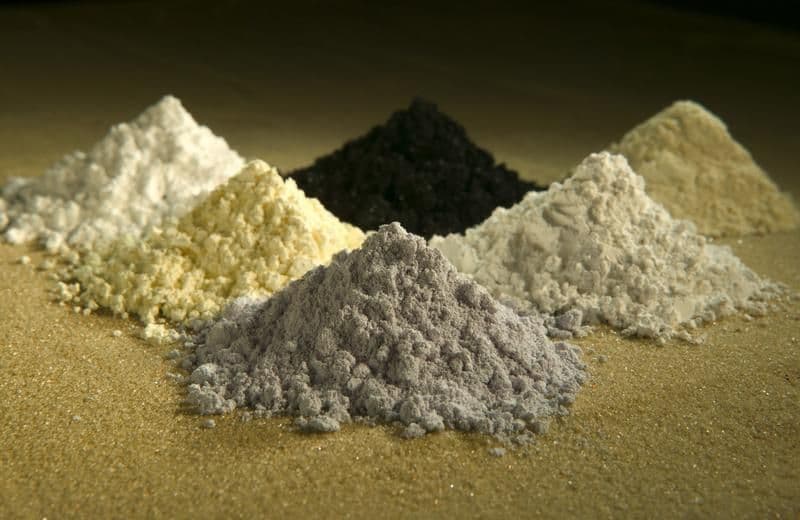
America’s complete dependence on China for the critical minerals and metals that play essential roles in our defense systems and critical infrastructure is alarming. Today, China could cripple our industrial supply chain by shutting off the tap for these “rare earth” minerals, as the vast majority of these minerals are mined in China, and even the small percentage that are mined in the U.S. are exported to China for necessary processing. The President, Congress, and our Department of Defense have all publicly recognized this risk as a critical vulnerability that must be addressed.
Our rare earth dependence on China is not only dangerous but completely unnecessary. Our nation holds significant reserves of these critical minerals and metals, and at one point was the world leader in rare earths’ production. The U.S. Geological Survey has identified over ten rare earth deposits in the United States. One of those, Bear Lodge in northeastern Wyoming, not only represents a significant source of vital rare earth elements here at home but will use a new rare earth separation technology that will, for the first time in years, remove China from the processing supply chain that underpins our nation’s ongoing dependence.
In short, the United States can, should, and must develop its own domestic source of rare earths, but as in so many manufacturing sectors, attempting to find a foothold in a market dominated by the Chinese government’s state-subsidized monopoly of the global industry requires the support of our own government. A “Key Finding” of the 2018 Report to the President Assessing and Strengthening the Manufacturing and Defense Industrial Base and Supply Chain Resiliency of the U.S. identified China’s “significant and growing risk to the supply of materials deemed strategic and critical to U.S. national security.”
The Chinese Communist Party demonstrated its willingness to weaponize supplies of rare earths in 2010, when it threatened to withhold shipments of these critical products to Japan, in response to a territorial dispute. We must build our domestic capacity to ensure that we are not similarly threatened.
Congress and the military started to use the massive purchasing power of our armed forces to address this problem by attempting to prohibit the procurement of products containing Chinese rare earths by the U.S. military. Unfortunately, a loophole in the National Defense Authorization Act language resulted in China remaining firmly entrenched as the supplier of the minerals necessary to produce advanced electronics, night vision devices, guidance systems and electric motors. It is imperative that this year’s NDAA close that loophole and begin the process of building a reliable and secure domestic critical mineral supply chain to meet the needs of our national defense. All the awareness in the world will not create American independence from the Chinese stranglehold of critical rare earths without clear action. The time is now.
BG John Adams (U.S. Army, Ret.) is the president of Guardian Six Consulting based in Gulf Breeze and Washington, D.C. Guardian Six is a national security consulting firm that advises government, business and nonprofits. He is the lead author of the 2013 study of the defense industrial base Remaking American Security, published by the Alliance for American Manufacturing.

The Services Do Not Need a Four-Star Autonomous Warfare Command
By Steven Wills • RealClearDefense
Honor Them While There Is Still Time
By Jeffrey Rosales • RealClearDefense
From Siberia to Fairford: How Operation Spider’s Web Has Changed the Rules of Airpower
By Frank A. Rose • RealClearDefense
Faster Simulations, Better Defense Decisions
By Rut Lineswala • RealClearDefense
Will HASC Have an Oversight Subcommittee in the Next Congress?
By Christopher J. Bright • RealClearDefense

Hegseth Barred Trans Troops. Military Boards Are Rejecting Those Orders.
By NYT
Closing the Sea: Lessons from Ancient Mediterranean Blockades
By DeCasien, CIMSECFrom Siberia to Fairford: How Operation Spider’s Web Has Changed the Rules of Airpower
By Frank A. Rose • RealClearDefenseFaster Simulations, Better Defense Decisions
By Rut Lineswala • RealClearDefense
Bombers Could Have a Major Air-to-Air Combat Role
By Joseph Trevithick, The WarZone