
Mining for Wartime Readiness
Published Aug. 3, 2026 • Read time: 4m
During World War II, the United States became the “Arsenal of Democracy” because American mines, factories and workers could produce the weapons and equipment needed by the United States and its allies at extraordinary pace and scale. U.S. industry provided nearly two-thirds of all Allied military equipment and by the end of the war the U.S. was home to more than half of the world’s entire industrial production.
Today, there is a sharp focus on rebuilding U.S. capacity to produce ships, missiles, aircraft and drones, but a less visible vulnerability threatens the ability to produce any of them: our dependence on foreign adversaries, such as China, for the minerals essential to defense applications.
The Department of War consistently emphasizes that access to a wide range of minerals is as important to the warfighter as the equipment they use. National security, therefore, is not only a question of the United States’ military capabilities. It is also a question of whether the country can obtain the materials that feed the supply chains needed to maintain and replenish its weapons during a prolonged crisis.
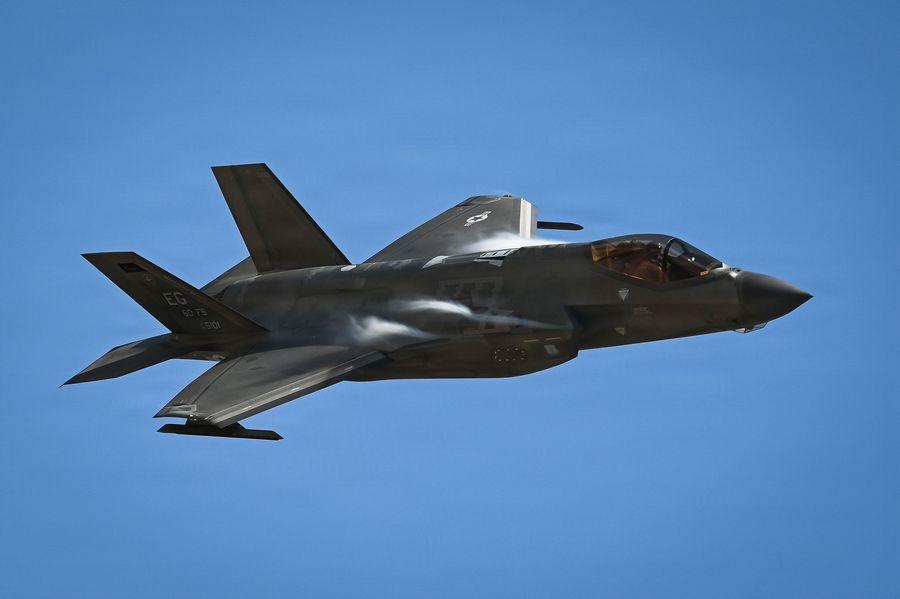
While rare earths are most frequently recognized as our Achilles heel – and indeed are essential in systems such as the F-35, Virginia and Columbia-class submarines and radar systems – our minerals vulnerability goes much deeper. Copper is used in wiring and electrical systems, while lithium, graphite and nickel are vital inputs for batteries, energy storage and high-strength materials. Tungsten is used in armor-piercing materials for jet engines and ammunition, while antimony has uses in ammunition, explosives, infrared sensors, batteries, flame retardants and military equipment.
These materials are not interchangeable commodities that can be replaced at a moment’s notice. In many defense applications, substitutes are unavailable or do not perform as well. The Government Accountability Office has warned that these disruptions we have seen in critical mineral supplies could seriously harm national security, especially because the United States relies heavily on foreign mining and processing.
Antimony – used in primers for small-arms and medium-caliber ammunition, as well as in other missile and munition components – provides the perfect case study. During World War II, the U.S. produced 90 percent of the antimony it needed from one mine in Idaho. Fast forward to present day and the U.S. is now more than 90 percent import-reliant for this vital defense input, with 55 percent of it coming from China. This reliance became a crisis when China imposed export restrictions on antimony in August 2024, prohibiting exports to America in December 2024.
The Department of War (DOW) has been clear: mineral security is national security. The DOW supported Perpetua Resources’ Stibnite Gold Project in Idaho as part of an effort to establish a domestic source of antimony for missiles and munitions. Michael Cadenazzi, Assistant Secretary of War for Industrial Base Policy, has said, “the [Stibnite project] is the most important pillar of the Department's strategy to secure a U.S. source of mined antimony.”
Given that it takes 29 years to bring a mine online in the U.S., we must treat mineral production as a continuous national-readiness mission. America cannot wait until a conflict begins – or the imposition of export controls – to identify mineral shortages and qualify new materials for military use.
Much-needed permitting reform coupled with federal tools such as Defense Production Act investments, strategic stockpiling, loans, grants and long-term purchase commitments can help move commercially viable projects from exploration into production. And thoughtful policy should address the entirety of the supply chain rather than the mineral alone. A mineral mined in the United States but sent overseas for processing can still leave the country vulnerable to foreign disruption. Smart investments and policy must focus on the entire value chain of domestic critical mineral capabilities.
America’s historic strength has long been a result of its investments in defense industrial base. Today, we must look beyond our frontline defense capabilities and ensure we are working just as urgently to secure the materials that enable them. National security requires minerals security – and it’s time for the United States’ domestic supply chains to reflect it.
Rich Nolan is the President and CEO of the National Mining Association.

Iran’s Nuclear and Chemical Weapons Threat
By Ben Ollerenshaw • RealClearDefense
Europe’s Rearmament Paradox
By Daniel Darling • RealClearDefense
Pentagon’s Pursuit of Faster Acquisition
By Ben Harris • RealClearDefense
The Army’s AI Cyber Defenders Need a Proven Stand-Down Order
By Gleb Tsipursky • RealClearDefense
After the Silence
By Chase Skylar DeMayo • RealClearDefense

The First Surface Drone-v-Drone Fight
By CDR Salamander, CDR Salamander
Air Force Strengthens F-22 Raptor Combat Readiness in the Pacific
By Global DefenseAfter the Silence
By Chase Skylar DeMayo • RealClearDefense
Underwater Arms Race Puts U.S. Naval Supremacy at Risk
By Tom O'Connor, Newsweek
New Facilities To Pump Out Upgraded F/A-18E/F Super Hornets
By Trevithick, WarZone