
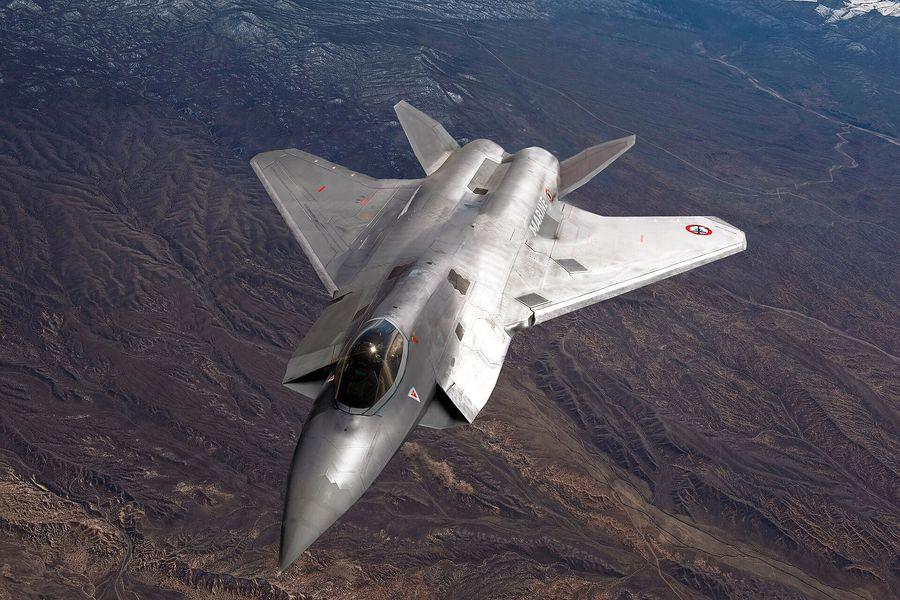
Depiction of the New Generation Fighter, a component of the Future Combat Air System.
Europe’s Rearmament Paradox
Published Nov. 14, 2026 • Read time: 5m
Join the Conversation
0Against a backdrop of Russia’s ongoing war in Ukraine and uncertainty in its relationship with Washington, Europe is undergoing its most aggressive defense spending expansion since the Cold War.
Following Moscow’s invasion of Ukraine, combined defense spending by EU member states rose from €240 billion ($253 billion) in 2022 to €418 billion ($473 billion) in 2025.
Total spending by the end of 2026 is expected to reach €454 billion ($510 billion), which would push aggregate defense expenditures to 2.4 percent of EU GDP.
Meanwhile, European investment in equipment procurement and defense research and development is estimated to hit €163 billion ($183 billion) this year, up 159% from 2021.
Yet this fiscal surge in defense investment is not entirely channeled back into European industry.
During the first year of consolidated spending uplifts (February 2022 to mid-2023), approximately 78% of EU defense acquisitions were sourced from non-EU providers (primarily the U.S.). The numbers began to shift thereafter, but the current percentage of defense investment directed to non-EU suppliers remains substantial at 45-48%.
Why is it so hard for Europe to funnel the surge in spending back into European defense primes and research and development initiatives?
The central issue is the systemic fragmentation of Europe’s defense technological and industrial base (EDTIB).
The European Union’s 27 members each have their own military requirements, national budgets, and, in many instances, localized defense sectors. Where industrial primes exist, they are viewed as valuable strategic sovereign assets by national governments.
A comparison with the U.S. illustrates the extent of this fragmentation. Whereas the U.S. manages its defense portfolio through a more centralized system, EU members maintain over 170 distinct weapon systems across 27 national budgets.
Such structural duplication dilutes research and development efficiency and spreads procurement investment across multiple platforms.
European leaders have worked to mitigate the fragmentation dilemma through collaborative mechanisms, such as the Permanent Structured Cooperation (PESCO) framework.
However, collaborative procurement efforts continue to fall short of European ambitions.
In 2022, the EU's collaborative procurement rate stood at 18% of total equipment spending, well below the European Defence Agency's 35% benchmark established in 2007 and the 40% target for 2027 under the Readiness 2030 policy framework.
Of the 83 projects launched under PESCO between 2018 and 2025, only eight have closed, while 75 remained ongoing.
Such slowness and the lack of aggregated serial production demand make European defense contractors hesitant to commit capital to expanding manufacturing capacity.
Meanwhile, European defense consolidation and joint venture activity face significant hurdles spanning both financial constraints and regulatory and political barriers.
These include elevated valuations that make acquisitions harder to finance against the target companies' earnings and profitability, as well as Environmental, Social and Governance (ESG) banking policies and sustainable-finance exclusions that can restrict access to traditional debt and equity.
On the public side, multiple roadblocks stand in the way of cross-border consolidation.
For starters, European prime contractors operate under direct state ownership or strategic influence.
Examples include Italy's Ministry of Economy holding a 30% stake in Leonardo, Spain holding a 28% stake in Indra Sistemas, and France maintaining a golden share (action spécifique) in Thales. Governments face pressure to protect domestic jobs, industrial workshare, and strategic assets, making cross-border transactions politically sensitive and procedurally complex. These considerations can take precedence even when cross-border consolidation could create a more efficient industrial structure.
EU merger-control rules present another potential obstacle. Reforms intended to better accommodate defense-readiness considerations have been under development, leaving some transactions subject to case-by-case assessment under the applicable framework.
To address these and other regulatory bottlenecks, the EU is using policy to clear the way.
It has created a Defence Readiness Omnibus package of legislation. First proposed in June 2025, it was subsequently advanced through the Omnibus V legislative package, which received final Council approval on 9 October 2026. Its aim is to eliminate regulatory red tape, cut administrative delays, and mobilize capital so member states can achieve military and industrial defense readiness by 2030.
Additionally, Brussels is utilizing funding mechanisms such as the Security Action for Europe (SAFE) financing instrument to help members facing fiscal constraints. This €150 billion ($168 billion) loan instrument provides EU-level financing for eligible defense investments. It enables participating member states to fund major equipment purchases through long-term loans rather than relying entirely on immediate national-budget outlays, easing near-term financing pressures.
Another financial catalyst is the European Defense Industry Programme (EDIP) backed by a €1.5 billion budget for 2025-2027. For eligible products, EDIP requires at least 65% of component costs to originate in the EU or associated countries.
Other mechanisms include the European Peace Facility (EPF), with a €17 billion financial envelope to support joint military capabilities and provide partner assistance, the European Defence Fund (EDF), which allocates €8.8 billion towards collaborative defense research and development, and the activation of the National Escape Clause, granting member states budgetary flexibility from EU fiscal rules for qualified defense investments.
Nonetheless, money alone will not fix Europe’s fragmented defense and industrial technological base, nor will it address ongoing strategic dependence on external suppliers.
Instead, joint ventures, such as Project Bromo (combining the space divisions of Airbus, Leonardo and Thales), and asymmetric industrial partnerships involving high-growth technology disruptor entities and legacy primes offer one practical avenue.
Streamlined permitting, broader use of General Transfer Licenses to reduce national export bottlenecks, and targeted exemptions from chemical regulations that constrain critical component production could also help transform Europe's fragmented peacetime acquisition model into a more responsive, wartime-ready industrial base.
Credible European strategic autonomy will require a resilient, integrated defense industrial base capable of converting increased spending into production at scale and sustained innovation. Whether Europe sustains its recent surge in military spending remains uncertain. The need to translate that investment into greater industrial capacity and output, however, remains clear.
Dan Darling is Forecast International’s director of military and defense markets. Dan oversees a team of analysts who cover budgeting to weapons to defense electronics and military aerospace. For nearly two decades, Dan has written International Military Markets reports, rotating among Europe, Eurasia, the Middle East, and the Asia-Pacific region.
Europe’s Rearmament Paradox
By Daniel Darling • RealClearDefense
Pentagon’s Pursuit of Faster Acquisition
By Ben Harris • RealClearDefense
The Army’s AI Cyber Defenders Need a Proven Stand-Down Order
By Gleb Tsipursky • RealClearDefense
After the Silence
By Chase Skylar DeMayo • RealClearDefense
Defense Chip Procurement Needs a Recovery Test
By Percy Yixuanchen Yu • RealClearDefense
After the Silence
By Chase Skylar DeMayo • RealClearDefense
Underwater Arms Race Puts U.S. Naval Supremacy at Risk
By Tom O'Connor, Newsweek
New Facilities To Pump Out Upgraded F/A-18E/F Super Hornets
By Trevithick, WarZone
U.S. Navy Expands Tomahawk Warhead Production
By Naval News Staff, Naval News
SSN(X) Attack Boat Will be a Swift, Lethal Mothership for Undersea Drones
By USNI N.