
Cyber Warfare
RealClear Context
Click below to continue reading this story, discover more Cyber Warfare stories from over 25 years of RealClear archives, or follow this topic to stay in the know.
AI and the Hydra Effect: Securing Outdated Operational Technology
Artificial intelligence (AI) is accelerating the pace and scale of cyber-physical threats; outdated operational technology (OT) provides an exposed...
09/02/25Read it on Small Wars JournalThe Pentagon's Next Readiness Test Should Begin When the Cloud Goes Dark
Modern defense manufacturing increasingly relies on commercial software for everything from production planning and quality control to procurement,...
1d agoRead it on RealClearDefense
The Pentagon's Next Readiness Test Should Begin When the Cloud Goes Dark
The Pentagon spends enormous amounts of time determining whether a weapon works, a contractor can deliver and a network can withstand a cyberattack. But there's another question it should be asking: Can the companies supplying America's national defense still operate when a technology provider they depend on suddenly stops working?
Last week's global Microsoft outage exposed how quickly those dependencies can become liabilities. Businesses and government offices lost access to critical services, while Microsoft's preliminary findings revealed a software defect that had gone undetected for months. When increased network traffic collided with reduced server capacity, systems designed to redirect users away from trouble instead helped spread the failure. Within two hours, more than 80 percent of affected gateway servers were unresponsive.
The New ‘Cold’ War
A wave of cyberattacks on European supermarkets last week exposed a vulnerability that extends well beyond refrigeration. For Australia, the national...
1w agoRead it on The Strategist (ASPI)Trump Nominates Palantir Security Chief To Lead CISA
If confirmed, the cybersecurity executive would take over an agency rebuilding after workforce cuts and nearly 22 months without a permanent director....
1w agoRead it on Defense One
The New ‘Cold’ War
A wave of cyberattacks on European supermarkets last week exposed a vulnerability that extends well beyond refrigeration. For Australia, the national security challenge is protecting the interconnected critical infrastructure systems that sustain our economy, essential services and defence capability. As strategic competition intensifies, these systems are increasingly exposed to disruption by state-sponsored hacking groups that seek to exploit the connections between critical infrastructure sectors.
A supermarket refrigerator might seem an unlikely target, yet the attacks demonstrate how manipulating an ordinary piece of commercial equipment can disrupt food supplies, destroy stock and undermine public confidence. They also expose a broader vulnerability: an adversary does not need to destroy critical infrastructure to disrupt the systems on which a country depends.
AI Saves the Day—and Could Bring Doom Tomorrow
OpenAI identified a bug in the web and reported it. Will the next one be found by bad guys with a Chinese open model?...
1w agoRead it on The Wall Street JournalAmerica Should Unleash Cyber Privateers
The rise of artificial intelligence technology has been a double-edged sword in the fight against criminal cyberattacks....
1w agoRead it on RealClearDefense
America Should Unleash Cyber Privateers
The rise of artificial intelligence technology has been a double-edged sword in the fight against criminal cyberattacks. The rapid development and proliferation of faster, more efficient, and agentic programs have slowed ransomware and phishing attacks. Simultaneously, white-hat AI tools that hunt for zero-day vulnerabilities have reduced human error in overall system design. Cybercrime, however, has continued to grow more potent. Criminals now use AI to research their targets and craft convincing phishing attempts, and bad actors are finding zero-day vulnerabilities of their own. As new technology emerges, these fights are less direct confrontation than a race against the clock. When defenders lose that race, the results are disastrous.
Our adversaries have put immense pressure on American infrastructure, endangering our economy and welfare. According to the FBI, Americans lose nearly $21 billion in tangible finances annually to cybercrime. Losses on this scale are unsustainable. The question is not whether this is a threat, but how to respond. As the federal government builds its capacity to go after cybercriminals, something must close the gap in the meantime. Bureaucracy is slow by design. That serves good governance, but it is a liability against criminals who face no such constraints.
Foreign Espionage of U.S. Frontier AI Labs
Below-Threshold Capability Transfer and the Compression of Strategic Advantage...
3w agoRead it on Christopher Townsend
Iron Raven: Remembering Colonel Joseph B. Conmy, Jr.
By Louis Marano • RealClearDefense
Stand Proud of the Force
By Jay Rogers • RealClearDefense
How a Dying Agency Turned Fentanyl Into a Weapon of Mass Destruction
By Barry Angeline • RealClearDefense
The Pressure Is the Message: What Xi and Putin Faced in Shenzhen
By Emzari Gelashvili • RealClearDefense
China’s Revised Mobilization Law and the Expanding Reach of National Defense
By Muhammad Shoaib • RealClearDefense

Marine Corps Hero Under Federal Investigation
By Laporta, Burnham & Watson, CBS
A Postmortem of Maneuver Warfare in the U.S. Marine Corps
By Donald Vandergriff
U.S. Putting Weapons in Space: A Strategic Blunder?
By Ajey Lele • RealClearDefense
U.S. Senate Seeks to Exchange Shipbuilding Funds for More Munitions
By Naval News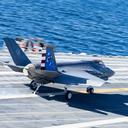
F-35C Completes First Launch and Recovery Trials on a Ford-Class Carrier
By Navy T.