
Iron Raven: Remembering Colonel Joseph B. Conmy, Jr.
Published Nov. 21, 2026 • Read time: 6m
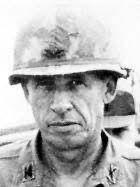
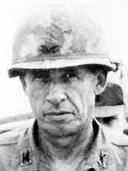
This is a tribute to my friend Joseph B. Conmy, Jr., colonel of infantry, United States Army, call sign “Iron Raven” (1919-1994).
We didn’t meet in Vietnam, but rather in Washington, DC, when he was promoting the 1987 film “Hamburger Hill.” In 1969, Joe had commanded the 3rd Brigade of the 101stAirborne Division in that costly victory over the North Vietnamese Army.
Joe was one of only 230 soldiers to have won the Combat Infantryman’s Badge three times: one for World War II, one for the Korean War, and one for Vietnam. After graduating from the U.S. Military Academy at West Point in 1943, he was assigned to the European Theater of Operations. He became a company commander in the 11th Infantry Regiment and was wounded after a month of combat. He then became the operations officer of the 1st Battalion, 114th Infantry Division. By the end of the war, he was awarded two Bronze Stars and a Purple Heart, as well as the CIB.
In Korea with the 7th Infantry Division, Joe first commanded a company and then the 1stBattalion, 31st Infantry Regiment. He was awarded the Silver Star, three additional Bronze Stars for valor, a second Purple Heart and a second CIB. The citation for his Silver Star -- for gallantry in action against the enemy near Popso-ri, Korea, on May 22, 1951 -- is worth quoting at length:
“While all three companies of the 1st Battalion were actively engaged in separate actions on three hills, communications between the units were disrupted. Major Conmy, cognizant of the serious situation and aware of the possibility of the battalion being encircled by the enemy, immediately commandeered a light vehicle and moved toward the positions of Company A. During the trip, the driver was wounded by enemy gunfire, and after administering first aid, Major Conmy continued on. Reaching the company’s position, he immediately directed the unit into new defensive positions and reorganized the forces. He then returned to the battalion aid station and left the wounded man and continued on toward Company B. Due to the intense enemy artillery fire, he was forced to abandon the vehicle and continue on foot. Locating Company B, he moved it into new positions and proceeded to Company C, where he repeated the process and insured that the battalion was physically tied in across the front.”
The Formation Left Us Behind
AI Should Speed Veterans’ Benefits, Not Decide Them
The VFW’s Gambling Addiction Victimizes Veterans
Honor Them While There Is Still Time
In 1964 Joe took command of 1st Battalion, 3rd Infantry Regiment, the “Old Guard,” at Fort Myer, Virginia. It’s the Army’s official ceremonial unit and escort to the president. It guards the Tomb of the Unknown Soldier, and provides an honor guard to eligible veterans at their interment in Arlington National Cemetery. The movie “Gardens of Stone” was made about the Old Guard during this period, and Joe has a cameo at the end of it.
As commander of the Old Guard, Joe supervised the funeral of Robert F. Kennedy, Sr., at Arlington. Based on the massive turnout, Joe told me that he had no doubt that RFK would have been elected president if he had lived to run in 1968.
In May of 1969, Joe led the 3rd Brigade of the 101st Airborne in the bitter fight for “Hamburger Hill” in the A Shau Valley near the Laotian border in Vietnam. Joe believed that the purpose of the battle was to deprive the North Vietnamese of an area from which to stage attacks on the populated coastal lowlands, as the NVA had done during Tet, 1968. That purpose being achieved, there was no value in garrisoning U.S. troops on the mountain.
After the battle, the brigade repulsed a night attack on their encampment. The following account is extracted from the feature story I wrote that was published in The Washington Times on August 31, 1987:
On the storm-lashed night of June 11, 1969, the North Vietnamese Army came gunning for the Iron Raven.
Three weeks after the 3rd Brigade of the 101st Airborne threw the NVA off Hamburger Hill, North Vietnamese suicide sappers ended their long vigil outside the paratroopers’ firebase and command center. On a pitch-black night through wind-whipped rain, the sappers stripped to the loincloth, taped to their bodies what dynamite they couldn’t carry and slithered through the mud under the barbed wire.
They came to destroy the artillery and kill brigade commander Col. Joe Conmy – radio call sign “Iron Raven.” They failed to do either, although they almost did both. …
As the artillerymen fought the attackers at the gun parapets, a North Vietnamese sapper got on the roof of Col. Conmy’s command center and blew the side door off the bunker with a satchel charge.
The colonel and operations Sgt. Maj. Robert D. Bryson knew they had to act. The sergeant major ran out the back door with an M-16, while Col. Conmy grabbed his .45 caliber grease gun and gave the front door a kick.
The sapper hung like a bat, his shaved head reflecting the glow of the bunker’s light. Col. Conmy fired the same time the sapper threw his charge.
With a violent orange flash, the blast sent the colonel flying back into the bunker and buried him under a pile of radios. “It filled me with pieces of metal,” Conmy said. “Screws, nails, bolts, and any kind of junk they had packed in there, plus splinters from the door frame. My ear drums were perforated, and I was temporarily blinded by the grit blown into my eyes.
“I got one of the radios working and made contact with the company guarding the perimeter.”
Sgt. Maj. Bryson stayed on top of the operations bunker for the rest of the night and killed six more sappers who came to destroy it.
“We didn’t lose a tube,” Conmy said, “and we were still on the hill when the light came.”
Joe took satisfaction that feature films had been made about two of his commands: “Gardens of Stone,” directed by Francis Ford Coppola, and “Hamburger Hill,” directed by John Irvin. Toward the end of his life, I tried to tell him about a third film reference. But by that time he was sick, and I’m not sure he followed my words. He had a cancerous lesion on his forearm from Agent Orange, and the disease was spreading.
The Al Pacino character in “Scent of a Woman” (1992) was identified as having been Lyndon Johnson’s military aide. In fact, Joe was Lyndon Johnson’s military aide. It was a sensitive topic, because Joe believed he had been passed over for promotion to general officer because he was too closely associated with Johnson – a man with whom he had political differences. I don’t think Joe would have liked the Al Pacino character or “Scent of a Woman.”
After Joe’s death, I was surprised by a phone call from one of his family members inviting me to sit among Joe’s West Point classmates at the dedication of Conmy Hall at Fort Myer, Virginia. It was a great honor to do so.
Louis Marano is an anthropologist and a former journalist, served 15 months as a junior officer in a Seabee battalion in Vietnam. In 2007-2009, he served two tours as a civilian Army contractor in Iraq.
Iron Raven: Remembering Colonel Joseph B. Conmy, Jr.
By Louis Marano • RealClearDefense
Stand Proud of the Force
By Jay Rogers • RealClearDefense
How a Dying Agency Turned Fentanyl Into a Weapon of Mass Destruction
By Barry Angeline • RealClearDefense
The Pressure Is the Message: What Xi and Putin Faced in Shenzhen
By Emzari Gelashvili • RealClearDefense
China’s Revised Mobilization Law and the Expanding Reach of National Defense
By Muhammad Shoaib • RealClearDefense

Marine Corps Hero Under Federal Investigation
By Laporta, Burnham & Watson, CBS
A Postmortem of Maneuver Warfare in the U.S. Marine Corps
By Donald Vandergriff
U.S. Putting Weapons in Space: A Strategic Blunder?
By Ajey Lele • RealClearDefense
U.S. Senate Seeks to Exchange Shipbuilding Funds for More Munitions
By Naval News
F-35C Completes First Launch and Recovery Trials on a Ford-Class Carrier
By Navy T.