
A Fitting 2021 Sequel to James Fallows' 1981 "National Defense"
Last updated 01:31 AM EDT • Read time: 8m
BIAS ALERT: Andrew Cockburn, the author of “Spoils of War,” is a longtime friend and colleague. While my views on him and his life’s work are heavily biased, the facts, analysis and anecdotes in this commentary should speak for themselves.
In 1981 Random House released James Fallows’ "National Defense” to become both award-winning and bestselling. The book could be found on the desks of many congressional defense staffers, including my own in Senator Nancy L. Kassebaum’s (R-KS) office. “National Defense” was a revelation. Through sources, Fallows readily recognized in his acknowledgments, the book made it clear that much of my own and others’ analysis of the DoD budget and the weapons it bought were poorly, if not mis-, informed. More money did not make our defenses stronger; it made them weaker. The actual facts on various controversial weapons were not that they were more than we needed, too costly (even if effective), or “destabilizing” in the eyes of others. Many weapons were losers designed more for their complexity and resultant cost than for meaningful battlefield performance. In some cases, the Pentagon even perversely undermined effective weapons to keep its preferred systems on track. Had we done it right, we could have a larger, more effective force for less money.
That was forty years ago. The only thing that has changed is that things have gotten worse.
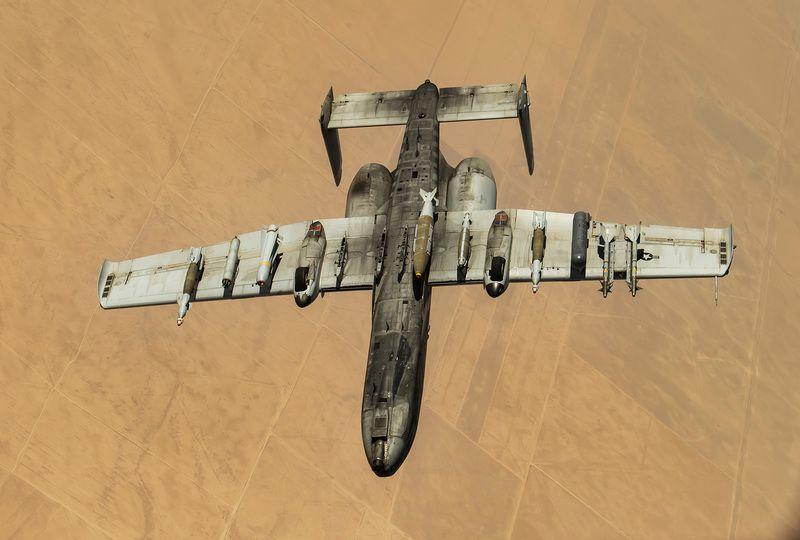
A new book now picks up many of Fallows' threads to tell us what has happened since 1981. Andrew Cockburn's "The Spoils of War: Power, Profit and the American War Machine," tells us, for example, “Overall, despite remorseless growth in spending, the U.S. military continues to shrink, fielding fewer ships, aircraft, and ground combat units with every passing decade. Remarkably, more money apparently produces less defense.” And, those smaller inventories are all too often not improvements but steps backward: compare, for example, as Cockburn shows, the performance of the high-cost F-35 to the older, cheaper A-10 to perform the close support mission (fighting with our troops engaged on the battlefield and hunting down threats coming at them). The new $7 billion-plus per ship Zumwalt class destroyer cannot perform its original mission (gunfire support for troops onshore), and the Navy is now changing it, at even more cost, to try to be a surface combatant with missiles. Just two examples of several cited.
But, it’s worse than that; as Cockburn demonstrates, some of our weapons actually help the enemy. Incompetent designs of equipment and aircraft killed our troops in September 2014 when an ill-suited, ill-equipped B-1B with an ill-trained crew killed five U.S. troops on a hilltop in Afghanistan, a tragedy that the Air Force then tried to pin on U.S. troops on the ground. Worse, Cockburn tells of the likely thousands of innocent civilians killed in Iraq, Afghanistan and elsewhere by “high tech” drones that literally do not know what they are shooting at, albeit “precisely:” Both morally corrosive for us and a great boon to ISIS and the Taliban. Now the mainstream world has been unavoidably confronted with the problem from the internationally reported September 2021 drone strike in Kabul on a presumed ISIS terrorist, first declared “righteous” by Chairman of the Joint Chiefs of Staff Milley but then found to be the murder of ten entirely innocent civilians. Cockburn has been following these killings for a decade, arguing not just about their wanton immorality but also the complete failure to prevent the expansion of terrorism.
Throughout "Spoils of War," Cockburn makes painfully clear that the shrinking of U.S. forces, while they age, are less trained and become more and more ill-suited for war-winning combat – all at ever-higher budgets -- comes independent of altering national strategies, constant changes in commanders and civilian leaders in the Pentagon or whether Democrats or Republicans control the White House or Congress.
It is, therefore, with real skepticism that we should view a recent report from the Congressional Budget Office that assures us that $1 trillion can be extracted from future defense budgets if we adopt any one of three military strategies ("deterrence by denial," "deterrence through punishment," or "maintaining the freedom of navigation in sea, air, and space”), each incurring a selected reduction in forces and manpower. Nowhere does CBO address the pathologies, made manifest by Cockburn, that shows our forces being reduced over the decades with deteriorating effectiveness, aging inventories and less training – all at greater cost. CBO applies strategy lipstick to a lower-budget scenario. We know from Cockburn’s book that if CBO’s prescription were to be imposed on the Pentagon that exists, utter chaos would prevail in an organization morally and mentally unequipped to survive – albeit grossly incompetently -- without constantly growing budgets. Some have argued the CBO prescription points the way, but as others have argued, badly needed, massive reductions in Pentagon spending can only be achieved after fundamental reform of its pre-existing cancers. Analysts at CBO are well aware of what has been happening in the DoD budget for decades that the organization would permit itself, even when asked to do so by the Chairman of the Senate Budget Committee, to produce this report prompts some serious questions.
Those above-mentioned needed reforms include the following:
- Make sure the weapons testing process remains brutally rigorous, independent and reported to Congress and the public -- something President Biden’s new testing nominee appears to be completely unequipped to do;
- Insist that all acquisition programs are multiple competitive prototype competitions based on empirical testing before major production starts; i.e., real “fly before buy” -- something that most Pentagon managers have detested for decades;
- Not rewriting current acquisition rules but observing existing ones without always exploiting the loopholes, conveniently written by Congress, to avoid audits, “fly before buy” buying, killing off failed programs and much else;
- Stop the revolving door wherein industry and Wall Street shuttle managers in and of DoD -- and the like-minded rotation of congressional staff to and from the Pentagon;
- Demand real financial audits of the Pentagon, not the contractor-run exercises looking at just inventory and where the money is spent -- but how it is spent, especially as corporate overhead and in statements of profits, and
- Relearn how to perform meaningful oversight inside DoD, Congress and think tanks – something that, quite deliberately, has become a lost art.
These ideas are hated and perennially avoided in the Pentagon and by its supplicants in Congress, the media, and many current think tanks. Given how poorly the Pentagon is run, it is a wonder that the opponents of reform have been so successful for so long.
“Spoils of War” is a compilation of Cockburn’s previous work for various publications, such as Harper’s and the London Review of Books. He also updates each chapter with a very short epilogue. But even those written as early as 2014 are painfully and presciently relevant to today’s issues. In Part IV, he adds three chapters on the mindboggling – but too often legal -- corruption on Wall Street and in international finance. This addition at first seems a bit off point – until you consider that the equally mindboggling – and too often legal -- foolishness in the Pentagon, defense corporations, Congress and the White House operate at the same level.
I regret to say that the current staffing system on Capitol Hill shows little evidence of potential interest in what Cockburn writes in “Spoils of War,” as there was in 1981 with Fallows’ “National Defense.” Overrun with specialists interested only in pushing whatever fluff they are told to push and pseudo-professional national security staffers who think too often of their next job in the Pentagon, industry or think thanks run by industry, Cockburn’s likely target audience on Capitol Hill are individuals poorly disposed to be seen in public with a copy of his book. It is the same for Members of the House and Senate -- if they have any time to read anything between media feedings and fundraising.
In another time, the kind of work that Cockburn has done for "Spoils of War" would gather nominations for prizes and placement on bestseller lists. It should have the kind of impact that Fallows' "National Defense" had in its time. That will not be happening in today’s national security culture. But if you see a politician or a defense manager with a copy of “Spoils of War,” pay close attention; they just may give today's national security culture a good ride, and it will be for its money.
Winslow T. Wheeler worked for three decades for Republican and Democratic Senators and GAO on national security issues. He later ran the Center for Defense Information, now at the Project On Government Oversight. He is now semi-retired.

Don’t Be Swayed by Tactical Nukes
By Benjamin Giltner • RealClearDefense
How Seoul’s Break With Kyiv Serves Trump’s Russia Turn
By Sang Won Pyo • RealClearDefense
When the Grid Goes Down, the Mission Must Go On. Solar and Storage Can Help.
By John Szoka • RealClearDefense
Data and Communications Technology are the Hidden Keys to Success for Golden Dome
By Eric Velte • RealClearDefense
The Dual Threat: Why Beijing’s Collapse Is Just As Dangerous as Its Rise
By Efraín Vázquez-Vera • RealClearDefense

USS Stout Loses Power During Port Visit Due to ‘Engineering Casualty’
By USNI News
Air Force Lessons Learned From Operation Epic Fury
By Tabitha Reeves, National Defense
Marines Need Nine More Amphibious Warships To Carry Out Its Missions
By TWZ
AFRL, ACC Fly XQ-67A Drone To Test Autonomous Teaming
By Airforce Technology
F-35B Releases Meteor BVRAAM for the First Time
By Parth Satam, The Aviationist