

America's AWOL Defense Spending
Last updated 06:16 AM EST • Read time: 8m
A Path to Accountability
America's defense budget, the largest worldwide, guarantees U.S. military dominance. However, it faces challenges such as escalating costs, inefficiencies, misaligned priorities, and an unequal burden of global security responsibilities. A cumbersome bureaucracy, escalating defense programs, and insufficient oversight drain resources, leaving vital areas underfunded, rendering the defense budget “absent from duty.”
This essay examines spending challenges and proposes reforms to streamline and make resource allocation more accountable while modernizing the force, improving readiness, and sharing global security costs more equitably. It begins with a swollen bureaucracy.
Bloated Bureaucracy
Since the Cold War, four-star generals have increased while active-duty forces shrank, creating a top-heavy bureaucracy. Today, according to a 2024 Congressional Research Service report, there is one general for every 1400 service members, compared to one per 6,000 in WWII.
Additionally, the 'Fourth Estate' agencies within the Department of Defense (DoD) have expanded unchecked, now encompassing over 30 defense agencies with 380,000 employees at an annual cost exceeding $100 billion, growing annually by $10 billion since 2018.
A Government Accountability Office (GAO) report found “…areas of fragmentation, overlap, and duplication among the DAFAs [Defense Agencies and Field Activities] – a 25% reduction in bureaucratic overhead alone could save over $40 billion annually.”
The consequences of an oversized command structure and unchecked bureaucratic growth are significant. Leadership interests are often prioritized over warfighter needs, raising concerns about resource allocation and spending priorities.
The Cost of Defense Spending
Defense spending, the fourth-largest federal expenditure, consumes nearly half of the U.S. government’s discretionary budget. Since 2010, it has risen by 44%, accounting for 40% of global military spending. This increase reflects the costs of maintaining an international military presence, developing cutting-edge technologies, and sustaining an all-volunteer force—now a third smaller than during the Cold War, yet 46% more expensive to maintain today.
60% of the defense budget supports operations, maintenance, and personnel costs—totaling around $200 billion annually, nearly 25% of the budget. Additionally, veteran benefits cost another $200 billion, making this defense budget segment the most expensive. These expenses continue to grow while modernization efforts lag.
Modernizing the Force
The F-35 fighter aircraft became the world's most expensive weapons system. According to a 2024 Congressional Research Service (CRS) report, the program surpassed $1.7 trillion due to procurement inefficiencies and changing performance standards—a 78% increase over the original total program cost estimates.
Similarly, the Navy's Littoral Combat Ship (LCS) has resulted in vessels riddled with design flaws and exhibiting limited combat effectiveness at an exorbitant cost of $500M a vessel. Seven ships have already been decommissioned, and six more are planned to retire in the next three years due to design flaws, high maintenance costs, and operational challenges.
Additionally, a 2024 GAO report found that major defense acquisition programs experience an average delay of three years, often due to contractor-friendly agreements. The report also found that most middle-tier acquisition (MTA) programs fail to adopt industry-leading practices to improve acquisition speed, frequently adding 50% longer development timelines.
While these high-profile defense programs highlight the challenges of cost overruns and lengthy development timelines, innovative acquisition programs like the Defense Innovation Unit (DIU) represent a promising counterpoint, working to streamline innovation and accelerate capability delivery for national security.
However, like broader defense initiatives, innovative efforts like DUI must navigate and compete with complex funding priorities, including global security commitments that can hinder modernization efforts.
Global Security Commitments
North Atlantic Treaty Organization (NATO) allies, like the United Kingdom and Germany, spend less as a share of Gross Domestic Product (GDP), with the U.S. shouldering a disproportionate burden of European defense. Their defense budgets—$81 billion for the UK and $86 billion for Germany—are nearly half of the U.S. percentage of GDP or a difference of $330 billion annually.
Additional global obligations, such as the Pacific Deterrence Initiative – a $40B multi-year program – further strain America’s defense resources, diverting funding from higher priorities such as homeland defense and force readiness.
Readiness Concerns
The U.S. military's operational tempo after decades of conflict in Iraq and Afghanistan has strained readiness. A GAO report found that only four of 49 aircraft types met mission-readiness goals, with maintenance backlogs growing annually. Additionally, since fiscal year 2016, the condition of the Naval depot’s infrastructure—its facilities and equipment—has remained in the fair-to-poor range and has not improved, with backlogs of facility projects growing by $3.1 billion.
Exacerbating the problem, potential adversaries' capabilities—notably China and Russia—have also pressured U.S. forces to address readiness challenges. Accelerating technological improvements, especially space and missile capabilities, and growing security cooperations present the U.S. with more than a conventional challenge but an existential one.
DoD is making strides to address these critical issues. The Department's FY 2025 budget request prioritized force readiness, investing $147.5 billion to build and maintain warfighting forces and capabilities. However, these funding levels are designed to keep our current readiness levels while modernizing them, not necessarily improving them.
Yet, readiness challenges are not solely a product of aging equipment or a high operational tempo. These issues often stem from broader strategic defense misalignments.
Misaligned Priorities
A recent "Nuclear Deterrence and America's Missile Defense Program " analysis highlights one of several misaligned defense priorities, warning that outdated deterrence doctrines and flawed defense strategies leave the United States vulnerable to modern missile threats.
Despite the Pentagon's 2024 budget of $842 billion, only 3 percent or $28.4 billion is allocated to missile defense—a figure that has remained unchanged since 2019, even as China and Russia rapidly enhance their military capabilities. The U.S.’s current "limited missile defense" strategy is outdated, relying on decades-old nuclear deterrence policies and incremental upgrades instead of bold new deterrence approaches and modernization efforts.
Although the Pentagon officially lists "Defending the Homeland" as its top priority, this focus often becomes secondary in practice. Resources are directed toward inflated procurement programs and inefficient spending rather than ensuring that the nation's strategic deterrence remains credible against modern threats.
However, this issue extends beyond poorly managed defense priorities; it reflects a failure to oversee, manage, and efficiently service its resources, underscoring the department's most striking problem: a lack of accountability.
Lack of Accountability
The DoD has failed seven consecutive full-scale audits, with the Marine Corps being the only branch to pass. A joint Subcommittee on Government Operations and the Federal Workforce report found that the department could not account for 61% of its assets. These failures highlight systemic mismanagement and the urgent need for financial oversight.
Legislation like H.R. 7603, which promotes AI-driven audits, could identify waste and improve accountability. Additionally, leveraging independent congressional audits and oversight mechanisms, such as DoD’s AI Adoption Strategy, could enhance transparency and enforce fiscal responsibility.
Recommendations
To address AWOL defense spending and return it to accountability, the following reforms should be implemented:
- Streamline Bureaucracy:
- Reduce the number of senior officers and unnecessary administrative layers.
- Conduct a comprehensive review of Fourth Estate agencies to eliminate redundancies.
- Prioritize resource allocation to warfighting capabilities.
- Reform Defense Spending:
- Redirect efficiency savings toward modernizing the force, improving readiness, and homeland defense priorities.
- Incorporate AI-driven program modeling to improve predicting lifetime program costs while considering emerging threats and upgrades.
- Adopt MTA industry-leading practices to improve efficiency, reduce costs, and accelerate delivery of capabilities.
- Hold defense contractors accountable, allowing for rebidding if underperforming.
- Expand new technology adoption through initiatives like the Defense Innovation Unit.
- Improve Readiness:
- Reduce overseas commitments that deplete resources.
- Strengthening training programs to counter near-peer threats.
- Replenish munitions stockpiles to ensure wartime preparedness.
- Reassess Global Security Priorities:
- Align national security strategies with homeland defense needs.
- Conduct a Base Realignment and Closure (BRAC) review of overseas commitments.
- Redirect savings from closures toward securing U.S. space, air, and maritime approaches.
- Enhance Accountability:
- Congress should mandate a bi-annual independent audit that external accounting professionals conduct.
- Adopt real-time financial tracking using AI-driven auditing tools
- Accelerate DoD’s AI Adoption Strategy
Conclusion
The United States must strike a delicate balance between maintaining military superiority and practicing responsible fiscal management. While the defense budget ensures national security, unchecked bureaucracy, inefficient programs, and misaligned priorities have led to significant financial waste. Reform is not about weakening the military but using resources more effectively to enhance readiness, address emerging threats, and defend the homeland.
The Pentagon can modernize the force by streamlining command structures, holding contractors accountable, and prioritizing critical capabilities like missile defense while reducing unnecessary expenditures. Furthermore, fostering stronger cost-sharing with allies will ensure global security responsibilities are more equitably distributed.
A more potent, more efficient military does not require ever-increasing budgets but a commitment to more intelligent, transparent spending. Through these reforms, the United States can better defend itself, maintain its strategic edge, protect its citizens, and continue to lead on the world stage.
Major General Don McGregor (USAF, ret.) is a combat veteran and an F-16 fighter pilot. While serving as a General Officer in the Pentagon, he was the National Guard Director of Strategy, Policy, Plans, and International Affairs, advising a four-star Joint Chiefs of Staff member. He was the lead liaison between the Council of Governors and the Secretary of Defense and administered the Department of Defense’s premier international affairs program, with over 80 global partnerships. He has held various operational command and director positions across the National Guard and military commands. Major General McGregor is an expert in defense strategy, policy, planning, and global security and is well-regarded for his expertise in the use of military forces to support federal agencies. He holds a master’s degree in Diplomacy and International Conflict Resolution from Norwich University.

The U.S. is Overpaying for Missiles
By Alex Lee • RealClearDefense
The U.S. Nuclear Deterrent Umbrella
By Peter Huessy • RealClearDefense
The Islamic Republic Can Lose the War and Still Win
By Nima Gholam Ali Pour • RealClearDefense
Talent Ecosystems: Building a Scalable National Security STEM Workforce
By Payuna Uday • RealClearDefense
The Underground Cloud
By Ben Poulin • RealClearDefense
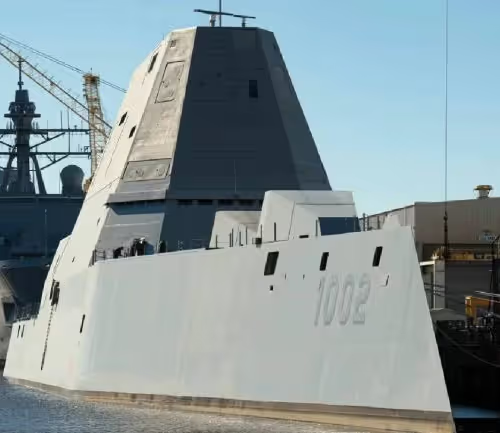
U.S. Navy to Begin Testing for USS Lyndon B Johnson (DDG 1002)
By Naval-Technology
Marine Corps Moves To Expand Maven Smart System Account Access
By DefScoop
Navy F/A-18 Spotted With New AIM-174B And AIM-260 Long-Range Missiles
By TWZ
Pentagon’s 6th Generation Stealth Fighter Will Control Drone Swarms
By Warrior M.
Air Force Needs 1,509 Combat-Ready Jets by 2035
By Michael Marrow, Breaking Defense