
Be Wary of a Backdoor BRAC
Last updated 01:58 AM EST • Read time: 5m
In the Senate’s version of the National Defense Authorization Act for 2022, there is a section in the committee report centered on issues relating to Base Realignment and Closure – or BRAC, as it is commonly referred to in D.C. parlance. The language for this coming fiscal year reads:
The committee recommends a provision that would prohibit the Department of Defense (DoD) from conducting another base realignment and closure (BRAC) round. The committee notes that, although the Department of Defense did not request authorization to conduct a BRAC round in the request for fiscal year 2022, the Department continues to focus its efforts on studying facility optimization. The committee is encouraged by these efforts and looks forward to reviewing these results prior to any future BRAC round request.
Congress has actually been including this kind of BRAC language in the NDAA for several years now, and it has almost become a standard clause in the annual defense policy bill. For Congress, ensuring that DoD does not institute another BRAC round is important on many levels – particularly the political and economic impacts on States and districts that are the inevitable consequence of military installation closures. And since 2005, when the last major BRAC round occurred, Congress has kept a lid on further reductions.
Looking ahead, however, the Hill should be wary of anything that looks like a “backdoor BRAC” – subtle moves designed to eliminate units or reduce capabilities through clever bureaucratic maneuvering. And as the DoD updates the next four-year National Defense Strategy and as the administration rolls out its FY23 budget, Congress should be on the lookout for this dynamic.
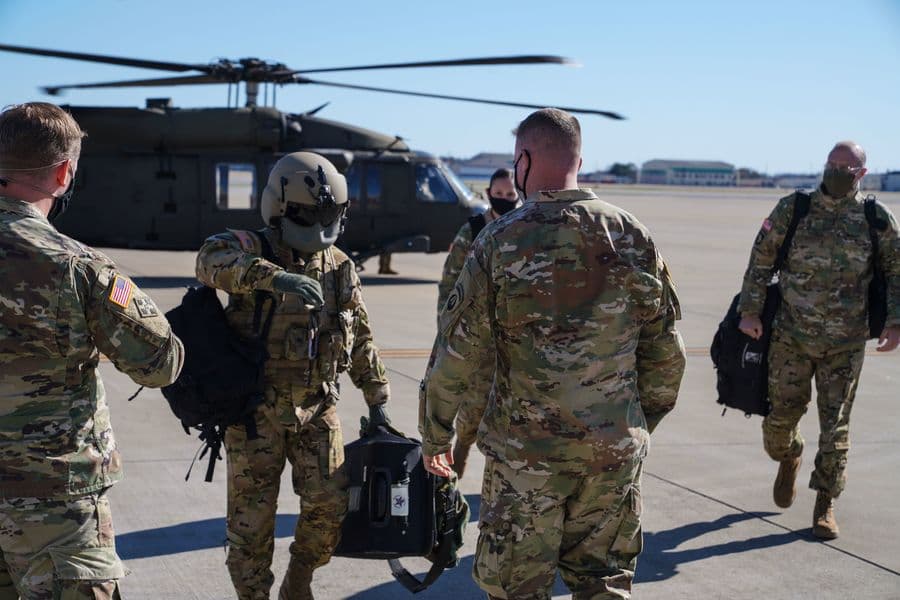
Congress should pay particular attention to how DoD (and specifically the U.S. Army) may look to meet certain divisional end strength force structure requirements by reducing the capabilities of the National Guard. It is important to note that such efforts could essentially result in de facto BRAC – whereupon eliminated or consolidated ARNG units would be followed by installation closures, unit realignment, and capability reduction. Essentially, as ARNG units are eliminated to find money and capability to shore up the strength of the active Army, all of the force-multipliers (i.e., economic stimulus generated and capabilities at the State level) are eliminated as well. Another way to ensure the ARNG is viable is to require purchasing of systems that align with the national force structure requirements and limit the acquisition of platforms that do not.
The potential loss of strategic depth and the ability to quickly mass forces in the event of a large-scale war would be the most concerning byproduct of a reduction or elimination of National Guard units. And, the combat experience currently held in those units – coupled with the higher education schema (as recently separated members typically join the ARNG and continue their education) – would be decimated, thereby further eroding the readiness of our armed forces. It is important to note that currently, the Army in total has about two-thirds the number of combat forces that it did at the beginning of Desert Storm. Reducing this would only incur additional risk for the nation as the National Guard provides cost-effective force strength in depth.
The 2nd and 3rd order effects of such changes would be highly visible as well. For example, long-standing ARNG units and squadrons would no longer exist in their communities, limiting the Guard's ability to rapidly and effectively respond to emerging domestic emergencies. Service members who planned on making the ARNG a career – and who depend on active-duty drill pay to supplement their living – might have made the tough decision to separate from service. This issue ultimately affects retention and readiness. Towns and communities that depend on an ARNG presence for economic health would be hit as well, in much the way that service towns across the nation were impacted in the first several official rounds of BRAC.
And finally, on a more symbolic level – but important, nonetheless – the elimination of ARNG units from local communities would constitute more fraying of our military from the larger civilian community, further widening the gap in civil-military relations and eroding the idea of the citizen soldier in our culture.
To be sure, concerns about efforts to reduce the footprint and capabilities of the National Guard are not unfounded recent white papers promulgated in the public domain have hinted that policymakers should re-examine the Guard's role in the Total Army concept and that the National Guard could be ripe for some seismic restructuring. In fact, governors, state legislatures, and even local leadership at the city and county level should all pay attention to any hinted moves at the national level to shuffle around National Guard units and squadrons.
While the joint force should certainly never remain static, and understanding that times change, such moves should always keep the taxpayer’s dime, the nation’s defense, and the best interests of our communities at the forefront of decision-making. The National Guard provides America with a responsive force of dedicated warriors with important and needed multi-mission, combat-effective capability – and it does so in a highly cost-effective way. The skill and professionalism of America’s armed forces cannot be mass-produced when crises hit – and as 9/11 proved, we must be ever vigilant.
As Congress and the administration seek to enhance our military to face the challenges ahead, and as the hard work is done to apply limited dollars toward a litany of requirements, the National Guard should be recognized as a cost-saver and not a cost-burden. So looking toward the next fiscal year and associated force structure planning, be watchful for any table of organization and equipment gimmicks that seek to remodel our forces for bureaucratic purposes with no strategic benefit.
Be wary of any backdoor BRACs.
Miguel Alejandro Laborde is a former NCO in the 160th SOAR (A) and a subject matter expert on defense aviation programs, capabilities and platforms, with decades' worth of experience in the aerospace industry supporting the joint force.

The U.S. is Overpaying for Missiles
By Alex Lee • RealClearDefense
The U.S. Nuclear Deterrent Umbrella
By Peter Huessy • RealClearDefense
The Islamic Republic Can Lose the War and Still Win
By Nima Gholam Ali Pour • RealClearDefense
Talent Ecosystems: Building a Scalable National Security STEM Workforce
By Payuna Uday • RealClearDefense
The Underground Cloud
By Ben Poulin • RealClearDefense
U.S. Navy to Begin Testing for USS Lyndon B Johnson (DDG 1002)
By Naval-Technology
Marine Corps Moves To Expand Maven Smart System Account Access
By DefScoop
Navy F/A-18 Spotted With New AIM-174B And AIM-260 Long-Range Missiles
By TWZ
Pentagon’s 6th Generation Stealth Fighter Will Control Drone Swarms
By Warrior M.
Air Force Needs 1,509 Combat-Ready Jets by 2035
By Michael Marrow, Breaking Defense