

Reimagining DoD Procurement: Solving for Optimal Q² and C²
Last updated 07:45 AM EDT • Read time: 5m
The modern battlefield, shaped by rapid technological advancements and evolving geopolitical threats, necessitates a radical departure from traditional military procurement and strategic thinking. The Department of Defense (DoD) must fundamentally redefine the relationship between the quantity and quality of weapon systems, as well as the capability and cost of those systems in order to maintain an advantage over its peer competitors. This requires a shift towards a more dynamic and adaptable approach, one that recognizes the limitations of both sheer numbers and exorbitantly expensive technological superiority.
In contrast to the randomness of current procurement decisions, whereby each of the Services advocate for capabilities both within and external to the Service and there is no data driven decision making in selection, the use of Q2 and C2 will allow direct comparison. For example, if DoD seeks to have deployable anti-ship capability in the South China Sea. There are various means of delivering such capability, Navy undersea, surface, and sub-surface combatants, Air Force strike aircraft, Marines pre-positioned on atolls and Soldiers stationed in the Philippines. Each of the Services claim they have the answer, but DoD lacks the resources to fully fund all of the potential delivery mechanisms. How do we decide using available data or modelling?
The below is offered not as a strict mathematical formula that will define procurement decisions but rather as a mindset of a means of thinking about future systems.
To conceptualize this shift, let's introduce two key metrics: Q² (Quantity-Quality Quotient) and C² (Capability-Cost Quotient).
Q²: The Quantity-Quality Quotient
Traditionally, the DoD has often prioritized "quality" over "quantity," investing in a smaller number of highly advanced, expensive platforms. However, the war in Ukraine has vividly demonstrated the potential of mass-produced, relatively inexpensive systems to overwhelm sophisticated defenses. Q² aims to quantify the optimal balance between these two factors.
We can define Q² as:
Q² = (Quantity * Quality Factor) / (Complexity * Vulnerability Factor)
- Quantity: The number of deployable units.
- Quality Factor: A numerical representation of a system's technological sophistication, performance, and survivability.
- Complexity: The logistical and maintenance burden associated with a system.
- Vulnerability Factor: The system's susceptibility to countermeasures and attrition.
A high Q² indicates a favorable balance, where a sufficient quantity of capable systems can be deployed without excessive logistical strain or vulnerability. A low Q² suggests an imbalance, either due to insufficient numbers, overly complex systems, or excessive vulnerability.
The DoD must move away from a linear, one-dimensional view of quality. Instead, it should adopt a more nuanced approach, considering factors such as:
- Modularity: Systems designed for easy upgrades and reconfiguration.
- Open-Source Architecture: Enabling rapid integration of new technologies.
- Distributed Manufacturing: Reducing reliance on centralized production facilities.
C²: The Capability-Cost Quotient
The C² metric addresses the fundamental challenge of maximizing military capability within budgetary constraints. It recognizes that higher cost does not always equate to superior capability, especially in an era of rapidly evolving threats.
We can define C² as:
C² = (Capability * Adaptability Factor) / (Cost * Lifecycle Cost Factor)
- Capability: A numerical representation of a system's effectiveness in achieving mission objectives.
- Adaptability Factor: The system's ability to evolve and respond to changing threats.
- Cost: The initial procurement cost.
- Lifecycle Cost Factor: The total cost of ownership, including maintenance, upgrades, and disposal.
A high C² indicates that a system offers significant capability relative to its cost, while a low C² suggests an inefficient allocation of resources.
The DoD must prioritize systems that offer the greatest return on investment, focusing on:
- Cost-Effective Technologies: Exploring innovative solutions that reduce development and production costs.
- Commercial Off-the-Shelf (COTS) Technologies: Leveraging readily available technologies to enhance military capabilities.
- Autonomous Systems: Reducing reliance on expensive manned platforms and infrastructure.
The Interplay of Q² and C²
Q² and C² are not independent metrics. They are interconnected and must be considered in tandem. For example, a system with a high Q² (large numbers of relatively inexpensive units) may still have a low C² if its individual capability is limited. Conversely, a system with a high C² (high capability relative to cost) may have a low Q² if its production is limited.
The DoD must strive to optimize both Q² and C², seeking systems that offer a favorable balance of quantity, quality, capability, and cost. This requires a holistic approach, considering factors such as:
- Threat Assessment: Understanding the evolving nature of potential adversaries.
- Technological Forecasting: Anticipating future technological advancements.
- nbsp; Strategic Planning: Aligning procurement decisions with long-term strategic objectives.
The Path Forward
The modern battlefield demands a paradigm shift in military procurement and strategic thinking. The DoD must embrace a more dynamic and adaptable approach, one that recognizes the limitations of both sheer numbers and exorbitantly expensive technological superiority. By adopting the Q² and C² frameworks, the DoD can move towards a more data-driven and evidence-based approach to weapons procurement, ensuring that it maintains a decisive advantage in the 21st century. Moving away from legacy systems that are expensive and vulnerable and procuring lower cost, survivable and or attritable weapons and systems, will ensure continued dominance on the battlefield. The future combat effectiveness of the US military depends on the ability to adapt to this new reality.
Colonel William “Mac” McHenry (USMCR, ret.) brings over 30 years of executive experience in strategy development, tech adoption, partner engagement, and operational execution within DoD and the Intelligence Community.
“The views expressed in the article reflect those of the author and do not reflect the official policy or position of the Department of Defense or the U.S. Government.”

Trump's Disrupt First, Negotiate Second: Greenland in Focus
By Meda Parameswara Reddy • RealClearDefense
In Seeking Peace With Beijing, Taipei Is an Asset, Not a Burden
By Alexandru Filip • RealClearDefense
Strike First: Israel's Inevitable Doctrine for the Iranian Axis
By Lance Gordon • RealClearDefense
It’s Not President Trump but Thomas Friedman Who Should Be Ashamed
By Francis P. Sempa • RealClearDefense
Putin, Plague, and America’s Biodefense Gap
By Ryan Kane • RealClearDefense
U.S. and Japan Begin Naval Exercises Near Taiwan
By Mari Yamaguchi • Associated PressU.S. and Japan Begin Naval Exercises Near Taiwan
By Mari Yamaguchi, AP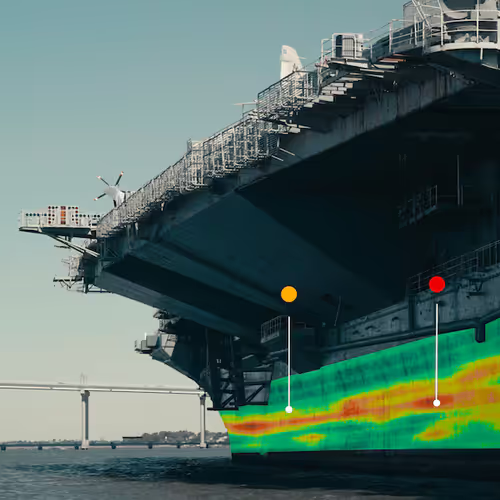
U.S. Navy, Gecko Robotics Surge AI Maintenance Contract
By Ceder, Simkins, Navy T.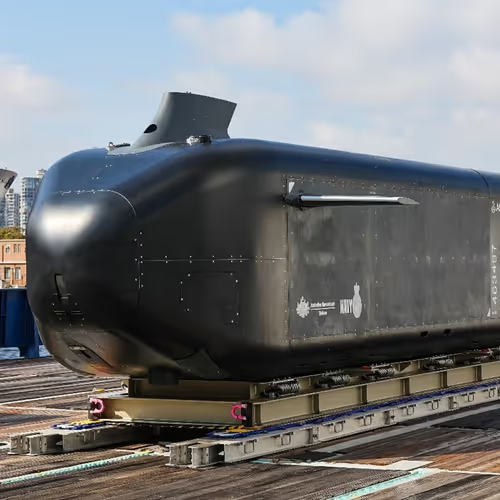
Ghost Shark XL-AUV Payload Bay Seen For First Time
By Thomas Newdick, The WarZone
Dakota Meyer Tapped As Barracks Task Force Senior Advisor
By C. Stassis, MC Times