
The 1960s had Their Day: Changing DoD's Acquisition Processes and Structures
Last updated 07:30 PM EST • Read time: 6m
The Department of Defense (DoD) acquires cutting edge technology in the same manner Secretary of Defense Robert McNamara envisioned acquiring aircraft carriers during the Vietnam War; via a long and ordered linear process. While a long-ordered process seemingly made sense in the mid-1960s when the government adopted the Federal Acquisition Regulations (FAR), it no longer does. The pace of technological development has rapidly increased since the 1960s. The government is no longer the largest investor in Research and Development (R&D) and thus does not control the pace of technological development in key defense technologies. Since the early 1990s, the commercial market has outspent the government by a factor of three-five times overall and much more in key defense technology sectors such as artificial intelligence. In the 1990s, in addition to eclipsing government R&D spending, the commercial sector pivoted away from linear product development or assembly line development and transitioned quickly to concurrent or constant feedback development via Cross Functional Teams (CFT)s. For DoD to maintain pace with the commercialization of advanced technology development and to provide viable technology to the warfighter, it must leave behind antiquated linear development processes and adopt current commercial development practices and structures.
Since the adoption of the FAR, DoD has artificially divided acquisition into three separate linear phases: Experimentation, Requirements Development and Requirements Fulfillment. Unlike in the commercial sector, DoD acquisition processes and the personnel that complete them, do not belong to the same unit, are not collocated; there is little feedback between the groups responsible for the three major phases and the processes do not overlap in time. The current DoD linear acquisition process begins with experimentation typically spanning several years, then an acquisition requirement is written and finally a capability is acquired to fulfill the written requirement. At a minimum, the entire process takes six years but on average it takes nine to twenty six years to bring in a new capability to the military. There are no technology sectors today that remain stagnant for six years and inevitably DoD fields technology that is obsolete the day it is delivered to the end user.
In contrast commercial development using the CFT model is rapid. Products are focused on customer needs and developed incorporating the best of current technology. A typical CFT is a team made up of the functions essential to product development—what the product is, how it will be designed, marketed, and sold. The primary benefit of CFT development is SPEED to production as development processes overlap vice occurring in sequence.
In contrast to DoD’s stove piped and often conflicting objectives, the typical commercial development process starts by the designated CFT defining and agreeing upon objectives. The CFT development model places a premium on getting end-user feedback early and throughout the process by building an initial viable product, getting input/recommended changes from the end user, and incorporating that feedback into the next design. The design is rapidly iterated to meet end user requirements. Within the DoD linear acquisition model, end user participation is minimal, leading to a disconnect between the developing needs of the end user and the delivered capability. Due to the lack of current end user feedback and lengthy acquisition timelines, too often DoD delivers capabilities that do not match current end user needs. In the CFT model, development issues are worked across functional areas by stakeholders concurrently rather than sequentially. New ideas and competitive inputs to a solution are ongoing and iterative. The result is a vast increase in the SPEED of development and a solution that better meets the needs of the end user.
Graphic Comparing linear Development vs CFT development
DIU
DoD’s experimentation, requirements writing, and requirements fulfillment functions and institutions are entrenched and resistant to change. How can the DoD move to the proven commercial CFT development model? A path forward that offers a minimum of disruption to DoD organizations is to start small by taking two or three high priority problem sets that have existing funding and a transition (fielding) plan. Pull personnel and resources from the three functional areas — experimentation, requirements writing and requirements fulfillment — and combine them into a CFT. Designate a product manager (PM) that has the responsibility, the authority and funding to acquire and sustain the needed capability.
To avoid undue influence by any one of the three parts of the acquisition functional areas, the PM should report directly to the leader/manager that sits one level up from the various acquisition functional area leaders/managers. Defined objectives should be agreed upon at project commencement. From inception, end user participation should be actively sought and continuous. As experimentation proceeds, written requirements are updated to reflect the results of the experimentation. Early in the process, the end user receives a minimum viable capability for feedback. The end user employs the capability operationally to the extent possible and recommendations for development are noted and incorporated as feasible, into the product design. The cycle continues and the product is iterated until the end user is satisfied with the capability. Only when the end user agrees that the capability is ready for employment is the capability put into production. The aforementioned proof of concept on the viability of CFT development should additionally serve as a learning tool for the acquisition entity. The small-scale experiment with CFT development will inevitably provide a number of lessons learned, thus providing the organization a baseline to fully develop its processes on a small scale before fully adopting cross functional development across the board.
DoD’s failure to adopt the CFT product development model coupled with the change in relative investment in technology/R&D between the government and the commercial markets, has resulted in DoD’s consistent inability to field the best of current technology to the warfighter. DoD’s antiquated processes and structures have led to capabilities obsolete upon delivery becoming the norm vice the exception across DoD. While the United States retains the lead in developing warfighting technologies due to its combined government and commercial sectors R&D investment, peer and near peer potential adversaries are rapidly closing the gap. As highlighted by the recent conflict occurring in Ukraine, the competitive advantage of rapid technology adoption can serve to be the decisive factor in success or failure in future conflicts. As in the commercial market those that adapt to change first, win.
Colonel William “Mac” McHenry (USMCR, ret.) serves as the Director DIU’s Senior Engagement Advisor focused on Department of Defense (DoD) and interagency interface and activities. He brings a combination of military and government service to his role with over 30 years of executive experience in strategy development, partner engagement, and operational execution.
Michael Allen Brown is a Visiting Scholar at Stanford's Hoover Institution and the former Defense Innovation Unit Director.
The views and opinions of the authors do not necessarily reflect those of the DoD or DIU.

Trump's Disrupt First, Negotiate Second: Greenland in Focus
By Meda Parameswara Reddy • RealClearDefense
In Seeking Peace With Beijing, Taipei Is an Asset, Not a Burden
By Alexandru Filip • RealClearDefense
Strike First: Israel's Inevitable Doctrine for the Iranian Axis
By Lance Gordon • RealClearDefense
It’s Not President Trump but Thomas Friedman Who Should Be Ashamed
By Francis P. Sempa • RealClearDefense
Putin, Plague, and America’s Biodefense Gap
By Ryan Kane • RealClearDefense
U.S. and Japan Begin Naval Exercises Near Taiwan
By Mari Yamaguchi • Associated PressU.S. and Japan Begin Naval Exercises Near Taiwan
By Mari Yamaguchi, AP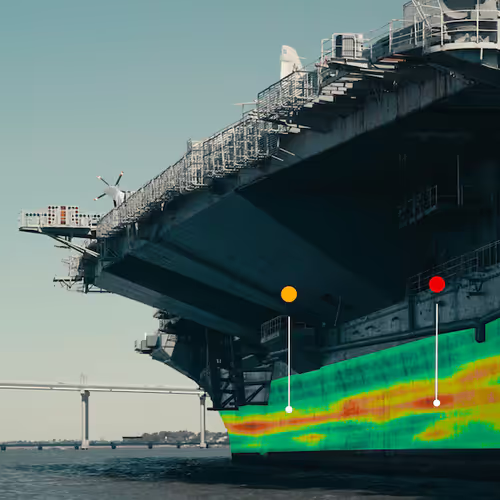
U.S. Navy, Gecko Robotics Surge AI Maintenance Contract
By Ceder, Simkins, Navy T.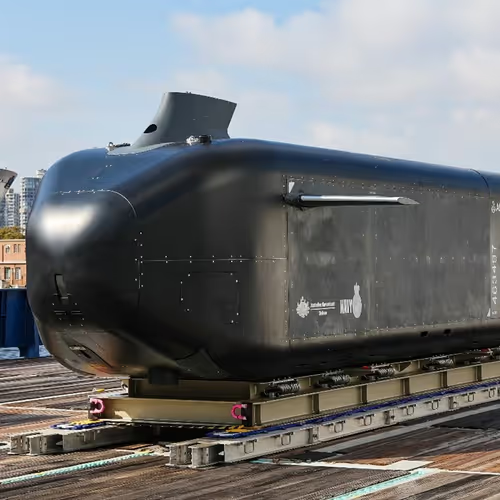
Ghost Shark XL-AUV Payload Bay Seen For First Time
By Thomas Newdick, The WarZone
Dakota Meyer Tapped As Barracks Task Force Senior Advisor
By C. Stassis, MC Times