
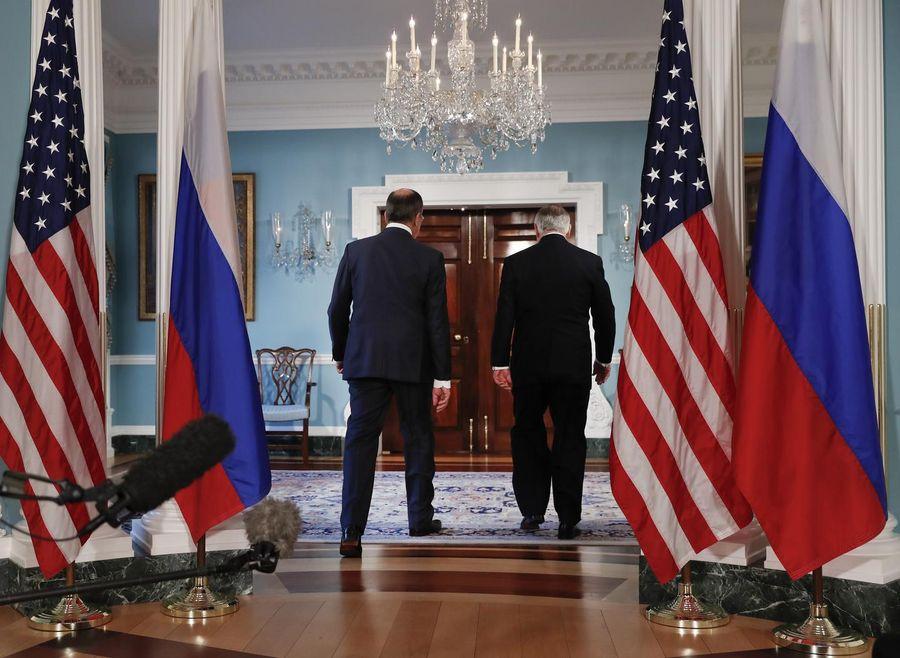
What Happened to the Art of Diplomacy?
Published Feb. 2, 2018 • Read time: 7m
During the post-Cold War era, Western diplomacy has receded to the background as the lure of supposedly easy military options has carried the day. In the emerging multipolar world of power politics, this could be highly dangerous.
Today we in the West face new and traditional threats around the world. Russia has annexed the Crimean peninsula and started a military crisis in Eastern Ukraine. China is expanding its territory and sphere of influence in the East and South China Seas by building artificial islands. North Korea is quickly becoming a nuclear threat, and it has been on a politico-military rampage making threats to South Korea, Japan and even the United States. The Taliban is marching forward in Afghanistan, Syria and Libya are in shambles, NATO is trying to make a U-turn and refocus on “real defense,” and the European Union is infested with a new “East-West” divide in addition to the pre-existing “North-South” split. There are good reasons to ask, what has gone wrong after the Cold War ended and we were supposed to have overcome divisions and adversarial relations as the fuel of international politics.
The first part of the answer is, of course, that the end of the Cold War did not mean the end of adversarial relations in the world - even if many thought and even declared otherwise. Western narrative on cooperative security and non-zero sum globalizing world was more a political project to engage former adversaries than it was a sober description of the state of world affairs in the early 1990s. Thus, many of the divisions, conflicts and potential future wars that we can witness today, never actually went away. Our perspective on international security just bypassed them or neglected them for the most of the post-Cold War era.
The Pressure Is the Message: What Xi and Putin Faced in Shenzhen
Previewing The Shenzen Summit: A Critical View
What the 2026 Midterm Results Mean for U.S. Strategic Competition with Rivals
The Six Strategic Mistakes That Led to U, S, Defeat in Afghanistan
The second part of the answer is more difficult to swallow - at least within the Western security community. I argue that many of the “new” or emerging security threats of today have become such in part due to the decreased standing of diplomacy within the Western conflict resolution approach. As time has gone by, the art of diplomacy has withered away from the toolbox of Western statecraft. Since the early 1990s, the possibilities to use high-tech military capabilities has offered Western statesmen the promise of solving security problems effectively and quickly. This promise has been trumped on several occasions, but the lure of using military force to settle security issues in the globalizing world has increased. Professional militaries in the U.S. and Europe have been on standby to be used in humanitarian operations, counter-terrorism operations and to topple brutal autocrats and to spread democracy.
Since the early 1990s, the asymmetry of military capabilities between the West (read: the U.S.) and the Rest has been so staggering that the need to engage in the art of diplomacy to settle disputes was practically removed from the scene. Instead of engaging enemies or adversaries, trying to understand their security interests, and seeking an outcome short of using military force, the recent history of Western conflict resolution paradigm is replete with examples of using ultimatums, refusing to negotiate and resorting to direct military action. Strategic trigger-happiness has increased.
The decreasing importance of diplomacy has not been a one-time thing. Instead, it has been a process - taking approximately 20-25 years - starting with the 1990 occupation of Kuwait by Saddam Hussein and the associated 1991 Gulf War. If there was any lesson learned from the Gulf War, it was that modern military capabilities are a usable and an effective way to tackle the post-Cold War era security issues. Subsequently, air bombings in Bosnia and Kosovo during the 1990s and the Western wars in Afghanistan and Iraq together with the intervention in Libya have all contributed to the increased standing of military interventions in settling conflicts in the contemporary world.
In most cases throughout the 1990s and the following decade, the losing significance of diplomacy did not matter much. All Western military operations during the last 25 years have been against adversaries that can cause practically no existential threats to the Western security community. In addition, Western states have always had the option of just walking away if the operations turned sour. There are of course inhibitions to do so, for example, questions related to prestige and sunk costs, but still, there have been only marginal national security interests at stake for the West in the militarized conflicts of the post-Cold War era.
This is about to change. As so eloquently described by the recently published summary of the National Defense Strategy of the United States of America, great power rivalries and geopolitics are back. We have witnessed this already in Asia and Europe. China and Russia have become more assertive - even more aggressive - and could seriously challenge the rules of the international security game defined by the West during the last decades. To address this sea change, the United States and Europe need to bolster their deterrence and defense capabilities. But they need to do more.
The “gung-ho” tradition of resorting to military force easily when faced with a security threat is compatible with a world of no serious national security threats. In a world of peer-competitors with massive military capabilities and the susceptibility of using them, Western states would be well advised to show firmness and credible military capabilities, but also take diplomacy seriously. After all, diplomacy has traditionally been most useful and much needed during times of crises.
Russia’s actions against Ukraine since early 2014 are totally unacceptable. But to refuse to negotiate with Russia, and to practically stop talking with Russia at any significant level, is to make a bad situation worse. And the price is paid most harshly by the people of Ukraine. There should not be publicly declared preconditions for negotiations. Similarly, conveying messages to Russia - or China in the cases of South and East China Seas - through TV-interviews and other media sources is not only amateurish in the field of diplomacy, but it is also making the problem more difficult to solve in the future. Forcing the opponent - and oneself - into a corner by publicly setting preconditions does not facilitate defusing the conflict. Western statesmen and diplomats should lower their tone through public channels and engage in serious long-term back-channel diplomacy.
The problem is that the Western approach to statecraft has been able to resort to ultimatums, unilateral declarations and the use of military force for so long that relearning the art of diplomacy will take time, even in the best of circumstances. Not only do we need to rethink our approach to solving crises at the statesmen level. Western citizens have also become accustomed to the use of military force. Starting a new military operation is the “new normal” - in many cases not causing much public discussion or debate.
It should also be remembered that diplomacy does not equal “soft power” or being weak. Real, credible military capabilities - together with other elements of national power - are part of the diplomatic process, through which adversaries engage each other, make their interests more understandable and try to find a solution that is acceptable to both or all parties involved. It is a fallacy to presume that in a multipolar world of power politics, Western states are going to define the rules of the security game and the end result of every conflict situation that is in the horizon. Nor will the West be able - any longer - to try to solve security problems with the use of military force as freely as was the case for the first 20 years of the post-Cold War era. We in the West need more diplomacy - although we will not be able to solve all of our security issues with diplomacy alone.
Jyri Raitasalo is Military Professor of War Studies at the Finnish National Defence University. Views expressed are his own.
The Pressure Is the Message: What Xi and Putin Faced in Shenzhen
By Emzari Gelashvili • RealClearDefense
China’s Revised Mobilization Law and the Expanding Reach of National Defense
By Muhammad Shoaib • RealClearDefense
U.S. Putting Weapons in Space: A Strategic Blunder?
By Ajey Lele • RealClearDefense
The Clearance Myth Is a Readiness Problem
By Elijah Fernandez • RealClearDefense
The Pentagon's Next Readiness Test Should Begin When the Cloud Goes Dark
By Colton Overcash • RealClearDefense
U.S. Putting Weapons in Space: A Strategic Blunder?
By Ajey Lele • RealClearDefense
U.S. Senate Seeks to Exchange Shipbuilding Funds for More Munitions
By Naval News
F-35C Completes First Launch and Recovery Trials on a Ford-Class Carrier
By Navy T.
USS George Washington Leaves Mideast As Trump Mulls Ending Iran War
By S&S
ULA’s Latest Launch Failure Spells Trouble for Space Force
By Greg Hadley, A&SF