
Beijing's Own Goal in the Pacific
Last updated 05:50 PM EDT • Read time: 4m
Did China’s missile test just solve Albanese’s Pacific security problem?
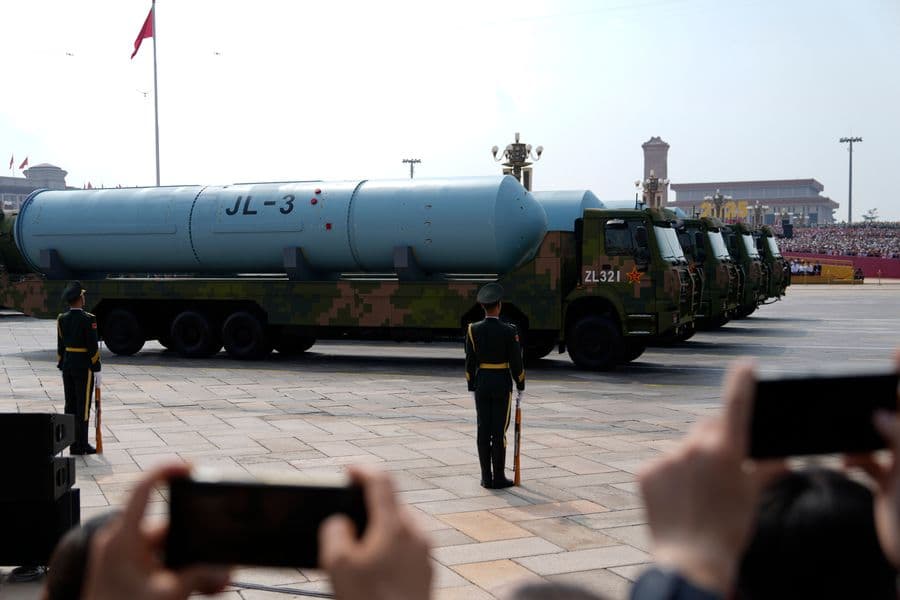
Australian Prime Minister Anthony Albanese has been on a hot streak of Pacific diplomacy. Over the past week, Australia has inked three pacts – the Nakamal Agreement with Vanuatu, the Ocean of Peace Alliance and the Vuvale Union, both with Fiji – which are reshaping the region’s security architecture. These positive developments have been overshadowed by a Chinese submarine test-firing a missile carrying a dummy warhead into Pacific waters, which analysts say is a direct warning to Pacific countries and a reminder of the PLA's reach and presence.
While the missile test may be a demonstration of China's arsenal, Beijing may have just handed Albanese the ammunition he needs to put the tussle for regional security to bed.
Chinese officials say the launch was planned well in advance, yet many are left wondering why it wasn’t delayed or brought forward to avoid the signing in Fiji. Leaders across the region have confirmed they were given minimal notice of the test. Whatever the truth of the timeline, the optics aren’t good for Beijing, which presents as lacking self-control. A Global Times editorial has responded by calling the test “necessary and restrained”, and warning critics they'd “have to accept and get used to” China flexing this kind of reach.
The test cuts against the substance of what Albanese and Fiji's Prime Minister Rabuka just signed. China is a party to the Treaty of Rarotonga's protocols against nuclear use and testing in the South Pacific zone. The warhead was a dummy, but the missile that carried it can carry a real one, and that capability, deployed in the same waters and on the same day as the Ocean of Peace Alliance was agreed, is exactly what Pacific nations have spent decades trying to keep out of their backyard.
Since Solomon Islands signed a security pact with China in 2022, Canberra has changed how it deals with the region. Clever statecraft has produced a run of transactional agreements, with Pacific nations trading access to their waters and infrastructure for concrete gains: climate migration pathways for Tuvalu, economic transformation for Vanuatu, policing and transnational crime capacity for Fiji, and budget support and banking security for Nauru. In each case, Australia has pushed for the same concession: a consultation clause giving Canberra a say whenever a partner considers letting a third party, namely China, into sensitive areas of cooperation.
A missile test makes Pacific countries spectators in their own region, much like they were during the Second World War. Albanese’s opening is to offer something different – partnerships that give Pacific countries legitimacy and agency over their own security, not another arrangement decided over their heads.
Domestically, this can be a win for Albanese. The recent Lowy Institute Poll shows Australians don't feel safe in the world, and the missile test amplifies that anxiety. The test also makes the case for deeper engagement with Pacific Island countries, despite domestic critics like Pauline Hanson attacking the aid spending that underwrites it.
Today, Albanese is in Honiara for the Solomons’ 48th Independence Day, in the town that sent the last shockwaves through Canberra in 2022 when it signed a security agreement with Beijing. The tone is different this time, with Prime Minister Matthew Wale declaring that China’s missile test was “not something a friend does”.
Tomorrow, Albanese will host Prime Minister Marape of PNG and Prime Minister Lord Fakafanua of Tonga, the same day the Pukpuk Treaty with PNG comes into force. It presents as an opportunity for Albanese to sell the idea of the Ocean of Peace Alliance and the potential for the regional security treaty that Prime Minister Wale has been championing.
Pacific leaders have said for years that they don't want their region to be a theatre for someone else’s power contest. They want responsibility for their own security, not protection from it. China just gave them, and Albanese, the clearest possible proof of what they worry about.
Oliver (Oli) Nobetau is Acting Pacific Islands Program Director and the Project Director of the Australia–Papua New Guinea Network at the Lowy Institute.
image: Chinese military vehicles carrying JL-3 submarine-launched missiles on armoured vehicles take part in a military parade to commemorate the 80th anniversary of Japan's World War II surrender held in front of Tiananmen Gate in Beijing, Wednesday, Sept. 3, 2025. (AP Photo/Ng Han Guan)
This article appeared originally at Lowy Institute's the interpreter.

In Pursuit of Nuclear Abolition
By Peter Huessy • RealClearDefense
Innovation Alone Won’t Prepare the U.S. for the Future Battlefield
By Joshua Segal • RealClearDefense
The sUAS Tactical Trifecta
By Bryan T. Woody • RealClearDefense
The Revolutionary War: When Strategic Options Share the Same Weakness
By Henry Yep • RealClearDefense
The Houthis Are Testing the Limits of Collective Defense
By Saima Afzal • RealClearDefense

Who Shoots Down the Drone Over the Shipyard?
By John Ferrari & Dillon Prochnicki • RealClearDefense
Northrop Grumman Breaks Out the Big Guns at AUSA
By Daniel Terrill, Defense News
Army Pursuing Diverse Array of New Anti-Air Interceptors
By Trevithick, The WarZoneWho Shoots Down the Drone Over the Shipyard?
By John Ferrari & Dillon Prochnicki, RCD
F-35C Lands for the First Time on a Ford-Class Aircraft Carrier
By The Aviationist